Home power outages can strike without warning. A well-chosen emergency generator keeps essential devices running, protects perishables, and supports comfort during storms or utility failures. This guide highlights five top emergency generators and power stations designed for home use, camping, travel, and outdoor emergencies. Each option balances reliability, portability, and cost, helping you decide which model best fits your household needs.
| Product | Brand | Capacity | Type |
|---|---|---|---|
| Portable Power Station, 266Wh | bailibatt | 266 Wh | Portable power station |
| Oxseryn Power Equipment 4400 Watts | Oxseryn | 4400 W peak / 3400 W run | Gas-powered inverter generator |
| PowerSmart 4400-Watt Portable | PowerSmart | 3600 W run | Gas-powered inverter |
| Westinghouse 12500 Watt Dual Fuel | Westinghouse | 12500 W peak / 11200 W run (propane) | Dual-fuel portable |
| Anker SOLIX C1000 Gen 2 | Anker | 2000 W / 1024 Wh | Solar-capable power station |
Each product below is chosen for versatile power output, reliable runtime, and suitability for home backup. Review the key features, capabilities, and the type of outages or outdoor scenarios they best support.
Portable Power Station 266Wh For Home And Emergencies

The bailibatt Portable Power Station delivers 266.4Wh of compact, safe energy with seven output ports, including a 300W pure sine wave AC outlet. Its 72,000mAh lithium battery supports fast charging for laptops, smartphones, cameras, and other essential devices during outages or outdoor trips. Weighing a light 4.0–4.5 pounds, it emphasizes portability for camping or quick home backups while keeping a small footprint in a closet or cabinet.
Key technical points include: 300W total output (AC, USB-C PD, USB-A, 12V car, and DC ports) and a compact form factor for easy transport. The unit is designed for indoor use and outdoor adventures, providing reliable power for critical devices when traditional outlets are unavailable.
Ideal use cases: short-term power for electronics during storms, remote work setups, charging mobile devices, and lightweight camping or RV trips where you cannot rely on a generator’s fumes. This model prioritizes quiet operation and simple operation, making it accessible for households seeking immediate backup power without large fuel storage or maintenance demands.
Oxseryn Power Equipment 4400 Watts Inverter Generator
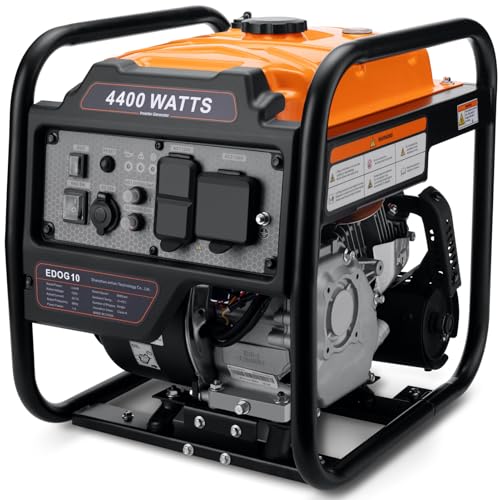
The Oxseryn 4400W inverter generator is geared toward home backup and RV use, delivering 4400 peak watts and 3400 running watts. It includes multiple outlets (two 120V AC ports, a 12V DC port, and an RV port) and emphasizes a long runtime—up to about 14 hours at 25% load with ECO mode. A 2-gallon fuel tank with a straightforward fuel gauge helps users monitor fuel levels easily, supporting extended outage or camping scenarios with less frequent refueling.
Strengths include: solid peak power for essential home circuits or RV appliances, multiple outputs to handle diverse devices, and an extended runtime suitable for evenings or off-grid camping. The ECO mode aids efficiency and noise reduction, a valuable feature for residential neighborhoods or campsites where quiet operation matters.
Considerations: fuel storage safety and noise level are important for urban settings. This unit is best for households needing steady power for critical devices such as sump pumps, refrigeration, and lighting, along with recreational use where reliable energy is essential during outages or remote trips.
PowerSmart 4400-Watt Portable Inverter Generator

PowerSmart combines high power output with compact design and quiet operation. The 4400-watt generator delivers 3600 watts continuous power, with a 1.6-gallon tank delivering up to 11 hours of runtime at 25% load. It is engineered to be quieter (76 dB at 23 feet) than many portable units, making it better suited for residential neighborhoods and camping trips where noise can be a concern. The CO-sensor adds an extra layer of safety in enclosed spaces.
What this unit offers: robust starting power suitable for home backup, RV appliances, and job sites; relatively efficient fuel use for its class; and safety features aimed at keeping occupants safe during operation. The included CO sensor reduces risk of dangerous emissions indoors, aligning with modern safety standards for portable power.
Practical considerations: while not the largest generator, it provides ample power for critical home devices and smaller appliances. It fits households seeking a balance of portability, quiet operation, and reliable run-time for outages or outdoor activities without a large fuel footprint.
Westinghouse 12500 Watt Dual Fuel Portable Generator

Westinghouse’s 12500-watt dual-fuel generator offers significant backbone for home backup. It supports gasoline and propane, with a remote start option via key fob and both electric and recoil starting methods. A large 6.6-gallon fuel tank and fuel gauge enable run times up to 12 hours, depending on fuel type and load. The unit provides a full suite of outlets, including GFCI variants and transfer switch compatibility for seamless integration with home electrical systems. The VFT display keeps you informed of voltage, frequency, and hours, aiding maintenance decisions.
Key advantages: high power output capable of sustaining whole-house loads during outages, flexible fuel options for supply chain reliability, and modern digital readouts for monitoring. This is ideal for larger homes or remote locations where continuous, robust power is a priority and where a transfer switch is part of the plan.
Considerations: the unit’s size and weight require a dedicated space and some level of physical setup. Fuel storage and maintenance are essential, and users should ensure proper ventilation to prevent fumes in enclosed areas. This option is best for homeowners seeking a long-duration, high-output backup solution with wide outlet options.
Anker SOLIX C1000 Gen 2 Portable Power Station

The Anker SOLIX C1000 Gen 2 is a modern, high-capacity portable power station with 2,000W continuous output and up to 3,000W peak, backed by a 1,024Wh LiFePO4 battery. It features ultra-fast recharge (HyperFlash) up to 1,600W and offers multiple ports across 10 outputs, enabling devices to be charged rapidly for emergencies, remote work, or off-grid living. The unit is designed for portability and can be charged via solar panels, AC, or car outlets, making it versatile for home backup and outdoor use.
Strengths include rapid recharge capability, high-quality LiFePO4 chemistry for long lifespan, and the flexibility to power multiple devices at once. For households considering solar integration or off-grid preparation, this model provides a compact, user-friendly solution with modern app-based monitoring.
Usage guidance: ideal for outages where you need to run essential electronics, routers, small appliances, and devices during longer power cuts. It is not intended to power large appliances like central HVAC but excels at sustaining connectivity, lighting, and charging capabilities during emergencies or recreational activities.
Buying Guide
- Power needs: Determine total wattage of essential devices and select a generator with a comfortable margin above that load. Consider surge requirements for devices like refrigerators or sump pumps.
- Fuel type and availability: Gasoline generators require storage and ventilation; dual-fuel units offer flexibility. Portable power stations rely on lithium batteries and can be charged via wall outlets or solar panels.
- Runtime vs. capacity: Larger tanks or higher battery capacity extend runtime but add weight or price. Match runtime to outage duration and typical usage window.
- Portability and space: For home backups, choose a model with compact design and convenient placement options. For whole-house backups, consider standby or transfer-switch-ready units with professional installation.
- Noise and emissions: Consider quiet operation and CO sensors for residential settings. In urban environments, low-noise models improve compatibility with neighbors and local regulations.
- Safety and maintenance: Look for features such as automatic low-oil shutdown, spark arrestors, and regular maintenance schedules. For lithium power stations, check cycle life and warranty.
- Future proofing: If you anticipate solar integration or increasingly power-hungry devices, prioritize higher-capacity units or modular systems that allow expansion.
These considerations help balance immediate backup needs with long-term reliability. When planning, assess climate risks, typical outage durations, and the number of devices you expect to power simultaneously. The products above illustrate a spectrum from compact portable power stations to high-output dual-fuel generators, each offering distinct advantages for American homes facing outages and emergencies.