Answer: The top picks offer reliable portable power for camping, road trips, or emergency backup, with LiFePO4 batteries and varying wattage. This guide targets campers, road-trippers, and preppers who need compact, safe, and versatile power solutions. The featured units balance battery longevity, output capacity, and recharge options to fit different use cases—from charging laptops on a hike to running essential devices during an outage. Below is a quick buying table and a deeper look at five strong options so you can compare at a glance.
| Product | Best For |
|---|---|
| DaranEner Portable Power Station (192Wh) | Compact camping, emergency home backup |
| Jackery Explorer 300 (292Wh) | Lightweight, multi-device outdoor power |
| FOVAL 200W Car Power Inverter | Vehicle charging and quick-device use |
| ALLWEI 300W Power Inverter | Road trips with fast USB-C charging |
| Schumacher 1200A Jump Starter & Power Station | All‑in‑one jump start and power backup |
DaranEner Portable Power Station 192Wh

Best for: Casual campers and compact emergency kits. This unit pairs a 192Wh LiFePO4 battery with a 300W pure sine wave inverter and a 60W USB-C PD port, offering solid daily charging for phones, tablets, laptops, lights, and essential devices. Its LiFePO4 chemistry supports long life and safer cycling, making it a practical option for off-grid weekends and home backups. Note: It cannot handle high-wattage appliances with large surges such as hair dryers or rice cookers.
Why selected: Strong balance of portability, safe battery chemistry, and useful charging options, including a PD USB-C and an MPPT-enabled solar input (up to 60W). The smart BMS enhances protection during charging and discharging, extending lifespan in rough outdoor conditions.
Caution: Avoid repeatedly running high-surge devices above 300W to prevent triggering the unit’s limits. Solar panels and car charging cables are not included.
Jackery Portable Power Station Explorer 300

Best for: Hikers and travelers who need light weight and versatile off-grid power. The Explorer 300 delivers 292Wh with LiFePO4 chemistry, offering more than 4,000 charge cycles and a durable long-term service life. It features two AC outlets, 100W USB-C PD, USB-A ports, and a car port, accommodating multiple devices for extended trips. The compact design supports easy carry via a built-in handle.
Why selected: Higher cycle life and robust module design make it a sustainable choice for frequent outdoor use. Its 600W peak surge covers common consumer electronics and small cameras, pairing well with solar panels for off-grid charging.
Caution: While lighter than some rivals, it still weighs more than a typical handheld power bank—plan for transport during multi-day outings. Solar panel options are available but panel compatibility should be checked.
FOVAL 200W Car Power Inverter
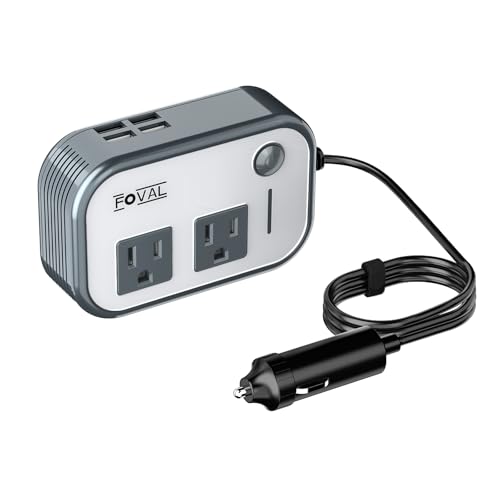
Best for: Vehicles needing a compact, ready-to-use power solution for gadgets and small appliances. This inverter provides 180W continuous output across two AC sockets and four USB ports, including PD USB-C and USB-A fast charging. It’s a practical travel kit for charging laptops, tablets, and phones on the go.
Why selected: Its slim, credit-card-sized footprint makes it highly portable for car or RV use. The integrated protection system guards against short circuits, over-voltage, and overheating, while a silent cooling fan helps extend operation.
Caution: Avoid running devices that exceed the continuous 180W output. Not designed for large appliances or high-startup-power equipment.
ALLWEI 300W Power Inverter

Best for: Road trips and family outings where USB-C fast charging and multiple outlets are valued. This 300W inverter includes two AC outlets plus 27W USB-C PD and 18W USB-A fast charging, enabling rapid power for laptops and devices during long drives.
Why selected: High output with efficient PD and USB ports makes this a strong option for multitasking on travel. Durable metal housing aids protection and heat management, helping maintain performance on longer trips.
Caution: Use with devices under 180W to optimize safety and longevity; high-wattage appliances may trigger overload protection.
Schumacher Electric 1200A Jump Starter & Power Station

Best for: Users seeking an all-in-one jump starter plus power backup for emergency situations and portable power needs. This unit combines a high‑current jump starter with a compact power station and a built-in compressor for on‑the‑go vehicle maintenance.
Why selected: The 1200A jump-start capability provides immediate assistance for 12V battery issues, while the portable power station supports basic AC outlets and USB ports for charging on the move. It’s a solid multi-tool for roadside emergencies and light camping.
Caution: The unit’s weight and size are larger than ultra-compact models; ensure you have space for transport. Only use it for compatible vehicle batteries and appliances within its inverter range.
Buying Guide: Key Purchase Considerations
What capacity do you need?
Battery capacity, measured in watt-hours (Wh), determines how long devices run. For longer trips or home backups, aim for 250–600Wh. For lightweight camping and few devices, 150–300Wh may suffice.
What kind of battery chemistry matters?
LiFePO4 batteries offer longer life (thousands of cycles) and safer thermal stability compared with standard lithium-ion. They are a common feature in robust portable stations and support frequent recharging.
What output options are essential?
Look for a mix of AC outlets (110V), USB-C PD for fast charging, USB-A ports, and possibly a car-style 12V port. The right balance depends on the devices you plan to run.
How should you recharge the unit?
Consider AC charging, car charging, and solar charging options. MPPT solar controllers help optimize off-grid charging, especially when sun exposure is intermittent.
Is portability a priority?
Weight and form factor matter for hiking or frequent travel. LiFePO4 models tend to be heavier but offer longer life and safer operation in outdoor environments.
What safety features are important?
Look for short-circuit, over‑charge, over‑discharge, over‑temperature protections, and built‑in fuses. A smart Battery Management System (BMS) is a plus for longevity and safety.
Frequently Asked Questions
- What is a portable power station? A portable power station stores electrical energy in a battery and provides AC and DC outputs to run small devices without a traditional grid connection.
- Can these power stations power a laptop for hours? Yes, depending on capacity and the laptop’s wattage, many units can power a laptop for several hours on a full charge.
- Are LiFePO4 batteries safer than other chemistries? Generally yes; LiFePO4 cells offer better thermal stability and longer cycle life, reducing risk of overheating.
- Can they be charged with solar panels? Many models support solar charging; check the maximum solar input and panel compatibility for optimal performance.
- How long do these power stations last? Lifespan depends on battery chemistry and usage; LiFePO4 options typically endure many charge cycles, often thousands.
- Do I need a special inverter for certain devices? Most devices that run on 110V AC can be powered by standard inverters in these stations, but check the device’s wattage and surge requirements.