Choosing the right electric car charger outlet hinges on your charging needs, location, and budget. This guide highlights five practical outlets and adapters that fit common scenarios: home garages, outdoor locations, and on-the-road charging. Each option is evaluated for ease of use, durability, and safety, so you can pick the best fit for your EV and lifestyle. The top picks appeal to DIY homeowners, frequent travelers, and those seeking weatherproofed, theft-resistant solutions.
Summary table of selected products:
| Product | Best For | Key Benefit | Limitations |
|---|---|---|---|
| Leviton 1450R Outlet | Homeowners wanting plug-in charging | Heavy-duty plug-in charging receptacle | Bulkier for tight spaces |
| EXCELFU NEMA 14-50R Box | Outdoor or indoor weatherproof charging | Lockable, weatherproof enclosure | Single receptacle only |
| BESTEK Inverter (DC 12V to AC) | Vehicle trips and off-car use | Compact power in vehicle with USB ports | Not a dedicated EV charger outlet |
| YSOLX 200W Car Inverter | Traveling with multiple devices | Multiple outlets and USB ports | Lower continuous wattage for heavy loads |
| ELEGRP Level 1/2 Charger | Flexible charging at home or on-site | Dual charging modes and IP67 rating | Requires compatible outlet |
Leviton 50 Amp EV Charging Receptacle/Outlet

The Leviton 1450R is designed specifically for plug-in EV charging applications and supports extended charging sessions with repeated insertions. It is a heavy-duty option that suits homeowners who prefer plug-in charging units over hardwired installations. Best for: homeowners who want a robust, plug-in solution that can handle frequent use without professional re-wiring. Limitations: installation space and conduit requirements should be considered for optimal placement.
EXCELFU 50 Amp NEMA 14-50R Outdoor/Indoor Receptacle Box
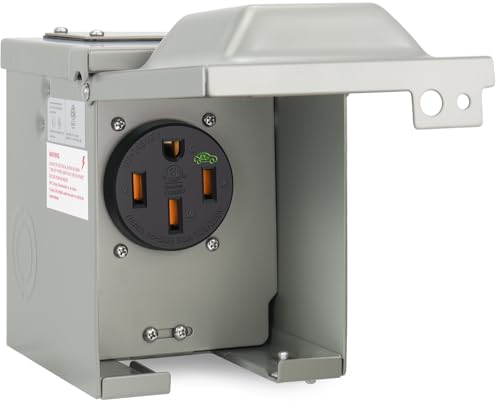
This 50 Amp power outlet box provides a weatherproof 14-50R receptacle with a 3R enclosure, making it suitable for outdoor charging or protected indoor spaces. It features a lockable door to deter power theft and supports Level 2 charging when paired with a compatible plug. Best for: locations needing weather resistance and security for outdoor charging. Limitation: only one receptacle per box, so you may need multiple units for multi-vehicle setups.
BESTEK Power Inverter DC 12V to AC 110V
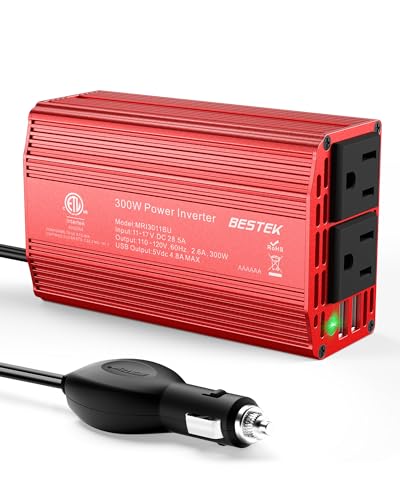
The BESTEK inverter converts 12V DC to 110V AC, delivering up to 300 watts continuous power and 700 watts peak with multiple outlets and USB ports. This is a practical car-top solution for trips, camping, or mobile work sites. Best for: travelers and road-trippers needing on-the-go power for laptops and devices. Caution: not a dedicated EV charging outlet; plan for devices within its power range and safety limits.
YSOLX 300W Portable Car Inverter with 4 USB Ports

This portable inverter provides four USB ports plus two 110V outlets, suited for charging multiple USB devices and small electronics during travel or camping. It is best for: road trips needing multiple device charging with limited AC loads. Limitation: rated at 300W peak around 150W continuous, which may limit larger devices like laptops or high-power appliances.
ELEGRP Level 1/2 EV Charger

The ELEGRP charger supports Level 1 and Level 2 charging with a 25-foot reach and IP67 weatherproof reliability. It uses PBE technology for surge and overload protection and includes a 6-20 and 5-15 adapter, offering flexible charging for BEVs, PHEVs, and related vehicles. Best for: users needing a versatile, weatherproof portable charger with dual charging capabilities. Limitation: effectiveness depends on accessible outlets; ensure compatible power source for Level 2 usage.
Buying Guide: Key Purchase Considerations
- Charging level compatibility: Determine whether you need Level 1 (120V) or Level 2 (240V) charging capability and match to your EV’s charging port.
- Environment and weather: For outdoor or garage use, prioritize weatherproof enclosures and lockable designs to reduce theft risk and element exposure.
- Power supply and outlets: Check your home electrical panel capacity and available outlets. A dedicated 240V circuit is common for Level 2 charging; ensure receptacles are compatible with your EV plug.
- Portability vs. permanence: Decide between a fixed wall receptacle, a weatherproof outdoor box, or a portable inverter/charger based on travel needs and installation flexibility.
- Safety features: Look for surge protection, over-current and short-circuit protection, and clear labeling of amperage and voltage to prevent misuse.
- Security: For outdoor installations, choose enclosures with locking doors or tamper-resistant components to deter theft or unplugging.
- Cable length and reach: Longer cords and cables give flexibility but add weight and cost. Ensure the length suits your charging location.
FAQ
- What is a NEMA 14-50R receptacle?
A: It is a 50-amp, 240-volt receptacle commonly used for Level 2 EV charging. It requires a compatible outlet and plug for safe operation. - Do I need weatherproof outlets for outdoor charging?
A: Yes. Outdoor charging requires weatherproof enclosures or sealed receptacles to protect electrical components from moisture and temperature changes. - Is a portable inverter suitable for EV charging?
A: Portable inverters are typically not designed for EV charging. They are better for powering small devices or USB devices on the road rather than charging high-capacity EVs. - What should I consider about charging speed?
A: Charging speed depends on your outlet type, vehicle capability, and circuit capacity. Level 2 charging is faster than Level 1 and may require a dedicated circuit. - Can I use a lockable outlet box outside?
A: Yes, lockable outlet boxes help prevent theft and accidental unplugging while keeping the outlet secure in outdoor environments. - Do all EV chargers require professional installation?
A: Not always. Some plug-in outlets and portable chargers are user-installable, but Level 2 installations may require a licensed electrician for safety and code compliance.