Answering the demand for flexible, clean power, these dual fuel inverter generators provide 240V compatibility and versatile outputs for home backup, RVing, or off-grid use. The top picks below are best for different buyers—compact portability, highway-ready RV setups, or whole-home backup with transfer-switch readiness. The table summarizes who each product is best for.
| Product | Best For |
|---|---|
| WEN 6800-Watt Dual Fuel DF680iX | Home backup and electric vehicle charging readiness |
| Pulsar 7250-Watt Inverter | Quiet, mobile power for camping and jobsites |
| Westinghouse 11000 Peak Watt Dual Fuel | High-output, transfer-switch ready setups |
| WEN 4800-Watt DF480iX | Compact, quiet option for RVs and small electronics |
| Champion 11,000-Watt Dual Fuel Inverter | Large backup power with premium inverter reliability |
WEN 6800-Watt Dual Fuel DF680iX Inverter Generator

Key features: 224cc dual-fuel engine runs on gasoline (6800 surge, 5100 rated) or propane (6000 surge, 4500 rated). It uses a bonded-neutral 240V configuration to support low-power Level 2 charging for batteries and hybrids. A CO watchdog automatically shuts down the unit if dangerous carbon monoxide levels are detected. Best for users needing robust backup power with EV charging compatibility and CO protection. Suitable for small-to-medium homes, RVs, and as an electric vehicle backup option. Caution: propane performance may be lower than gasoline at peak loads; plan fuel proximity accordingly.
Pulsar 7,250-Watt Dual Fuel Inverter

Key features: gasoline 7,250 peak / 6,000 running watts; propane 6,500 peak / 5,500 running watts. Supports both 120V and 240V outputs. Best for portable, quiet power with strong surge for tools or appliances in remote locations. Choose this if you need solid power delivery for an RV or tailgate setup and value dual-fuel flexibility. Limitation: somewhat higher noise than ultra-quiet models; plan for ear protection if in quiet environments.
PowerSmart 7000-Watt Open Frame Inverter

Key features: 7000W surge / 6000W rated with advanced inverter technology. Delivers clean sine wave power under <3% THD for sensitive electronics. Dual voltage 120/240V with electric push-button start; 322cc engine, 6-hour runtime at 50% load on a 3.2-gallon tank. Best for households seeking stable power with a transfer-switch-ready setup. Use caution: to reach full rated wattage, start and run the unit for 10 minutes to stabilize before connecting high-wattage loads.
Westinghouse 11000 Peak Dual Fuel Inverter

Key features: 9000 running / 11000 peak watts on gasoline; 8100 running / 10000 peak watts on propane with less than 3% THD. Includes remote electric start, multiple transfer-switch-ready outlets, and a LED data center display for fuel, output, run time, voltage, and hours. Best for users needing high-output power with transfer-switch readiness and a clear power-readout. Limitation: higher weight and size compared to smaller inverter models.
WEN 11,000-Watt DF1100T Dual Fuel Inverter
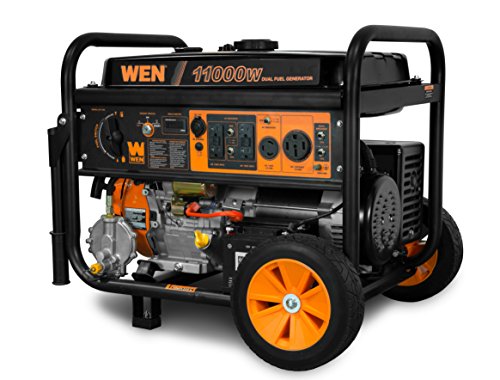
Key features: gasoline 11,000 surge / 8,300 running watts; propane 9,500 surge / 7,500 running watts. 120/240V dual voltage; electric start for easy operation. Best for larger properties or RV setups needing substantial 240V power with dual-fuel flexibility. Limitation: higher fuel consumption at peak loads; ensure fuel supply is readily accessible during outages.
WEN 4800-Watt DF480iX Inverter

Key features: 224cc dual-fuel engine with gasoline (4800 surge / 4000 running) or propane (4320 surge / 4000 running). Very quiet operation and clean power to protect sensitive electronics. Best for quiet RV trips or small electronics loads where minimal noise and good fuel flexibility matter. Limitation: lower overall wattage compared with larger models; best for lighter power needs.
WEN 4,750-Watt DF475T Dual Fuel

Key features: 4750 surge / 3800 running on gasoline; 4350 surge / 3500 running on propane. 120/240V capable for transfer switches and backup scenarios. Electric start with a 224cc engine. Best for budget-conscious buyers needing a reliable dual-fuel unit for basic home backup or small RV use. Limitation: lower wattage may limit simultaneous operation of several high-watt appliances.
Champion 11,000-Watt Dual Fuel Inverter

Key features: 11,000 starting / 9,000 running watts on gasoline; 11,000 starting / 8,100 running watts on propane; CO Shield auto shutoff; quiet technology; up to 15 hours of runtime on a full tank with a 64 dBA rating at 23 feet. Best for users needing a high-capacity inverter with built-in quiet operation and CO protection. Consideration: heavier and larger footprint; not ideal for ultra-portable needs.
Buying Guide
What to consider when choosing a dual-fuel inverter generator for 240V power
- Power needs: Estimate your peak and ongoing wattage. Look for models with higher surge watts if you plan to run start-up motors or appliances together.
- Fuel versatility: Dual-fuel capability lets you use gasoline or propane. Propane offers longer storage life but may reduce peak output from some models.
- Voltage options: Ensure the unit provides both 120V and 240V outputs or a dedicated 240V configuration for transfer switches and RV hookups.
- Inverter quality: Low total harmonic distortion (THD) is important for charging sensitive electronics without damage.
- Starting method: Electric start is convenient; some units include a recoil backup. Consider remote start if you need to operate the unit from a distance.
- Noise level: If you’ll use the generator near living spaces or in campgrounds, lower dBA figures improve comfort and compliance with noise restrictions.
- Run time and tank size: Heavier loads consume more fuel; check claimed run times at common loads for planning outages.
- Portability and maintenance: Wheel kits, handle design, and ease of maintenance affect daily use and transport.
- Safety features: CO detectors, auto shutoffs, and transfer-switch compatibility enhance reliability during power outages.
FAQ
- What is the advantage of a dual-fuel inverter generator over a standard generator?
- Do all dual-fuel inverters support 240V output?
- How does inverter technology affect sensitive electronics?
- Is propane storage safe for long-term use in generators?
- What maintenance steps help extend inverter generator life?
Notes: The product details above reflect listed features for each item. Specifications, availability, and compatibility may change; review current product pages before purchase. This article uses objective, instruction-based language to aid direct comparison and buying decisions. All Amazon links are provided in the respective product sections and are not repeated elsewhere in the text.