Answering buyers who want higher energy output from two-sided solar panels, this guide highlights five top options and explains who each is best for. Double-sided (bifacial) designs capture light from the front and rear, boosting total energy yield in suitable installations. Suitable buyers include rooftop homeowners planning large arrays, RV and van enthusiasts, off-grid campers, and small commercial setups. The following table compares key aspects of the selected models to help you decide quickly.
| Product | |||
|---|---|---|---|
| Callsun 450W 2-Pack (900W Total) | Large rooftop or ground-mount systems | Dual-module parallel anti-shade design | Rooftop, off-grid, ground sites |
| Callsun N-Type 400W 2Pcs | RV, van, marine, off-grid vehicles | High efficiency with bifacial gain up to ~30% | Mobile or compact installs |
| Callsun 450W Bifacial (Single Panel) | Residential & small commercial | 25% efficiency with backsheet capture | Rooftop installations |
| Renogy ShadowFlux 400W 2-Pack | Shaded or variable-light sites | Anti-shading tech reduces hot spots | Homes, cabins, sheds |
| Epoch 800W Bifacial (400W×2) | Off-grid cabins, RVs, boats | High durability with IP68 and robust construction | Off-grid and marine setups |
Below are five detailed product sections to help you compare features, suitability, and limitations side by side.
Callsun 450W 2-Pack: High-Power Bifacial Panels

The Callsun 450W 2-Pack uses N-Type 16BB cells to provide a high energy yield and lower degradation over time. The bifacial design means light captured from the backsheet can add to total production, especially in ground-mounted or reflective environments. The dual-module parallel anti-shade architecture keeps a portion of the panel generating power when the other is shaded, enhancing real-world performance. Best for large rooftop or ground installations where shading is uneven or expected to be limited by space. A potential limitation is that performance gains from bifacial design depend on reflective surroundings and mounting height; in low-reflectivity environments, gains may be modest.
Callsun N-Type 16BB 400W: Two-Panel Set

This 400W two-panel package emphasizes N-Type 16BB technology for higher efficiency and reliability, with an estimated total output boost from bifacial use. The twin-cell anti-shade setup keeps energy production robust when part of the panel is shaded. Suitable for RVs, vans, or small off-grid systems where space and weight are considerations. A key caveat is that off-grid performance benefits depend on installation height and the presence of reflective surroundings; under limited space, gains may be smaller.
Callsun 450W Bifacial: Double Glass Durability

This Callsun 450W bifacial module features N-Type 16BB cells and a double-glass construction designed for durability and long life. The bifacial capability provides additional energy capture from reflective surfaces, making it a strong choice for open rooftops or ground installations with reflective ground cover. Best for homeowners and small commercial projects seeking a balance between high output and rugged build. A limitation is that double-glass panels can be heavier and may require sturdier mounting hardware.
Renogy ShadowFlux 400W 2-Pack: Shading-Resilient

Renogy ShadowFlux panels integrate anti-shading technology to reduce hot-spot risks and maintain energy output under partial shading. Built with N-Type cells and 16BB busbars, these panels aim for high efficiency and durability. They are compact and lighter than many traditional 400W+ panels, making them suitable for space-constrained installations. Choose this if you expect inconsistent sunlight due to surrounding structures. A potential limitation is that performance depends on shadow patterns; persistent shading can still impact total yield.
Epoch 800W Bifacial: Dual 400W Panels
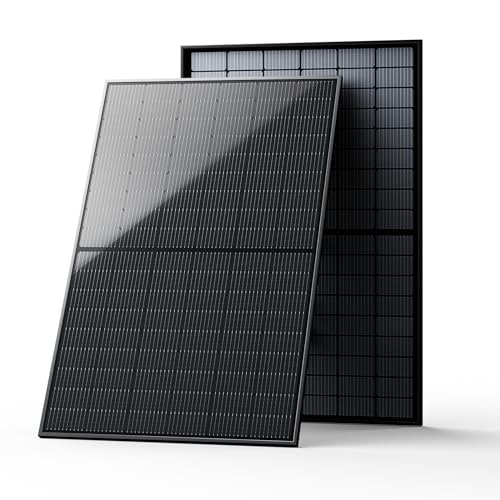
The Epoch system bundles two 400W bifacial panels to reach 800W with N-Type 16BB cells and robust construction. Features include high transmittance lenses and a weatherproof IP68 junction box, designed for off-grid RVs, boats, or remote cabins where reliability matters. Best for users needing higher total output in compact footprints. A limitation is that heavier panels may require reinforced mounting and careful ballast in mobile installations.
Buying Guide: Key Considerations For Double-Sided Solar Panels
- What makes a panel truly bifacial?
– Bifacial panels capture light from both sides, increasing energy yield when there is reflected or diffused light. Verifying backsheet clarity and frame strength helps predict real-world gains. - How much additional energy can bifacial panels deliver?
– Gains vary by installation. Ground-mounted or reflective surfaces (snow, white gravel, or metal roofs) typically yield larger boosts than standard rooftop setups. - Cell technology and durability matters:
– N-Type cells with 16BB busbars reduce potential hot spots and degradation, supporting longer lifespan and stable outputs in many climates. - Shading resilience:
– Dual-module parallel or anti-shade designs help maintain output when portions of the panel are shaded or dirty. Consider the typical shading pattern of your installation site. - Construction and mounting:
– Double-glass or tempered-glass designs favor durability but add weight. Confirm mounting hardware compatibility and structural support for your roof or ground mount. - System context:
– Larger, higher-wattage bifacial kits suit fixed installations; compact panels suit RVs, vans, boats, or temporary off-grid setups. Balance weight, size, and wiring complexity against your energy needs.
Frequently Asked Questions
- What environments maximize bifacial gains?
– Open areas with reflective ground or snow, and installations that provide rear-side light exposure, such as ground-mounted arrays or roof angles with rear clearance. - Are bifacial panels heavier than standard panels?
– Some bifacial modules use heavier construction, especially double-glass designs. Check mounting requirements before purchase. - Do all bifacial panels require rear-side exposure to benefit?
– Yes, rear-side capture improves yields, but gains can still occur with diffuse light even if rear exposure is limited. - Can bifacial panels be integrated into existing systems?
– They can, but ensure compatibility with inverters, mounting structures, and shading patterns to optimize performance. - What maintenance do bifacial panels need?
– Regular cleaning and inspection of mounting hardware help maintain consistent output. Dirt or shading on the rear side can reduce gains. - Do bifacial panels require special warranties?
– Warranties vary by brand and model. Review module, output, and workmanship warranties for long-term reliability.