Finding a reliable diesel generator and welder combo or separate units can be challenging. This guide highlights five top options that pair power, portability, and durability for job sites, emergencies, or mobile welding needs. Each entry includes core features, so you can compare performance, runtime, and output. A quick summary table of the chosen products follows the introduction to help you scan key specs at a glance.
| Product | Key Output | Fuel Type | Notable Benefit |
|---|---|---|---|
| Campbell Hausfeld 3-in-1 | Generator 5000W, Welder 200A | Gas | Truck-mount ready, versatile 3-in-1 |
| Generac XD5000E | 5000-Watt Diesel | Diesel | Long runtimes, smooth power, portable |
| Tomahawk Welder Generator 120A | Welding 120A, 2200W inverter | Gas | Stable sine wave, compact and quiet |
| Hobart Engine Driven | Generator/Welder (40-145) | Gas/Diesel (engine driven) | US-made reliability, multi-output |
| Tomahawk 15 HP Engine Driven | 210A Stick/TIG welding, 2000W | Gas | High current welding with inverter stability |
Campbell Hausfeld 3-in-1 Compressor-Generator-Welder

The Campbell Hausfeld 3-in-1 system combines a 5000W generator, a powerful 200A welder, and a compressor in a single rugged package. Designed for truck mounting, it targets mobile contractors and remote sites where versatility is essential. The Honda GX390 gasoline engine delivers reliable power for both welding and air usage, while the 30-gallon tank helps extend operation between refuels. With a welding capacity up to 180A DC stick welding, this unit supports common fabrication tasks and on-site repairs without needing multiple machines.
Key capabilities include a robust air delivery output of up to 14 CFM at 90 PSI, which makes it suitable for impact tools and air-driven operations on the job. The integrated design reduces clutter and simplifies transport, though installation on a pickup or trailer should consider weight and balance. As with any multi-function machine, matching the task to the unit’s peak outputs is important to prevent overloading. Overall, this Campbell Hausfeld model emphasizes convenience, compatibility with standard welding and compressor needs, and portability for field work.
Generac XD5000E 5000-Watt Diesel Generator
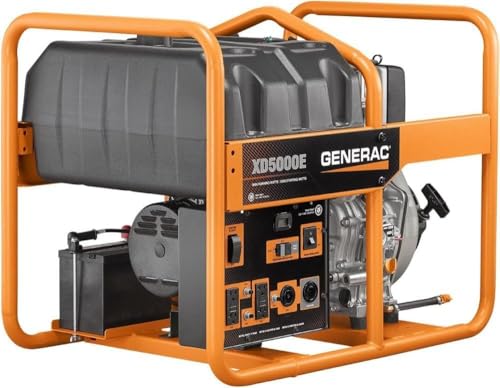
The Generac XD5000E is a diesel-powered portable generator designed for demanding job sites and emergency backup. Its rugged steel frame includes an integrated lifting eye for easy transport and secure placement. With only 6% total harmonic distortion, the XD5000E provides clean power suitable for tools, appliances, and sensitive electronics, reducing risk of equipment damage. A 12-gallon diesel tank delivers extended runtime, minimizing frequent refueling during long shifts. The unit’s portability plus fuel efficiency makes it a practical choice for contractors who require reliable power on remote sites or during outages.
Considerations include the balance between weight, noise, and fuel consumption. While diesel engines are efficient and durable, on-site noise levels and vibration should be assessed against local regulations and worker comfort. Maintenance of a diesel generator is straightforward but requires regular oil changes and fuel management. For users needing steady output and dependable run times, the XD5000E offers a strong combination of power, durability, and portability.
Tomahawk Welder Generator 120 Amp
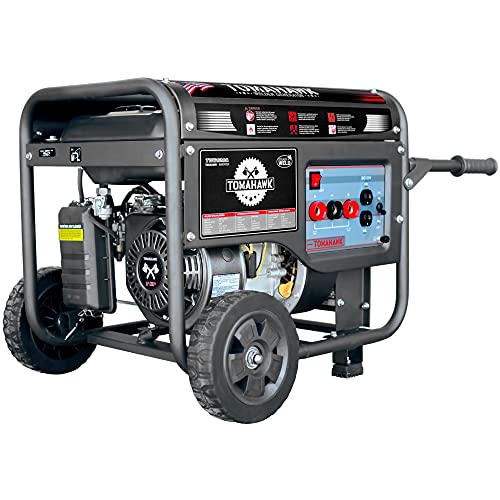
The Tomahawk Power unit offers a 120 Amp Stick MMA welding capability coupled with a 2200W inverter generator. This combo enables welding and running electric tools at the same time, thanks to a stable sine wave output from the inverter. Designed for portability, it is well-suited for small shop tasks or field repairs where light welding and power are needed together. The 120A welding capacity supports common structural tasks, while the 2200W generator provides enough headroom for compatible tools without frequent recharging.
When evaluating this model, consider duty cycle and runtime in relation to the size of jobs. The inverter technology helps maintain arc stability and reduces spikes that can affect weld quality on sensitive materials. For hobbyists or light professional use, the balance of price, portability, and performance makes this a practical choice for mobile welders and on-site fabrication.
Hobart Engine Driven Generator/Welder

Hobart’s engine-driven combination unit covers a broad operating range from 40 to 145 amps and blends generator and welder capabilities in a single, durable package. Marketed for occupational health and safety, this model emphasizes reliability, US-based manufacturing, and versatility for welding tasks in remote or shop environments. The unit’s dual functionality supports ongoing welding while providing auxiliary power to compatible tools and equipment, which can simplify project logistics and reduce the need for multiple power sources.
Buyers should assess the available amperage range, duty cycle, and fuel type compatibility with their typical job requirements. The Hobart engine-driven approach is favored by those who need a sturdy, all-around performer for welding and power generation in one package, especially when access to additional power sources is limited.
Tomahawk 15 HP Engine Driven Welder
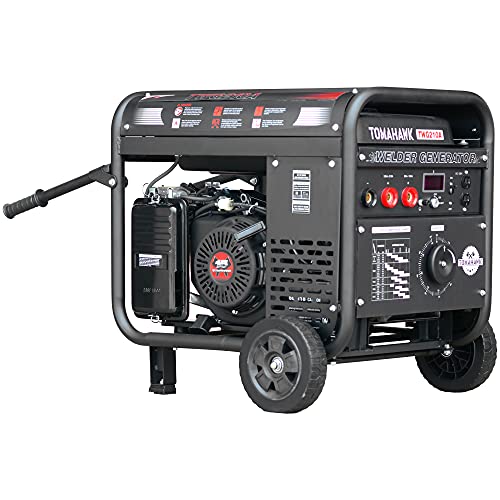
The Tomahawk 15 HP Engine Driven Portable unit provides 210 amps of welding output with a 60% duty cycle, enabling heavier welding tasks while still offering portability. As an inverter generator with a stable sine wave, it supports simultaneous welding and power tools, making it suitable for on-site fabrication and repair work where robust arc performance is essential. The included welding kit and the high current output help tackle thicker materials and more demanding jobs in field environments.
Users should weigh the trade-offs between weight, fuel consumption, and continuous welding capability. For crews that require strong welding performance in a compact, transportable form, this Tomahawk model offers a compelling blend of amperage, portability, and integrated power.
Buying Guide: Key Purchase Considerations And Comparisons
- Power output and duty cycle: Match the generator’s wattage and the welder’s amp rating to the typical workload. Higher amp welding requires more steady power and a higher duty cycle to prevent overheating.
- Portability and mounting: Truck-mount and trailer-ready units save space on the worksite, but they add weight. Consider transport method, weight distribution, and ease of setup.
- Fuel type and efficiency: Diesel engines often provide longer runtimes and durability on job sites, while gasoline units can be lighter and easier to service. Evaluate fuel availability and refueling intervals.
- Power quality: Low total harmonic distortion (THD) and clean sine-wave output protect sensitive tools and electronics. Inverter-based welders deliver smoother arcs and less spatter with delicate components.
- Durability and warranty: Look for units with steel frames, protective enclosures, and reputable brands. A strong warranty reduces long-term risk on remote sites.
- Maintenance and parts availability: Consider ease of maintenance, oil & filter intervals, and access to replacement parts and service centers.
- Versatility: 3-in-1 systems (compressor, generator, welder) reduce equipment clutter but may compromise on specialization. Separate units can offer higher performance for each task.
- Safety features: Ground-fault protection, surge suppression, and proper ventilation help ensure safe operation during extended use and welding high-load materials.