Looking for the best deep cycle battery for an inverter? This guide highlights top AGM and LiFePO4 options that deliver steady power, long life, and maintenance‑free operation. Ideal for RVs, off‑grid setups, solar storage, boats, and backup systems, these selections emphasize safety, low self‑discharge, and high discharge capability. The top picks suit different needs—from budget‑friendly AGM to long‑lasting lightweight LiFePO4. See which fits your storage space, climate, and daily power demands.
Summary table of chosen products
| Product | Type | Capacity | Best For | |
|---|---|---|---|---|
| Weize Deep Cycle AGM 100Ah Battery | AGM | 100Ah | Budget RV, camping, solar | Maintenance‑free, low self‑discharge |
| Renogy Deep Cycle AGM 100Ah Battery | AGM | 100Ah | Off‑grid cabins, RVs, marine | Trusted safety and performance |
| Interstate Marine Deep Cycle 100Ah AGM | AGM | 100Ah | Marine trolling, heavy usage | Extreme deep‑cycle power |
| VEMDIA 12V 100Ah LiFePO4 | LiFePO4 | 100Ah | Lightweight, long life, solar storage | Smart BMS, 15,000+ cycles |
| Feuruetc 12V 100Ah LiFePO4 Solar Battery | LiFePO4 | 100Ah | Solar systems, off‑grid | Maintenance‑free, compatible with solar setups |
Weize Deep Cycle AGM 12V 100Ah Battery

Best for budget‑conscious buyers who need a reliable 12V 100Ah option for RVs, solar storage, trolling motors, or off‑grid cabins. This AGM battery minimizes maintenance with a sealed design and low self‑discharge. Its 1,100A max discharge current supports short high‑demand loads, making it suitable for inverters paired with moderate appliances.
Best for: budget RV setups, basic off‑grid systems, and occasional camping power needs. Limitations: self‑discharge and temperature sensitivity mean avoid storing fully discharged in extreme cold or heat for long periods.
Renogy Deep Cycle AGM 12V 100Ah Battery

Renogy’s 100Ah AGM is a widely trusted option for RVs, cabins, and marine use. It supports series and parallel connections (no limitation for series), enabling scalable power banks for larger systems. The sealed design reduces maintenance risks and simplifies installation in tight spaces.
Best for: users seeking a trusted, drop‑in AGM battery with solid safety margins and easy scalability. Caution: ensure adequate ventilation around charging equipment, as AGM batteries can vent gases under high load.
Renogy Deep Cycle AGM 12V 200Ah Battery

This higher‑capacity 200Ah AGM battery is best for larger RV systems or off‑grid setups needing longer run times between charges. It leverages Renogy’s low self‑discharge and stable chemistry for improved endurance in extended power draws. Better for steady loads than constant peak surges.
Best for: larger energy storage for campers or cabins. Limitation: heavier weight and longer recharge time compared with 100Ah models.
Interstate Marine Deep Cycle 100Ah AGM
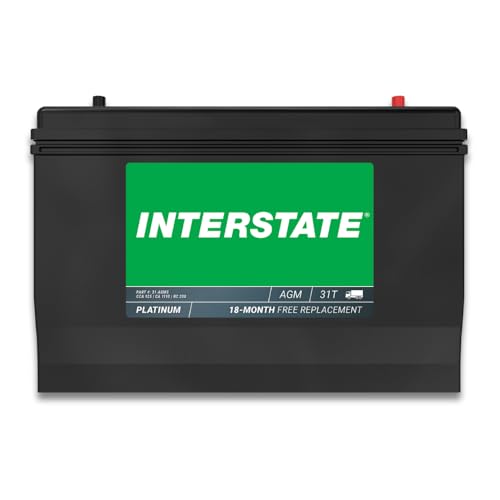
Designed for marine use, this 100Ah AGM is built for heavy‑duty cycles with thick plates to sustain discharge over time. It delivers reliable power for trolling motors, depth finders, and marine electronics, with a longer service life than some flooded alternatives.
Best for: boats and aquatic environments where durable deep‑cycle performance matters. Caution: not recommended as a replacement for automotive or mobility device batteries due to its design focus.
Feuruetc 12V 100Ah LiFePO4 Solar Battery

Feuruetc offers a 12V 100Ah LiFePO4 battery optimized for solar systems and off‑grid living. Light in weight and maintenance‑free, it supports long cycles and reliable energy storage for RVs, cabins, or home backup. Its design aligns well with solar arrays ranging from 200W to 400W.
Best for: solar enthusiasts seeking lightweight, durable energy storage. Caution: LiFePO4 cells require proper BMS integration and temperature management for optimal life.
VEMDIA 12V 100Ah LiFePO4 Battery With Smart BMS

VEMDIA features a 100A smart BMS for robust protection against overcharge, over‑discharge, over‑current, and short circuits. It includes low‑temperature cut‑off to prevent charging below freezing, making it a solid choice for RVs or boats in variable climates. It weighs about 24 lbs, offering significant portability for group 31 placements.
Best for: mobile power needs where weight matters and climate varies. Consideration: ensure compatibility with your existing BMS and wiring setups for seamless integration.
Buying Guide: Key Purchase Considerations
What type of battery should I choose for an inverter system?
- AGM (absorbent glass mat) batteries are budget‑friendly, maintenance‑free, and robust for mixed loads. They’re well suited for RVs, solar storage, and marine use where weight isn’t the top constraint.
- LiFePO4 (lithium iron phosphate) batteries are lighter, have longer cycle life, and offer higher deep‑cycle performance. They excel in solar storage and off‑grid systems with higher daily discharge needs, but come at a higher upfront cost.
How important is cycle life and self‑discharge?
- Low self‑discharge (often 1–3% per month) helps store energy longer between uses, which is crucial for backup power and off‑grid setups.
- High cycle life (thousands of cycles) reduces total cost of ownership over years of operation, especially for solar or RV systems with frequent cycling.
What about safety and temperature performance?
- Maintenance‑free sealed batteries reduce acid leaks and fumes. Ensure proper ventilation and avoid extreme ambient temperatures where possible to maximize life.
- LiFePO4 cells typically perform well across a wide temperature range and have strong safety margins, but require a compatible BMS and weather‑appropriate storage strategies.
How do I size the battery for an inverter?
- Estimate total inverter load (watts) and multiply by hours of use to get watt‑hours. Convert to amp‑hours at the battery’s voltage (e.g., 12V). Add a cushion (20–30%) for inverter efficiency and aging.
- Consider the depth of discharge (DoD) recommended by the chemistries. For LiFePO4, you can typically use 80–90% DoD; for AGM lead‑acid, 50–80% is common to prolong life.
Choosing the Right Setup
- Budget‑oriented campers: Weize AGM or Renogy AGM offer solid value with straightforward installation.
- Large energy users or homes without daily full recharges: Feuruetc or VEMDIA LiFePO4 provide longer life and lighter weight per amp‑hour.
- Marine environments: Interstate Marine AGM batteries deliver robust deep‑cycle performance for trolling motors and onboard systems.
Quick FAQ
- Can AGM batteries be used with a standard inverter? Yes, they’re commonly paired with inverters for household and RV loads.
- Do LiFePO4 batteries require special chargers? Most do; use a charger compatible with LiFePO4 charging profiles and monitor temperature.
- Is heavier weight a concern? AGM models are heavier than LiFePO4 for the same capacity; LiFePO4 offers lighter weight and longer life.
- What is the best storage practice? Store partially charged in moderate temperatures; avoid long storage at full discharge.
- How many cycles to expect? AGM cycles typically range in the hundreds to a few thousand depending on use; LiFePO4 can exceed 5,000–15,000 cycles with proper use.