For hobbyists exploring small-scale power generation, a compact DC motor can double as a generator when paired with wind, water, or cranking input. The following hand-picked DC motors are suitable for DIY toys, wind-turbine experiments, hand-crank generators, and educational physics projects. Each option offers different voltage ranges, speeds, and mounting possibilities to suit your setup. Read on to compare features, compatibility, and typical applications.
The table below highlights five closely related options that emphasize ease of use, beginner-friendly kits, and proven performance for generator-style applications. Use this quick reference to narrow down your pick before diving into full product sections.
| Product | Voltage Range | Approx. Speed (RPM) | Key Use |
|---|---|---|---|
| EUDAX 6 Set Mini Generator Motors (B096ZKFHPT) | 3V–12V | 1,500–6,500 | Wind, solar, and educational experiments |
| EUDAX Mini Generator Motors (B078MSFFH5) | 3V–12V | 1,500–6,500 | Mini fans, toys, science demos |
| Sntieecr 6 Set (B0922N8MCR) | 3V–12V | 1,500–6,500 | Educational physics experiments |
| AUTOTOOLHOME 6-12V Mini DC Motor | 6–12V | 12,000 | DIY PCB, small projects, hand tools |
| XD-3420 12V/24V High Torque DC Motor (B0B21YW465) | 12–24V | 3,500–7,000 | DIY generators, small machinery |
EUDAX 6 Set Mini Generator Motors 3V-12V DC Motor

The EUDAX 6 Set positions itself as a complete starter kit for hands-on energy experiments. Each package includes six mini generator motors, six motor mounting brackets, six propellers, 9 LEDs for lighting demonstrations, quick connectors, a user-friendly English manual, and a range of shaft and body dimensions that fit compact builds. Designed for versatility, the kit can be driven by wind, solar, or batteries to light LEDs and power small demonstrations. Its multi-voltage range (3V, 4.5V, and 12V) enables rapid experimentation with different input speeds to observe how voltage and RPM relate to generated current. The kit also doubles as an introduction to gear and pulley systems when used in wind or hand-crank configurations.
Key features include: small, uniform motor dimensions (24 mm diameter, 22.21 mm tall), a compact shaft (8.25×2.0 mm), and a 14 cm lead for easy wiring. The included propellers are color-coded for quick identification, and the LEDs provide immediate visual feedback when the generator is turning. Because this set is designed for beginners, users can iteratively improve their setup by adding solar panels or wind turbines and comparing outputs across voltages and speeds. For classrooms or home labs, it offers a robust, all-in-one entry path into practical energy conversion experiments.
Typical use cases: entry-level wind turbine demos, small solar projects, circuit learning with LED indicators, and simple demonstrations of how mechanical energy converts to electrical energy. Given its broad compatibility and included accessories, this kit is particularly convenient for students and hobbyists who want to explore generator concepts without sourcing components separately.
EUDAX Mini Generator Motors 3V-12V DC Motor (Plastic Holder)

The second EUDAX option emphasizes a slim, lightweight design with a plastic motor holder. It shares the same voltage range and speed characteristics as the starter set, making it a practical upgrade for projects that require a cleaner, more compact assembly. The motor’s 24 mm diameter and 22.21 mm height keep it accessible for compact wind turbines, educational kits, and small-scale power modules. With a 14 cm lead, these motors are simple to wire into LED indicators or small battery chargers for demonstration purposes.
The included voltages and speeds enable predictable results when teaching the relationship between RPM and generated voltage. Its plastic holder keeps components accessible for modification while reducing weight, which can be helpful when mounting on a small frame or turbine blade assembly. Users can experiment with different propeller sizes or add external gearing to increase voltage output or observe torque changes at various speeds.
Potential applications include learning modules for basic electricity, science fair projects, and DIY wind-turbine experiments. While the plastic holder offers budget-friendly simplicity, it may be less rugged than metal mounts in long-term or outdoor installations. This option remains excellent for indoor demonstrations, classroom settings, or quick prototype builds where ease of assembly matters most.
Sntieecr 6 Set Mini Generator Motors
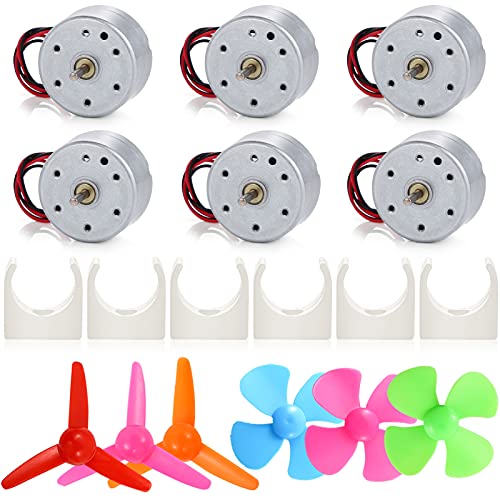
Sntieecr’s kit emphasizes a comprehensive beginner-friendly package with ready-to-use components for simple energy conversion experiments. The set includes six mini motors, six motor brackets, and three color options for four-vaned and three-vaned propellers, enabling quick experiments with different blade configurations to influence rotor speed and generated electricity. The voltage-to-speed mapping mirrors the 3V, 4.5V, and 12V voltage steps found in other kits, with corresponding RPMs of approximately 1,500, 2,500, and 6,500. The two-way energy flow capability—where bearing rotation generates electricity and power input causes rotation—adds a practical demonstration of energy conversion in action.
In practice, this set suits classroom labs aiming to illustrate energy conversion concepts beyond a single motor. The variety of propeller configurations allows students to see how blade count and shape affect torque and RPM. The included brackets improve mounting stability on experiment boards or small frames, making it suitable for tabletop demonstrations or portable wind turbine models. As with similar kits, success depends on a balanced mechanical setup and careful wire routing to avoid short circuits during testing.
AUTOTOOLHOME 6-12V Mini DC Motor
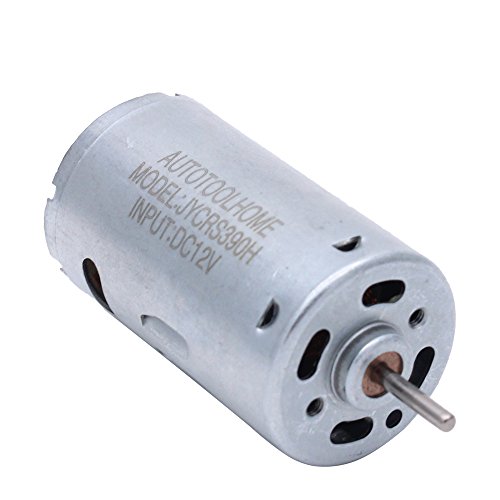
This motor is positioned for DIY electronics and small-scale mechanical projects. With a higher no-load speed around 12,000 RPM, it’s capable of rapid response in experiments that involve short burst power or fast rotor action. The product description highlights versatility for PCB projects, jewelry crafting, and manual tool prototypes, suggesting it can serve both educational demonstrations and light-duty applications where quick rotational response matters. The compact form factor, along with a 6–12V operating window, makes it a good option when you need a motor that can be driven from small power sources or integrated into compact wind turbine models as a generator candidate.
For generator-focused use, pairing this motor with a small turbine or hand crank can illustrate how quickly mechanical input can generate measurable electrical output. However, note that the primary emphasis is not heavy torque or long-duration operation, so it’s best suited for demonstrations, toys, or light experimentation rather than continuous output devices. Mounting hardware, wiring, and load considerations should be planned thoughtfully to maximize safe operation and data collection during experiments.
XD-3420 High Torque DC Motor 12V/24V

The XD-3420 motor family is designed for higher torque output at 12V and 24V, making it well-suited for DIY generators that require both speed and sustained torque. With rated speeds of 3,500 RPM at 12V and 7,000 RPM at 24V, plus a torque range of 1–2 kgf·cm, this motor is capable of handling heavier loads typical of wind turbines or small mechanical-driven generators. The dual-voltage capability allows experimentation with different input speeds to observe how output voltage and current scale with RPM and torque. Its robust torque profile helps sustain generator performance when wind or manual input is inconsistent, providing more reliable demonstrations and potential for longer-duration testing.
Applications include small wind turbine builds, re-purposed machinery, and experiments that require steady torque. The wide voltage range supports versatile setups, from beginner-tier models to more demanding demonstrations. While this motor has higher torque and speed potential, ensure that mounting and gearing are appropriate to protect the motor’s shaft and electrical connections during testing. Proper heat management and load monitoring are advisable for extended use in generator configurations.
Buying Guide: Key Purchase Considerations
- Voltage range and speed: Select a motor whose voltage and RPM align with your intended input source (wind, crank, or solar) and desired electrical output. Higher RPM at a given voltage typically yields more power, but torque and mechanical efficiency matter too.
- Torque and mounting: For generator use, torque stability reduces voltage fluctuations under variable wind or cranking. Check shaft size, mounting holes, and bracket compatibility to fit your project frame.
- Blade and propeller compatibility: When using wind as the input, ensure propeller size and vane configuration match the motor’s torque characteristics. Propeller variation can significantly affect RPM and power output.
- Load considerations: LED lights, small charge circuits, or microcontrollers have different current needs. Plan for appropriate current ratings and protection (fuses, diodes) to avoid damage.
- Kit completeness vs. expandability: Starter sets provide quick experiments with multiple motors and accessories, while individual motors offer flexibility for custom builds. Consider whether you need mounting hardware, brackets, leads, and optional holders.
- Durability and environment: Plastic holders and lightweight housings are beginner-friendly but may be less robust outdoors. Metal mounts are sturdier for longer-term demonstrations or outdoor testing.
- Safety and handling: Working with high RPMs can produce mechanical hazards or electrical shock if insulated improperly. Use appropriate PPE and ensure secure wiring and insulation.
In summary, each listed option supports generator-style experiments, but your choice should match your project goals: quick classroom demonstrations, compact wind-turbine models, or more capable DIY generators. Consider starting with a beginner-friendly kit to understand the relationships between speed, torque, and electrical output, then scale up to higher-torque motors for more demanding builds.