Answering the question “which DC to AC car inverter is right for me?” this guide compares five top options for road trips, camping, and daily driving. Each pick targets different needs: compact and portable, higher continuous power, USB-C PD charging, or robust multi-outlet capability. Best for frequent travelers are those with a compact profile and reliable cooling; best for heavy device use are those with higher wattage and PD or QC ports. The table below highlights the five selected products and their core strengths.
| Product | Best For | Key Feature | Continuous Power |
|---|---|---|---|
| Pro Chaser 400W Power Inverters for Vehicles – DC 12v to AC 110v | Road trips with multiple USB devices | Dual AC outlets, dual USB ports, 30-inch cord | 400W |
| BESTEK Power Inverter DC 12V to AC 110V – 300W | Value-focused road trips, larger devices | 2 AC outlets, 2 USB ports, 32-inch lighter plug | 300W |
| Pro Chaser 400W Power Inverters for Vehicles – with PD 65W USB-C | USB-C PD charging and laptops on the go | USB-C PD 65W, USB-A QC 18W, dual 110V outlets | 400W |
| YSOLX 300W Portable Car Power Inverter | Compact camping and everyday trips | 4 USB ports, 2 AC outlets, compact design | 300W |
| EPANEE 400W Power Inverter – PD 65W USB-C & QC 18W | Balanced performance and safety | PD 65W USB-C, QC 18W USB-A, built-in fuse | 400W |
Pro Chaser 400W Power Inverters for Vehicles
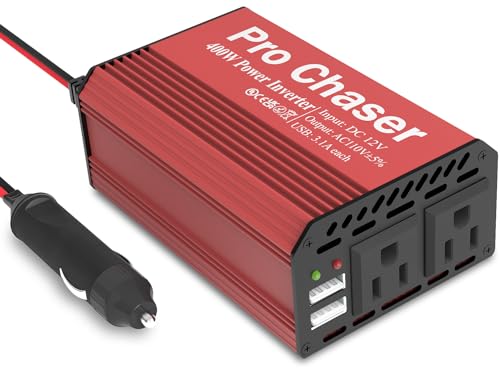
- Continuous 400W, peak 800W, dual 110V AC sockets, dual USB ports for high-speed charging.
- Best for road trips needing to power laptops, air pumps, or DVD players while charging phones and tablets.
- Limitations: should not exceed 400W continuous load; longer continuous use may require cooling considerations.
BESTEK Power Inverter DC 12V to AC 110V – 300W
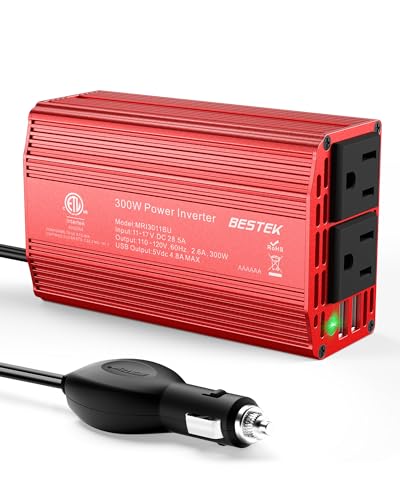
- 300W continuous power with 700W peak; 2 AC outlets and 2 USB ports for versatile charging.
- Best for travelers needing reliable power for laptops and larger devices via the 110V outlets.
- Limitation: smaller continuous rating may restrict high-watt*age devices for long use.
Pro Chaser 400W With PD USB-C – 65W

- 400W continuous with PD 65W USB-C and USB-A QC 18W; dual 110V outlets.
- Best for users who need fast USB-C charging for modern laptops and phones.
- Caution: ensure PD devices’ wattage stays within inverter rating to avoid tripping.
YSOLX 300W Portable Car Power Inverter

- 4 USB-C/A ports and 2 AC outlets, compact and travel-friendly.
- Best for minimal setups with multiple USB devices and occasional laptop charging.
- Limitation: 300W continuous power may not support multiple high-wattage appliances simultaneously.
EPANEE 400W Inverter with PD USB-C

- 400W continuous, PD 65W USB-C, QC 18W USB-A; built-in fuse for protection; cooling fan.
- Best for balanced needs: power laptops, cameras, and small appliances with built-in safety features.
- Limitation: higher wattage may draw more from vehicle electrical system; monitor load to avoid overuse.
Buying Guide
Power needs: Determine continuous wattage you plan to run. If you frequently power laptops or mini-fridges, aim for 300–400W or higher with peak ratings over 700W to handle surge devices.
Charging options and ports
USB-C PD ports dramatically improve charging speed for modern laptops and devices. USB-A QC ports add compatibility with older devices. Look for models offering at least one USB-C PD port in addition to multiple USB-A ports.
Number and type of outlets
Dual AC outlets support simultaneous use of larger devices. Consider the practical reach of the cord (30 inches is common) and whether a compact “cigarette lighter” plug will suit your vehicle.
Safety and cooling
Built-in fuses, over-voltage and over-temperature protection, and quiet cooling fans extend inverter life. In hot climates or long drives, cooling performance is a decisive factor.
Portability and ease of use
Cellphone-sized form factors with lightweight materials improve portability. A compact inverter with a long cord is often easier to position in the back seat or trunk area.
Vehicle compatibility and mounting
Most inverters are universal but verify the vehicle’s electrical capacity and any warranty considerations. If your car is a Tesla or similar high-voltage system, confirm 11–17V compatibility as noted in some models.
Practical buying tips
- Avoid inverters that offer high wattage without sufficient ports for USB devices if you rely on USB charging.
- For road trips, prefer models with dual 110V outlets and a 30-inch cord for flexibility in seating arrangements.
- Check for a built-in fan to reduce heat buildup during prolonged use.
FAQ
- What size inverter should I choose for laptop charging in a car?
Choose an inverter rated at least 300–400W continuous if you plan to power a laptop, with higher peak ratings to cover startup surges.
- Is PD USB-C important on a car inverter?
Yes, PD USB-C enables faster charging for modern laptops and devices that support USB-C PD, reducing charging times.
- Can I run multiple devices at once?
Yes, if the combined wattage stays within the inverter’s continuous rating and you use outlets appropriately.
- What safety features should I look for?
Look for built-in fuses, over-voltage/over-temperature protection, low-noise cooling fans, and a stable casing.
- Do high-wattage inverters damage a car battery?
Prolonged heavy use can strain the vehicle alternator and battery; monitor load and avoid continuous max power use.
- Are 12V car inverters universal for all vehicles?
Most are, but some high-watt models may require vehicle power capacity. Check compatibility with your vehicle’s electrical system.