When drilling or driving in cramped areas, a corded right angle drill can deliver consistent power and reliability. This guide focuses on practical picks that excel in narrow corners, around studs, and inside cabinets. The top choices suit different buyers: contractors needing steady torque, DIYers working on furniture, and professionals who value compact profiles for confined spaces. The following table highlights the 5 best options and who they’re best for.
| Product | Best For |
|---|---|
| Makita DA3010F 3/8″ Angle Drill | General framing and close-quarters drilling with a lighter, compact build |
| Genesis GCQD38A 3.5 Amp | Budget-friendly tight-space tasks with variable speed |
| DEWALT DCD740B 20-Volt MAX (Tool Only) | Hard-to-reach spaces with adjustable speed and trigger comfort |
| Brushless DeWalt 20V 3/8″ Cordless | Battery-friendly cordless power for precision in tight spots |
| DIYtoolifz 90-Degree Drill | Value-conscious users needing compact 90-degree reach |
Makita DA3010F 3/8″ Angle Drill

The Makita DA3010F is a 4.0-amp right-angle drill designed for compact use in tight spaces. Its light weight (about 3.5 lbs) and small head width (2-5/8″) help it reach between studs and into confined areas without fatigue. The variable speed control (0–2,400 RPM) supports drilling in a wide range of materials, from soft woods to metal. This model suits general contractors and serious DIYers who prioritize reliable power in close quarters and straightforward operation.
Best for: versatile framing and cabinetry tasks where extended reach and steady RPM matter. The small footprint makes it a natural pick for working between framing members or inside bounded compartments.
Limitations: No battery compatibility since this is a corded model, which means continuous power with an outlet is required for uninterrupted sessions in remote locations.
Genesis GCQD38A 3.5 Amp 3/8″ Drill
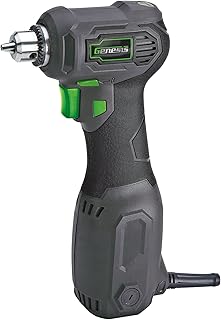
The Genesis GCQD38A offers a compact head and 3.5-amp motor, with a variable speed range up to 1600 RPM. Its shape is engineered for into-tight-access spots where typical drills struggle. This option is appropriate for budget-minded buyers who still need a reliable right-angle drill for installing hardware or drilling in narrow cargo compartments and cabinetry.
Best for: occasional heavy-duty work in tight spaces, where a longer reach would be more expensive or less convenient.
Limitations: Lower no-load RPM versus higher-end models means slower progress on dense materials; best used where speed is not the primary requirement.
DEWALT DCD740B 20-Volt MAX Right Angle Drill

The DEWALT DCD740B is a cordless right-angle drill that prioritizes reach without sacrificing trigger control and comfort. It features dual speed ranges (0–650 and 0–2000 RPM) for versatility across drilling and fastening tasks. Its compact 4.0″ length helps the tool fit in tight spaces while keeping a multi-grip trigger for comfortable operation. This selection is strong for users who already own a DeWalt 20V MAX battery system and want cordless flexibility in cramped projects.
Best for: electricians, plumbers, and builders who need cordless convenience with fast switching between light and heavy drilling tasks in confined areas.
Limitations: Tool-only configuration means you must own compatible batteries and a charger separately.
Brushless DeWalt 20V 3/8″ Cordless Right-Angle Drill

This DeWalt model combines a brushless motor with a 3/8″ ratchet chuck and a compact profile (front-to-back length around 3.8″). The brushless design provides higher efficiency and torque control—valuable in restricted spaces where steady, reliable power is needed. It is compatible with DeWalt 20V MAX batteries, enabling users to leverage existing power tools. This option is suitable for professionals and enthusiasts who value battery versatility and longer motor life.
Best for: users who want higher torque efficiency in tight spaces and already own a DeWalt 20V battery ecosystem.
Limitations: Tool-only status requires separate battery and charger purchase, which adds up if you need a full system at once.
DIYtoolifz Cordless 90-Degree Drill

The DIYtoolifz model is a budget-friendly cordless option compatible with DeWalt 20V MAX batteries, offering a 3/8″ chuck and 400 in-lbs of torque. Its ultra-compact head design supports access to tight corners, such as the interior of cabinets or under sinks. It uses a brushless motor, contributing to efficiency and reduced stalling during prolonged work. This pick appeals to value-conscious buyers who still need solid performance in restricted spaces.
Best for: DIY projects where cost is a primary concern, and there is an existing 20V battery system to maximize value and flexibility.
Limitations: Being a bare tool, it requires a separate battery/charger purchase if you don’t already own a compatible system.
Buying Guide: Corded Right Angle Drills for Tight Spaces
- Power vs. portability: Corded models deliver constant power and steady torque, ideal for professional use or long sessions. Cordless options offer portability but depend on battery life and your existing system.
- Head size and reach: Look for compact front-to-back lengths and narrow head dimensions to access tight corners between studs or inside drawers and cabinetry.
- Speed control: Variable speed is important when drilling different materials. Higher RPM helps with softwood and plastics, while lower RPM can prevent bit wandering in metal.
- Chuck type and size: A 3/8″ chuck is common for right-angle drills and fits many standard bits and driver bits used in construction and woodworking.
- Trigger comfort and control: A multi-grip trigger or ergonomic handle improves precision in cramped jobs, reducing hand fatigue during extended use.
- Battery ecosystem (for cordless options): If selecting a cordless model, consider whether you already own a compatible battery platform to maximize value and avoid extra purchases.
- Durability and maintenance: Brushless motors tend to run cooler and longer, though they may come at a premium. For tight spaces, a durable gear train and solid build reduce downtime.
Frequently Asked Questions
- What is a right-angle drill best used for? Right-angle drills excel at drilling and driving fasteners in confined spaces where a standard drill cannot reach, such as between studs or inside cabinets.
- Should I choose corded or cordless for tight spaces? Corded drills provide constant power with no battery changes, ideal for continuous work. Cordless drills offer portability but depend on battery life and system compatibility.
- Is a brushless motor important in a right-angle drill? Brushless motors improve efficiency, torque control, and motor life, which is beneficial when working in tight spaces where stalling can occur.
- What RPM range is best for common materials? For wood, masonry, or metal, variable speeds from around 0–2,400 RPM cover most tasks. Lower speeds help with metal or drilling into harder materials to reduce bit wear.
- What should I consider about the chuck size? A 3/8″ chuck is standard for many right-angle drills and strikes a balance between bit compatibility and compactness for tight spaces.
- How do I know which drill suits my cabinets or framing projects? Consider reach between studs, front-to-back length, weight, and trigger comfort. If you frequently work in cabinetry, a compact model with solid torque is advantageous.