Find the best carbide grit hole saws for cutting through stucco, plaster, drywall, cement board, and other abrasive materials. These tools are best for contractors, DIY homeowners updating lighting, venting, or weatherproofing spaces. The top picks below cover a range of hole sizes, cutting depths, and compatibility to help you choose the right one for your project.
Summary of selected products:
| Product | Best For | Key Benefit |
|---|---|---|
| 4-1/4″ Carbide Grit Hole Saw | 4″ recessed lights, drywall and stucco | Long life, 1-1/2″ depth |
| 6-1/8″ Carbide Grit Hole Saw | 6″ recessed lights, cement board, plaster | Heavy-duty, broad cut capacity |
| 4″ Carbide Grit Hole Saw (Fast Cut) | recessed lights, vents, dry areas | Up to 6X faster cutting |
| 18 PCS TCT Carbide Hole Saw Kit | Multiple materials, versatile | Wide size range with complete accessory set |
| 4 inch Carbide Grit Hole Saw (Plastics / Siding) | Siding, stucco, fiber cement | Fast cutting, durable carbide edge |
4-1/4″ Carbide Grit Hole Saw for Recessed Lights

Best for installing 4″ recessed lighting and vent holes in ceilings and walls. This hole saw features a tungsten carbide grit edge for durable performance through drywall, stucco, plaster, cement board, and similar abrasive materials. Cutting depth is 1-1/2 inches, suitable for thick substrates without frequent blade changes.
Who this is for: ideal for remodelers and DIYers tackling ceiling renovations, or electricians installing lighting where hard materials are common. Choose this if you need a reliable 4-1/4″ hole with extended life in abrasive substrates.
Limitation: Not ideal for extremely hard metals or very deep cut requirements beyond 1-1/2″ depth.
6-1/8″ Carbide Grit Hole Saw

Best for mid- to large-size recessed lighting or vent holes in tougher substrates. This 6-1/8 inch hole saw uses a tungsten carbide grit edge for efficient drilling through plaster, stucco, drywall, cement board, and even plastic or PVC. Depth remains 1-1/2 inches, with compatibility to common drill chucks.
Who this is for: suitable for professional installers and serious DIYers working on larger fixtures or exterior walls where abrasive materials are present. This size balances cutting width with controlled depth.
Limitation: Heavier and larger; may require more guiding support to prevent wandering on tough surfaces.
4 Inch Carbide Grit Hole Saw for Recessed Lights and Dryer Vent
Best for quick-cut applications like recessed lighting and dryer vents in walls and ceilings. The 4″ hole saw features a carbide grit edge for robust performance through stucco, plaster, drywall, cement board, and similar abrasives. Depth is 1-1/2 inch for efficient installations.
Who this is for: ideal when speed matters and the substrate includes plaster or cement board. Opt for this if you need faster throughput without sacrificing edge durability.
Limitation: May not fit very small drill chucks without proper adapter; verify chuck compatibility prior to purchase.
18 PCS TCT Carbide Hole Saw Kit

Best all-around kit for contractors and serious DIYers. This set includes sizes from 5/8″ to 2-1/8″, plus three pilot drills, L-wrenches, and a carry case. Teeth combine tungsten carbide tips with titanium-coated HSS bodies for sharper, longer-lasting cuts in metal, wood, and composites. Chips and cooling are aided by design features for heavy use.
Who this is for: a versatile option for those who frequently drill through metal, hardwood, or abrasive composites and need a full range of sizes in one package.
Limitation: Heavier set; requires proper storage and handling to maintain edge quality over time.
4 inch Carbide Grit Hole Saw for Siding and Drywall
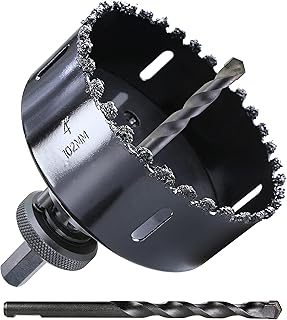
Best for siding, hardy plank, air brick, stucco, drywall, and plasterboard applications. This hole saw claims up to 50% faster cutting thanks to its carbide edge. The edge hardness exceeds 80 HRC, contributing to longer tool life in abrasive materials. Cutting depth is 1-1/2 inch.
Who this is for: ideal for exterior remodeling where siding, fiber cement, or plaster demands quick, durable cuts. Choose this if you frequently encounter hard boards or backer materials during exterior installations.
Limitation: May require extra support to maintain straight cuts on vertical surfaces or when starting a hole without pilot alignment.
Buying Guide
What to consider when choosing carbide grit hole saws:
- Material compatibility: Select carbide grit versions for abrasive substrates like stucco, plaster, cement board, and fiber cement. For metal-heavy work, ensure the kit includes teeth designed for metal.
- Hole size and depth: Match the hole diameter to the fixture size (e.g., 4″ for standard recessed lights). Check cutting depth to avoid under- or over-penetration in thick walls or ceilings.
- Shank and chuck compatibility: Confirm the shank size fits your drill chuck (common sizes include 1/2″ and 7/16″).
- Edge durability: Tungsten carbide grit edges offer longer life on abrasive substrates; titanium coating on HSS bodies can improve wear resistance.
- Cutting speed and efficiency: Some models claim faster cutting due to geometry and carbide grit. Evaluate if faster cuts are worth potential trade-offs in finish quality on delicate materials.
- Set completeness: Kits with multiple sizes, pilots, wrenches, and a case provide flexibility for future projects and organized storage.
- Ease of removal and depth control: For ceilings and walls, consider designs that minimize snagging and provide clean, chip-free holes.
Frequently Asked Questions
- What is carbide grit on hole saws?
Carbide grit refers to tungsten carbide particles embedded in the cutting edge, providing durability and the ability to cut through tough materials like stucco, cement board, and plaster.
- Can I use carbide grit hole saws on metal?
Some carbide hole saws are suitable for metal, especially when the kit includes titanium-coated or carbide-tipped teeth. Check product specs for metal cutting compatibility.
- What depth should I expect for most hole saw cuts?
Most carbide grit hole saws offer 1-1/2 inch cutting depth, though some larger or specialty tools may differ. Verify depth before starting a project.
- How do I prevent wandering when starting a cut in drywall or plaster?
Use a pilot drill to create a guide hole, clamp the workpiece, and start with a light initial cut. A sharp, properly set drill helps maintain accuracy.
- What size range do these kits typically cover?
Many kits cover a broad range from around 5/8″ up to about 2-1/8″ or larger, with complementary pilot drills and wrenches for quick changes.