Looking for the best car charger to AC adapter? This guide compares five reliable in-vehicle power converters that transform 12V car power into 110V AC or provide robust DC output for laptops, chargers, and small appliances. The picks below are organized for different needs: best overall value, highest wattage, quiet operation, and compact designs for travelers. Each product section explains who it’s best for, why it’s chosen, and any notable limitations to consider.
| Product | Best For | Key Benefit |
|---|---|---|
| BESTEK Power Inverter DC 12V to AC 110V – 300W | All-around travel and road trips | Two AC outlets and USB ports for dual-device charging |
| PiSFAU 200W Car Power Inverter | Compact versatility with multiple ports | 2 USB ports plus 2 AC outlets, USB-C fast charging |
| Pro Chaser 400W Power Inverter | Higher-wattage needs on the go | Dual AC outlets, fast USB ports, strong for laptops |
| ALITOVE AC to DC Converter 110V to 12V 120W | Low-power 12V devices indoors | Rugged 12V output with multiple safety protections |
| FOVAL 150W Car Power Inverter | Compact, budget-friendly option | 2 USB ports, 1 AC outlet, portable and simple |
BESTEK Power Inverter 300W with Dual USB
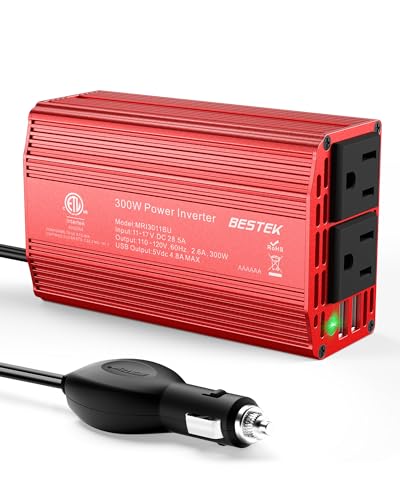
Best for multi-device charging on road trips. This inverter provides 300 watts of continuous DC to AC power and 700 watts peak, with two 110V outlets and two USB ports (4.8A total). The aluminum housing offers durability and a compact form factor. It’s ideal when you need to power laptops, tablets, and other USB devices from a car’s 12V system.
Best use case: long drives with multiple devices needing AC outlets and USB charging. Best for travelers who require laptop-ready power without bulky gear. Limitation: higher-wattage devices near the 300W continuous rating may require careful management to avoid tripping or overheating. The vehicle’s electrical system should be compatible with sustained higher loads.
PiSFAU 200W Car Power Inverter

Best for compact setups needing multiple outputs. This 200W inverter includes two AC outlets and four USB ports, plus a USB-C option for fast charging. It emphasizes quiet operation and good heat dissipation, making it suitable for continuous use on trips or camping.
Best use case: users who want a portable, all-in-one solution for laptops, tablets, and phones with some room for other small devices. Limitation: not designed for very high-wattage appliances; keep total draw under the 200W continuous rating to avoid automatic shutoff.
YSOLX 300W Portable Car Power Inverter

Best for families and outdoor use with higher output needs. This inverter offers four USB ports and two 110V outlets, covering power for smartphones, cameras, laptops, and small appliances. A robust cooling system helps maintain performance during longer trips or outdoor activities.
Best use case: road trips, camping, and situations where multiple devices require simultaneous charging. Limitation: the unit’s higher wattage means it’s bulkier than pocketable options, so plan storage in the vehicle accordingly.
ALITOVE 110V to 12V 120W Car Converter
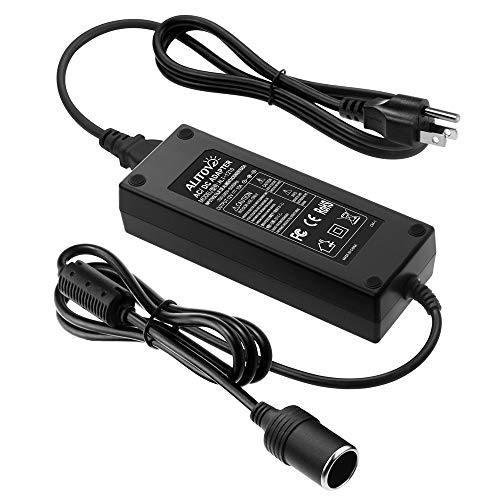
Best for powering low-wattage car electronics indoors or in vehicles. It converts 110–240V AC to 12V DC with up to 10A output and includes several safety protections. This unit is well-suited for devices like dash cams, chargers, small fans, and humidifiers that require steady 12V power.
Best use case: when you need a dedicated 12V supply for low-power electronics with protection features. Limitation: not intended for high-power devices or long-term heavy loads; avoid running devices near the 120W max rating for extended periods.
FOVAL 150W Car Power Inverter
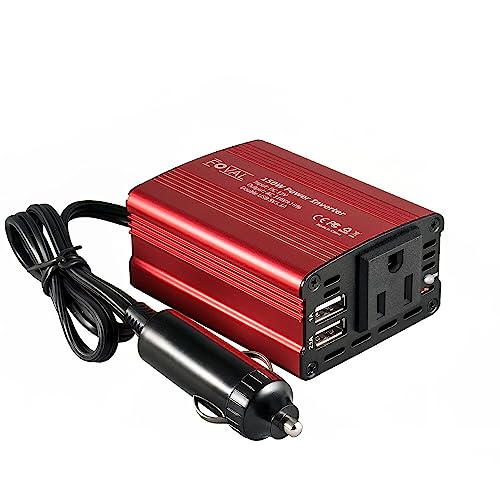
Best for budget-conscious travelers needing a simple two-port USB setup plus an AC outlet. The 150W continuous power supports laptops, tablets, and small electronics without excess features or bulk. Its aluminum shell adds durability for travel storage.
Best use case: quick trips or backup-in-car charging where a lightweight, straightforward inverter suffices. Limitation: lower continuous wattage means power-hungry devices like high-wattage CPAPs or large kitchen appliances aren’t ideal here.
Buying Guide: Key Considerations For Choosing a Car Inverter Or 12V DC-DC Adapter
- Power needs: Estimate the total wattage of devices you plan to run simultaneously. Choose an inverter with more continuous wattage than your expected load to avoid overloading.
- AC vs DC outputs: If you primarily power AC devices (laptops, TVs), pick models with at least one 110V outlet. For low-power electronics, a DC-DC adapter may be sufficient.
- Port availability: Consider how many USB and AC outlets you require. Some units offer multiple USB ports including USB-C for newer devices.
- Portability vs. performance: Higher-wattage inverters tend to be bulkier. If you travel light, a compact model may fit better, but verify that it still meets your power needs.
- Cooling and safety: Look for built-in cooling fans, overheat protection, short-circuit protection, and fuse-based protections. Safety features help prevent damage to your vehicle and devices.
- Vehicle compatibility: Some models are designed for 12V cigarette lighter sockets, while others require a direct battery connection. Check your vehicle’s power capacity and the inverter’s input requirements.
- Durability and design: Aluminum housings and rugged finishes are beneficial for frequent travel or outdoor use. Consider mounting options or cords long enough for flexible placement.
- Usage scenarios: If you’ll use the device for camping, road trips, or hotel-hopping, consider models with longer cords and rugged builds for outdoor environments.
Frequently Asked Questions
- What is the difference between a car inverter and a 12V DC-DC power adapter?
Answer: An inverter converts 12V DC from a vehicle to 110V AC for standard wall outlets. A 12V DC-DC adapter provides regulated 12V power directly to low-power devices without converting to AC. - Can I run a laptop from a car inverter?
Answer: Yes, provided the inverter’s continuous wattage rating exceeds the laptop’s power draw and you avoid overloading the system. - Is it safe to use in a moving vehicle?
Answer: Yes, but ensure the inverter is properly connected to a suitable power source and does not overtax the vehicle’s electrical system. - What should I look for in a safety-protected inverter?
Answer: Look for overcurrent, overvoltage, overload, short-circuit, and overheating protections, plus a thermal management system such as a cooling fan. - Do higher-wattage inverters consume more fuel or battery power?
Answer: Running higher-wattage loads increases power draw from the vehicle’s battery; this can reduce fuel economy slightly and drain the 12V system faster when the engine is off.