Looking for a reliable car battery charger desulfator? This guide highlights five top models that combine charging, maintenance, desulfation, and temperature-compensated charging. Each pick serves different needs, from compact maintainers to high-efficiency multi-stage chargers. The best choice often depends on battery type, usage frequency, and whether you need 6V, 12V, or dual-voltage support. Below is a quick summary to help compare core features.
| Product | Voltage | Best For | Key Benefit | Limitations |
|---|---|---|---|---|
| NOCO GENIUS1 | 6V/12V | Occasional maintenance for lead-acid and LiFePO4 | Compact all-in-one charger with desulfator | Lower power for larger deep-cycle needs |
| NEXPEAK NC201 | 12V/24V | Mid-range hobbyists and multiple-vehicle households | Balanced 10A speed with smart protections | Be mindful of overcurrent guidance |
| NOCO GENIUS5 | 6V/12V | Better performance in a compact form | Higher power with extensive desulfation | More features than ultra-basic units |
| TowerTop 12V Charger | 12V | Heavy use with fast charging needs | Multiple current settings up to 25A | More complex interface and settings |
| NOCO GENIUS10 | 6V/12V | High-power maintenance for large batteries | Very high power with desulfation | Bulkier and higher price point |
Buyer profiles: hobbyists with multiple vehicles may prefer flexible dual-voltage units. Those storing vehicles for winter benefit from temperature compensation and desulfation to extend battery life. Users with deep-cycle or marine batteries often need higher amperage and robust safety protections. The following sections detail five top products, their ideal use cases, and what to watch for in practical terms.
NOCO GENIUS1: 1A 6V/12V Smart Charger

This compact model targets light to moderate maintenance needs. It supports 6V and 12V lead-acid varieties and LiFePO4 lithium batteries. Its desulfation feature helps restore some sulfated cells during charging, while the integrated thermal sensor adjusts charging with ambient temperature. Best for casual car owners who want a simple, automatic maintainer that protects against overcharge and adapts to weather. Caution: lower amperage means longer replenishment times for larger deep-cycle batteries.
NEXPEAK NC201 10-Amp Battery Charger

Designed for faster charging with smart maintenance, the NC201 handles 12V and 24V lead-acid batteries across automotive and marine applications. It includes multiple protections (overcurrent, short circuit, fireproof, reverse polarity) and a desulfation cycle to help extend battery life. Best for households with several vehicles or devices needing quicker turnaround. Choose this if you need higher amperage without sacrificing safety. Limitation: avoid charging totally dead batteries (0V).
NOCO GENIUS5: 5A 6V/12V Charger

The GENIUS5 increases power over the GENIUS1 while retaining a compact form. It supports 6V/12V lead-acid and lithium batteries and includes temperature-compensated precision charging and desulfation. Best for car enthusiasts who want faster top-offs and more robust maintenance without stepping up to higher amperage models. It’s a better choice for mid-size batteries or vehicles that sit unused for longer periods. Limitation: higher price than entry-level units.
TowerTop 2/10/25 Amp 12V Smart Charger
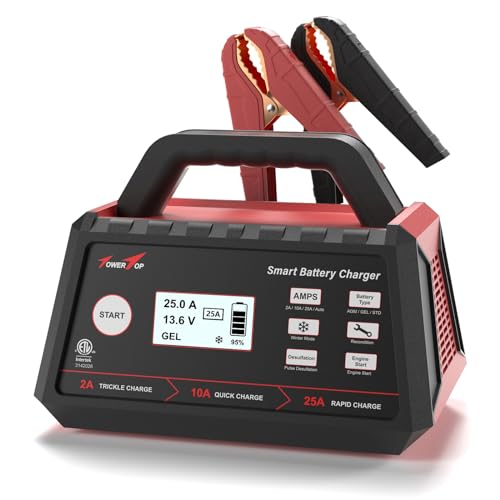
TowerTop offers adjustable currents from 2A to 25A with a dedicated Auto mode, making it suitable for larger batteries or faster charging for boats, RVs, and deep-cycle configurations. It provides pulse repair mode after a charge and maintains last-used settings for continuity. Best for users who need a versatile, all-in-one solution with strong charging speed. Caution: more complex interface may require a longer setup, and peak current should match battery size to avoid overcharging.
NOCO GENIUS10: 10A 6V/12V Charger
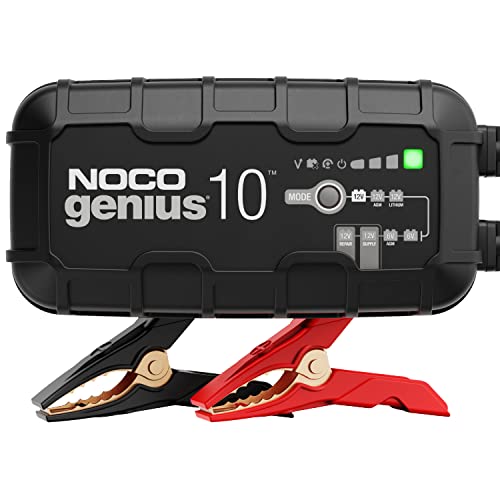
The GENIUS10 provides a high-amp solution for larger batteries, delivering substantial power with advanced desulfation and temperature compensation. Best for users managing sizable maintenance or marine/deep-cycle batteries that require robust recovery and ongoing upkeep. It’s a strong option when extended maintenance cycles and faster recovery are needed. Limitation: bulkier unit and higher upfront investment.
Buying Guide
What should you consider when choosing a car battery charger desulfator?
- Voltage range: Do you need 6V, 12V, or both? Dual-voltage models offer flexibility for different vehicles and battery chemistries.
- Amperage and charging speed: Higher amps charge faster but may be unnecessary for small, maintenance-only needs. Match amperage to battery size and how often you charge.
- Desulfation capability: Look for pulse repair or desulfation modes that actually target sulfation buildup without aggressive charging that could harm the battery.
- Temperature compensation: Temperature-sensing helps prevent overcharging in heat and undercharging in cold.
- Safety protections: Overcharge protection, reverse polarity, short circuit protection, and fireproof design improve reliability in real-world use.
- Maintenance vs. repair focus: Some units are better as trickle maintainers; others are designed to recover partially sulfated batteries.
- Display and ease of use: Clear status indicators and simple controls help minimize setup mistakes, especially in variable climates.
Practical comparisons
- Best for occasional maintenance: NOCO GENIUS1 or GENIUS2, small, automatic, and temperature-aware.
- Better for multi-vehicle households: NEXPEAK NC201 offers a balance of speed, protection, and desulfation.
- Best for high-demand charging: TowerTop with up to 25A, suitable for larger deep-cycle batteries and boats.
- Best all-around for large batteries: NOCO GENIUS10 combines high amperage with desulfation and temperature compensation.
FAQ
- What is a desulfator in a battery charger?
Desulfation uses pulse charging to break up lead sulfate crystals and improve battery capacity over time.
- Can these chargers fix batteries that won’t hold a charge?
Desulfation can help recover some batteries, but deeply damaged cells may require replacement.
- Is temperature compensation important?
Yes. It adjusts charging to prevent overcharging in heat and undercharging in cold, protecting battery life.
- Are all batteries compatible with these chargers?
Most models target lead-acid variants (including AGM, GEL, flooded) and LiFePO4 in some cases; check manufacturer specs for lithium compatibility.
- What amperage should I choose for a typical car battery?
For standard automotive batteries, 1A to 5A is typical for maintenance, while 10A or more can handle quicker top-offs or larger deep-cycle batteries.