If you’re shopping for a home generator, your priority is reliable, scalable power during outages. This guide highlights five top options and explains who each is best for, plus practical buying tips to help you compare quickly. Ideal buyers include those needing whole-house backup, those with larger electrical loads, and anyone seeking dual-fuel flexibility for emergencies.
The following quick-reference table summarizes the five generators most relevant to a home backup setup. Use it to compare peak watts, run time, fuel type, and key features at a glance.
| Product | Peak / Running Watts | Fuel Type | Key Benefit | Best For |
|---|---|---|---|---|
| Gas: 13500 / 10500; Propane: 12500 / 9500 | Gas & Propane | Remote start, transfer switch ready, long run time | Medium-to-large homes needing substantial load support | |
| Gas: 12500 / 9500; Propane: 11200 / 8500 | Gas & Propane | VFT real-time readout, compact dual-fuel option | Better for mid-sized homes or portable backup | |
| Gas: 14500 / 11500; Propane: 13500 / 10500; Natural Gas variant | Gas, Propane, Natural Gas | Higher power for larger loads, long run options | Large homes or multi-appliance loads | |
| 13,000 | Gas & Propane | Dual fuel versatility, strong power, whole-home ready | Storms, outages with flexible fuel | |
| 26kW | Natural Gas or Propane (standby) | Whole-house automatic, cellular connectivity | Whole-home protection with smart monitoring |
Westinghouse 13500 Peak/10500 Running Dual Fuel Generator

Features: 13500 peak watts and 10500 running watts on gasoline; 12500 peak / 9500 running watts on propane. Remote start with key fob, electric and recoil start; up to 19 hours of runtime on a large 9.5-gallon tank. Transfer switch ready with a 30A and an RV-ready 50A outlet. Includes safety outlets and a durable 500cc engine with automatic low-oil and CO shutdown; digital hour meter.
Best for: Homeowners who want strong, versatile power with dual-fuel capability and remote start for convenience during outages. Choose this if you need robust backing for multiple essential circuits and longer run times.
Caution: User must ensure proper transfer switch compatibility and secure fuel storage; heavy unit requires solid anchoring and ventilation.
Westinghouse 12500 Watt Dual Fuel Generator

Features: 9500 running / 12500 peak watts on gasoline; 8500 running / 11200 peak watts on propane. Remote start with key fob; 12-hour runtime on a 6.6-gallon tank with fuel gauge. Dual GFCI outlets, a 30A transfer switch-ready outlet, and an RV-ready outlet; includes digital hour meter. VFT display shows real-time voltage, frequency, and lifetime hours.
Best for: Homes needing solid backup for essential circuits with real-time diagnostics to help plan usage. Better for smaller loads or partial-home protection with dual-fuel flexibility.
Caution: Run-time is tied to fuel tank size; plan for fuel supply and refill logistics during extended outages.
Oxseryn 4400 Watts Inverter Generator
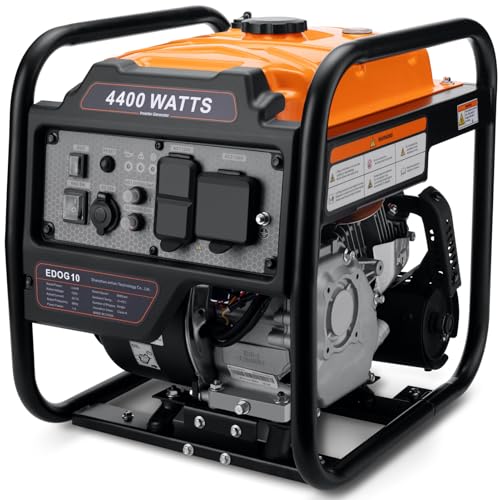
Features: 4400 peak watts and 3400 running watts; multi-output options include 2x 120V ports, 1x 12V DC, and an RV port. ECO mode extends runtime; compact 2-gallon tank with fuel gauge; lightweight and portable for RVs and small emergencies.
Best for: Small homes or campers needing quiet, fuel-efficient backup for essential devices. Choose this if you want portable power for critical loads without running a large, loud generator.
Caution: Not ideal for whole-house backup or heavy appliances; limited peak capacity means you must prioritize essential circuits.
DuroMax XP13000EH Dual Fuel Generator

Features: 13,000 watts of power; dual fuel capability (gasoline or propane); electric start; whole-home backup readiness; transfer switch ready and RV-ready for flexible connections. DuroMax engines are built for power and durability.
Best for: Homes that require strong all-around backup with fuel flexibility and easy start during outages. Choose this if you need substantial power for multiple loads and occasional long runtimes.
Caution: Heavy unit that requires proper handling and secure mounting; ensure compatible transfer switch and ventilation indoors or outdoors as per local codes.
DuroStar DS13000MX 13,000-Watt Dual Fuel

Features: 13,000 watts of power; dual fuel (gasoline or propane); remote electric start; whole-home backup capability; transfer switch ready and RV-ready. CO alert safety feature detects dangerous fumes and shuts down to protect occupants.
Best for: Homeowners who want reliable, high-power performance with safety features for added protection. Better for larger houses or outages requiring sustained power for multiple circuits.
Caution: CO alert means the unit should be installed and used in a well-ventilated area; ensure proper clearance and outdoor placement per instructions.
Westinghouse 14500 Peak Watt Tri-Fuel Generator
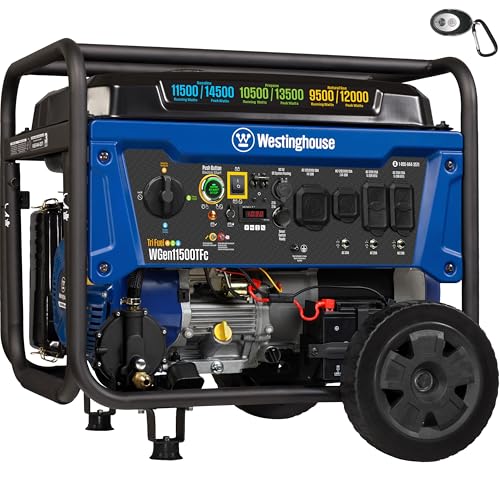
Features: 14500 peak / 11500 running watts on gas; 13,500 peak / 10,500 running watts on propane; natural gas variant available. Heavy-duty 550cc Westinghouse engine; up to 19 hours on a 9.5-gallon tank; 7 hours on a 20-lb propane tank. Three-fuel flexibility broadens emergency options.
Best for: Larger homes needing robust power across multiple appliances with flexible fuel sources. Choose this when you want high peak power with long runtime and fuel choice.
Caution: Heavier unit; requires adequate space for ventilation and storage when not in use; ensure appropriate transfer-switch and hookup readiness.
Buying Guide: Practical Steps and Key Considerations
- Determine your essential load: List refrigerators, sump pumps, heating, lights, and communication devices. Match total running watts to generator output to avoid overload.
- Choose fuel strategy: Dual-fuel offers flexibility during shortages but adds complexity. Consider availability, storage, and local regulations for propane, gasoline, or natural gas connections.
- Assess transfer switch needs: A transfer switch simplifies switching to generator power. Confirm compatibility with your electrical panel and whether you need a manual or automatic solution.
- Consider runtime vs. tank size: Bigger tanks mean longer runtime but heavier units and more space required. Plan for fuel availability during extended outages.
- Outdoor placement and ventilation: Generators must be installed outside and away from doors, windows, and vents to prevent carbon monoxide exposure.
- Portability vs. standby: Portable units provide flexibility but require manual setup during outages. Standby systems offer automatic operation but require professional installation and a permanent connection to your home’s electrical system.
- Safety features: Look for CO shutdown, spark arrestors, weather protection, and rubber outlet covers to minimize shock risk and weather exposure.
- Future-proofing: If you anticipate expanding loads, choose a generator with higher peak watts and more robust amperage to avoid frequent upgrades.
Frequently Asked Questions
- What size generator do I need for a typical modern home? – For a standard home with essential appliances, a generator offering around 8000–12000 running watts is commonly adequate, but larger homes may require 15000–30000 watts or more depending on loads.
- Is dual-fuel better than single-fuel? – Dual-fuel provides flexibility when one fuel type is scarce, but it can add cost and complexity. Choose based on fuel availability and your comfort with maintenance.
- Should I buy a portable or standby generator? – Portable units are less expensive and versatile; standby units automatically power your home during an outage but require professional installation and higher upfront costs.
- Can a generator power my whole house? – Yes, with sufficient wattage and a properly installed transfer switch. Most homes can cover essential loads, while larger homes may need higher-capacity units or multi-generator setups.
- How long can a generator run continuously? – Runtime depends on fuel capacity and load. Higher loads consume fuel faster; running a generator at lower loads generally improves fuel efficiency and engine life.
- What maintenance is required? – Regular oil changes, spark plug checks, air filter cleaning, and fuel stabilization are common. Follow the manufacturer’s maintenance schedule for best results.