If you’re shopping for a black-frame solar panel to blend with a dark roof or to minimize visible glare, these five options stand out for performance and durability. This guide highlights who each panel is best for, with practical reasons to choose one over another. It’s ideal for buyers seeking a compact, high-efficiency, or bifacial solution that aligns with off-grid needs, weather resistance, and mounting flexibility. The following table summarizes key attributes to compare at a glance.
| Product | Best For | Key Benefit | Notes |
|---|---|---|---|
| Renogy 100W Flexible Panel (Black) | Curved surfaces, light vehicles | 240° bendability, lightweight | Flexible, glare-free appearance |
| BougeRV 200W N-Type Panel (Black Frame) | Large rooftops, long-term use | 30% bifacial gain, high efficiency | N-Type technology |
| Rvpozwer 100W N-Type Panel | Durable, all-weather setups | IP68 junction box, -40°C to 85°C | 25% efficiency |
| Renogy 100W N-Type 16BB Panel | High-temperature sites, off-grid | 25% efficiency, low temp coefficient | 16BB cell design |
| BougeRV 400W Bifacial N-Type Panel | Max output, low-light days | Bifacial with 30% extra output | Large 400W capacity |
Renogy 100W Flexible Panel 12V – Black
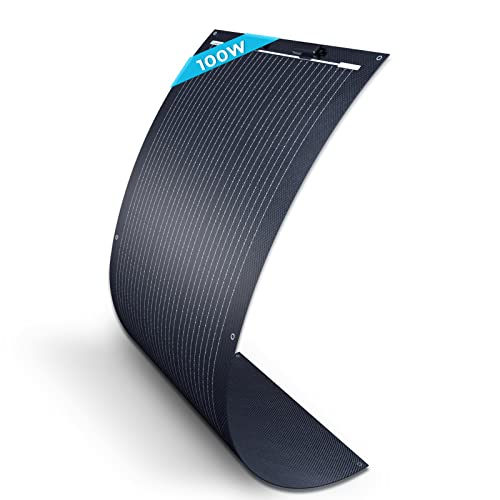
Best for curved surfaces and light-duty installations, this flexible 100W panel is designed to conform to curves up to 240 degrees. Its all-black appearance reduces glare and blends with dark roofs or marine hulls. Features include half-cut PERC cells for improved light capture and efficiency. This panel weighs about one-third of a rigid counterpart, making it easy to transport and install on RVs, boats, cabins, or vans. It’s a strong pick for temporary or mobile off-grid setups where weight and flexibility matter. Caution: flexible panels can be more delicate than rigid panels and may require careful mounting to avoid flex-induced damage.
Best for: users needing a lightweight, flexible solution for curved surfaces or portable off-grid power. Why selected: high flexibility, glare-free black finish, and strong electrical performance due to half-cut PERC cells.
BougeRV 16BB N-Type 200W Panel – Black Frame

Best for larger roofs and long-term off-grid use, this 200W N-Type panel delivers higher efficiency through N-Type technology, including a 25% conversion rate and a compact 16BB cell design. The bifacial gain claim (up to 30% in practice) comes from the transparent backsheet that captures sunlight from both sides. It reduces area coverage by about 26% and stands out for boats, RVs, or cabins where space is valuable. Limitation: N-Type panels can be pricier than P-Type equivalents, which may affect upfront costs.
Best for: bigger installations where space efficiency and long life matter. Why selected: N-Type efficiency, bifacial potential, and reduced area coverage help maximize energy on limited rooftops.
Rvpozwer 18BB 100W N-Type Panel

Best for compact, durable off-grid systems, this 100W N-Type panel emphasizes weather resistance and broad operating temperature range. It features 25% efficiency with high-purity monocrystalline cells and an IP68-rated junction box for protection against dust and water. It performs well in challenging environments, including cold and hot climates. Caution: high-performance N-Type panels can require careful system integration to avoid under- or over-sizing in small installations.
Best for: reliable, all-weather off-grid use where protection against moisture and temperature swings is critical. Why selected: IP68 enclosure, wide operating range, and solid 25% efficiency keep power available in diverse conditions.
Renogy 100W N-Type 16BB Panel – Black

Best for high-temperature environments and off-grid rooftops, this 100W N-Type panel uses 16BB technology to improve current collection and reduce hot spots. The low temperature coefficient minimizes power loss in hot conditions, increasing overall output during summer. It offers a balance of efficiency and durability for remote cabins, RVs, boats, and farms. Limitation: higher-efficiency nodes can require more careful heat management in confined spaces.
BougeRV 400W Bifacial N-Type Panel
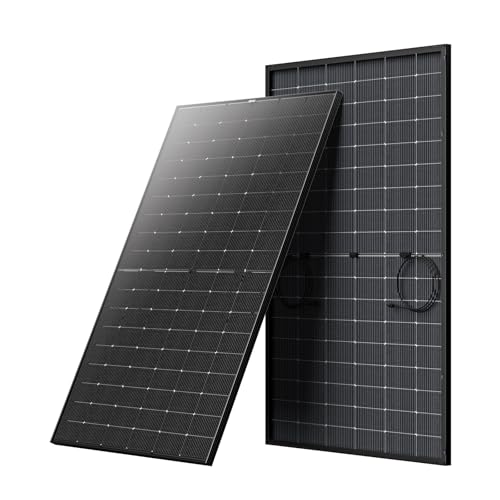
Best for maximize energy on large rooftops or contiguous off-grid installations, this 400W bifacial panel leverages N-Type tech and a 24V/12V configuration. The bifacial design captures sunlight on both sides, adding approximately 30% more output under favorable conditions. It accommodates extended energy generation for boats, RVs, or cabins with ample roof space. Caution: its larger size demands adequate mounting space and stronger support structure.
Buying Guide: Key Considerations for Black Frame Solar Panels
What mounting surface is best for a black-frame panel?
Rigid panels work well on flat roofs or trailers with sturdy mounting rails. Flexible panels excel on curved surfaces or irregular shapes. Consider roof rigidity, weight limits, and mounting hardware compatibility.
Which technology should I prioritize: P-Type vs N-Type?
N-Type cells offer higher efficiency, lower light-induced degradation, and better performance in high-temperature or low-light conditions. P-Type panels can be more affordable. For off-grid use where space and output matter, N-Type is often preferred.
How important is bifacial design?
Bifacial panels absorb light from both sides, boosting output in sunny environments with reflective surfaces or ample diffuse light. They tend to be larger and more expensive but can offer meaningful gains on suitable rooftops or dockside installations.
What about weather resistance and temperature ranges?
Look for panels with robust waterproofing, IP ratings for connectors, and low temperature coefficients. Panels designed to withstand wide temperature swings perform more consistently in extreme climates.
How to size a system for RVs, boats, or cabins?
Estimate daily energy needs in watt-hours, then select a panel (or array) to meet or exceed that figure with a margin for inefficiencies. Consider battery storage, charge controller compatibility, and space constraints on the roof or deck.
Installation considerations and safety
Ensure proper mounting to prevent wind uplift, seal penetrations to avoid leaks, and use appropriately rated cables and fuses. Flexible panels require careful edge protection to prevent cracking and delamination.
Maintenance and longevity
Most panels require minimal maintenance beyond keeping surfaces clean. Verify warranty terms and check for potential shading or dirt buildup that could reduce performance over time.
Summary of selected products
- Renogy 100W Flexible Panel: Best for curved surfaces and lightweight setups. Pros: flexible, glare-free, and efficient. Cons: more delicate than rigid panels.
- BougeRV 200W N-Type Panel: Best for larger rooftops with high efficiency and bifacial potential. Pros: compact area, 30% bifacial gain. Cons: higher upfront cost.
- Rvpozwer 100W N-Type Panel: Best for all-weather reliability. Pros: IP68, wide temperature range. Cons: may require careful sizing for tiny installations.
- Renogy 100W N-Type 16BB Panel: Best for hot climates and high-temp performance. Pros: low temp coefficient, high efficiency. Cons: can be pricier than basic P-Type equivalents.
- BougeRV 400W Bifacial Panel: Best for maximum output on ample roof space. Pros: bifacial design, 30% extra output. Cons: size and weight require strong support.
FAQ
- What is the advantage of a black-frame solar panel?
- Are bifacial panels worth it for small RV roofs?
- Which panel is best for hot climates?
- Do I need a special controller for N-Type panels?
- How should I maintain a black-frame panel on a boat?
- What is a good rule of thumb for panel sizing?
Black frames reduce visible glare, help panels blend with dark surfaces, and can improve aesthetics on boats, RVs, and homes. The frame color does not directly affect electrical output but can influence installation choices and heat dissipation.
For compact installations, bifacial gains may be limited by distance from reflective surfaces and shading. They are more beneficial on larger rooftops or sites with diffuse reflections.
P-Type or N-Type panels with a low temperature coefficient are preferable. N-Type panels typically maintain output better as temperatures rise.
N-Type panels use standard MPPT controllers just like other panels. Ensure the controller is compatible with your system voltage and battery type.
Regularly clean the surface with a soft brush and water. Inspect mounting hardware for corrosion and sealants for leaks. Avoid abrasive cleaners that could damage coatings.
Estimate energy needs in watt-hours per day, multiply by 1.2 for system losses, and choose a panel capacity that covers that demand with room for future growth.