Answering the common buyer question: which bifacial solar panels deliver reliable, extra power for off-grid cabins, RVs, boats, and rooftops? This guide highlights five well-suited options, each chosen for higher efficiency, dual-side capture, and shading resilience. Best for off-grid enthusiasts, small- to mid-size rooftops, or compact installations where space is at a premium. The top products target different needs—from ultra-dense setups to portable, high-output systems.
Summary of selected products
| Product | Brand | Why it stands out | Best for |
|---|---|---|---|
| Callsun N-Type 16BB 400W Bifacial Solar Panel (2×200W) | Callsun | High efficiency with N-Type 16BB cells; dual-module anti-shade design; strong for RVs and off-grid roofs | RVs, boats, and small homes |
| Epoch 800W Bifacial Solar Panels (400W×2) | Epoch | Four-sided busbar design with high durability; IP68 box; great for fans of modular 2× panels | RVs, boats, and off-grid cabins |
| SUNGOLDPOWER 590W Bifacial Panel (6×590W) | SUNGOLDPOWER | Very high power density; up to 30% rear-side gain; versatile rooftop or ground mount | Large rooftops and space-efficient installations |
| JJN Bifacial 425W Panel | JJN | N-Type 16BB cells; rugged frame; weather and wind resistant | Homes, farms, RVs |
| AeternaSol 200W Bifacial Panel | AeternaSol | 25% efficiency with A+ grade cells; IP68 junction box; good for off-grid RVs and boats | Compact off-grid setups |
Callsun N-Type 16BB 400W Bifacial Solar Panel (2×200W)

Features include N-Type 16BB high-efficiency cells delivering up to 25% efficiency, and a twin-module anti-shade design that divides the panel into two independent halves. This layout improves shading tolerance and maintains energy output when one half is obstructed. Best for RVs, boats, and off-grid rooftops where partial shading is likely.
Best for: users needing reliable output in partially shaded environments; ideal for small vehicle installations or compact roof spaces. Caution: performance gains depend on mounting surface and shading patterns; rear-side gains are optimized in reflective surroundings.
Epoch 800W Bifacial Solar Panels (400W×2pcs)
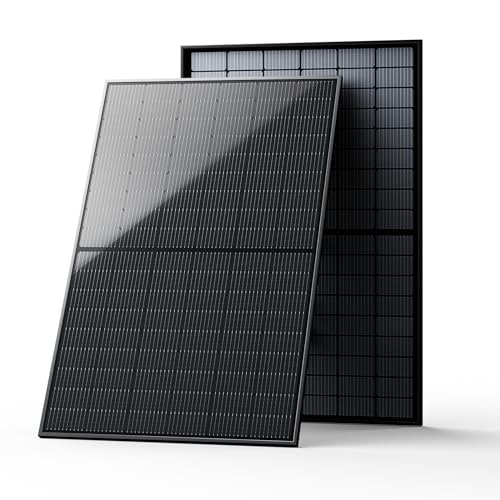
This kit uses Class A N-Type cells with PERC and 16BB design to maximize longevity and efficiency, offering up to 25% conversion efficiency and rear-side energy capture. The panels are engineered for durability with IP68 junction boxes and robust waterproofing, plus high wind and snow tolerances. Best for larger RV setups or off-grid cabins needing modular 2×400W capability.
Best for: scalable off-grid projects requiring steady, long-term output with strong weather resistance. Caution: bulkier footprint than smaller panels; consider mounting space and system balance beforehand.
SUNGOLDPOWER 590W Bifacial Panel (6×590W)

Designed for high-density power output, this bifacial model leverages N-Type 16BB cells with efficiency up to 22.8%. Front and rear-side capture can yield up to 30% more energy, which is particularly beneficial for rooftop or ground-mounted setups with reflective surfaces. Best for large installations and those prioritizing maximum output per square foot.
Best for: high-output needs and larger installations where space is available. Caution: 590W per panel implies heavier arrays; ensure structural support and wiring are properly planned.
JJN Bifacial 425W Panel

JJN’s bifacial 425W panel uses N-Type 16BB cells with a rugged aluminum frame and IP65/IP68-rated components for weather resilience. It supports a wide operating range and is designed to withstand wind of up to 2400 Pa and snow loads up to 5400 Pa. Best for homes, farms, RVs, and off-grid applications seeking a balance of size and power.
Best for: durable outdoor use with strong weather resistance. Caution: not as compact as some 200–300W models; plan for appropriate mounting area.
AeternaSol Solar Panels, 200W Bifacial
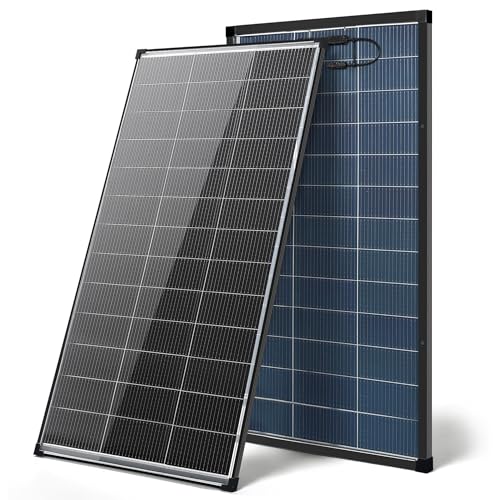
AeternaSol’s 200W bifacial panel uses 18BB busbars and A+ grade N-Type cells to deliver up to 25% efficiency. The IP68-rated junction box protects the wiring, improving longevity in challenging environments. Best for off-grid RVs, boats, and compact rooftop installations where space is limited.
Best for: compact, weather-resistant setups with reliable efficiency. Caution: 200W per panel means more panels may be needed to reach higher system targets.
Buying Guide: Key Considerations For Bifacial Panels
- Power density and space: Larger outputs like 590W panels offer more kilowatt-hours per install but require robust mounting areas. For tight spaces, consider 200–425W panels with higher efficiency per footprint.
- Backside gain potential: Bifacial gains depend on surface reflectivity and mounting angle. Look for panels advertising rear-side energy capture up to 30% and plan reflective surroundings (snow, gravel, white roofs) accordingly.
- Cell technology: N-Type 16BB cells typically reduce light-induced degradation and hot spots versus traditional P-type or older busbar designs. This improves long-term reliability and efficiency.
- Durability and weather resistance: Panels with IP68 or IP65 ratings, robust frames, and high wind/snow tolerance are preferable for RVs, boats, and off-grid installations exposed to the elements.
- Installation context: For RVs or small boats, weight, dimensions, and mounting hardware compatibility matter. For fixed installations, consider space, shade patterns, and mounting angle.
- System integration: Ensure the chosen panels match your inverter/controller voltage (12V, 24V, 48V systems) and any existing battery storage configuration.
Frequently Asked Questions
- What is bifacial solar power? It captures light from both the front and back of the panel, increasing potential energy generation depending on mounting and surface reflectivity.
- Do bifacial panels work well in low light? They can, especially with good rear-side light collection, but performance still relies on direct sun and reflective surfaces.
- Are N-Type cells better than P-Type? Generally, N-Type cells offer higher efficiency and better resistance to degradation over time, which can improve long-term output.
- Is more wattage per panel always better? Higher wattage panels save space but may require stronger mounting and wiring; balance with total system design and budget.
- How do I choose for RV or marine use? Prioritize weather resistance, weight, compact dimensions, and compatibility with your battery system and charge controller.
- What maintenance is required? Regular inspection for corrosion, dirt, and secure mounting; ensure junction boxes and connectors remain watertight.