Power outages disrupt daily life, especially when a refrigerator is involved. A battery powered generator can keep perishable food safe and sustain essential devices during emergencies. This article reviews five top portable power stations with LiFePO4 chemistry and robust output, focusing on refrigerator-friendly performance, recharge speed, and versatility for home backup, camping, and RV use.
Summary of chosen products:
| Product | Brand | Battery | Output (W) | Approx. Capacity | Key Strength |
|---|---|---|---|---|---|
| Anker SOLIX C1000 Gen 2 | Anker | LiFePO4 | 2,000W (3,000W peak) | ~1,024Wh | UltraFast recharge, compact and portable |
| EF ECOFLOW Delta 2 | EF ECOFLOW | LiFePO4 | 1,800W | ~1,024Wh | 7x faster charging, expandable |
| ABOK Portable Power Station | ABOK | LiFePO4 | 3,600W | ~3,840Wh | High capacity and multiple outputs |
| Anker SOLIX F2000 | Anker | LiFePO4 | 2,400W | ~2,000Wh | Long lifespan, high surge capacity |
| Jackery Explorer 1000 v2 | Jackery | LiFePO4 | 1,500W | ~1,070Wh | Fast charging, durable design |
Anker SOLIX C1000 Gen 2 Portable Power Station

The Anker SOLIX C1000 Gen 2 combines a 1,024Wh LiFePO4 battery with a 2,000W continuous output and a 3,000W surge capacity. It supports UltraFast recharging, allowing full recharge in under an hour when using the HyperFlash feature and AC input. This model is designed for home backup, camping, and RV use, delivering reliable power to essentials like a refrigerator, lights, and small appliances. It is notably more compact and lighter than many rivals, aiding mobility within the home or on trips.
Key considerations for refrigerators include stable 60 Hz power delivery, the ability to power a fridge during an outage, and the capacity to sustain cooling for several hours. The SOLIX C1000 Gen 2’s LiFePO4 chemistry offers extended cycle life and improved thermal stability, which helps during repeated outages or long-term off-grid periods. If you need to power multiple devices, its 10-port design provides flexibility for fans, routers, and devices alongside the fridge.
Ideal use scenarios: power outages at home, tailgating, and weekend camping where a compact, reliable energy source is beneficial. Battery monitoring via the Anker app adds convenience for planning backup runtimes and scheduling recharges during non-critical times.
EF ECOFLOW Delta 2 Portable Power Station

The Delta 2 offers 1,024Wh LiFePO4 storage with 1,800W AC output. It emphasizes rapid charging, with 0–80% in about 50 minutes, and 0–100% in roughly 80 minutes via AC input, making it well-suited for quick restocks after outages. The capacity is expandable with additional batteries, enabling higher total energy for longer outages or multiple devices, which helps maintain a refrigerator’s cold chain for extended periods.
For refrigerators, the 1,800W continuous output can handle typical fridge loads and freezer features, while the 15-port ecosystem makes it easy to run a small farm of essential devices during a blackout. The LiFePO4 chemistry provides a long lifespan and better thermal performance compared to some older chemistries, reducing degradation with frequent cycling. Solar charging is optional, offering flexibility for off-grid living or remote campsites.
Consider this option if you want strong, reliable power with fast recharging and expandable capacity to cover longer outages or multiple appliances beyond a fridge.
ABOK Portable Power Station 3840Wh

The ABOK unit offers a substantial 3,840Wh LiFePO4 battery, expandable up to 11,520Wh, with a 3,600W rated output and a 4,500W peak. This level of capacity supports lengthy outages and can power a refrigerator for extended periods, plus other high-draw appliances. It features multiple charging options, including AC, PV solar, and car charging, along with 15 output ports to run a wide array of devices simultaneously.
The LiFePO4 chemistry provides thousands of cycles and a long system life, addressing durability concerns for frequent outages or off-grid lifestyles. Fast AC charging and the flexibility to add solar or EV charging methods make it a compelling choice for households seeking a robust, long-term power solution for refrigeration and beyond.
Best for households that anticipate longer outages or need to run several devices at once, including a fridge, a small workshop, and off-grid living requirements.
Anker SOLIX F2000 Portable Power Station
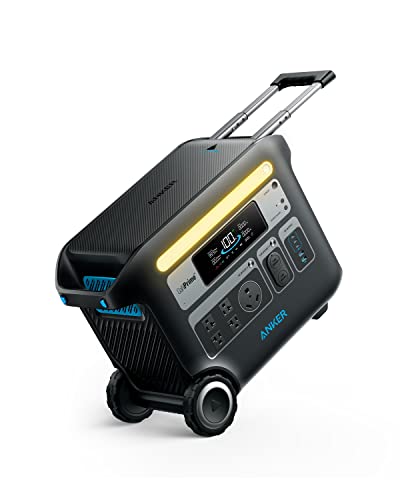
The SOLIX F2000 (PowerHouse 767 series) delivers 2,400W continuous output with a surge capacity suitable for running power-hungry devices alongside a refrigerator during an outage. It uses LiFePO4 chemistry delivering stability and a rated lifespan designed to exceed a decade with proper care. The unit supports charging from multiple sources and has a broad set of ports to support emergency needs beyond just a fridge, including RV appliances and outdoor gear.
Consider this model if you want to power a fridge and multiple devices with a compact, user-friendly interface. SurgePad technology helps manage high-startups from devices like freezers or pumps, reducing the risk of tripping the unit during cycling loads. Its longevity and multiport versatility can make it a staple for emergency kits or off-grid living setups.
Jackery Explorer 1000 v2 Portable Power Station

The Jackery Explorer 1000 v2 features a 1,070Wh LiFePO4 battery with 1,500W continuous output and a 3,000W surge, enabling fridge operation and several other appliances during outages. A notable feature is the one-hour fast charging capability with emergency charging activated via app controls, making it convenient to top up quickly when a window of power becomes available. The design emphasizes portability and durability, with a lightweight build and integrated handle for easy transport.
For refrigerators in outage scenarios, the Explorer 1000 v2 provides a reliable balance of capacity and weight. Its long lifespan of LiFePO4 cells reduces capacity fade over time, while the modular approach (with optional solar panels) allows for sustainable energy in off-grid locations. Ideal for campers, homeowners seeking a dependable backup, and emergency preparedness kits.
Buying Guide: Key Purchase Considerations And Comparisons
- Battery Chemistry and Lifespan: LiFePO4 is favored for longer cycle life and thermal stability. Look for a unit rated for thousands of charge-discharge cycles and a long-term warranty.
- Capacity vs. Load: For a refrigerator, consider both the energy capacity (Wh) and continuous power rating (W). A fridge typically draws between 100–300W when running, but startup surges can be higher. A higher surge rating helps prevent tripping during compressor starts.
- Output Ports and Compatibility: Ensure sufficient AC outlets and USB/DC ports for essential devices. Some units offer dedicated RV or smart outlets to support multiple appliances simultaneously.
- Recharge Speed and Flexibility: UltraFast charging and multiple recharge options (AC, solar, car) reduce downtime between outages. Solar compatibility enhances off-grid resilience.
- Portability and Weight: If you intend to move the unit between rooms or take it on trips, weight and form factor matter. LiFePO4 models tend to be heavier but offer longer life and stability.
- Temperature Range and Environment: Operating temperature can affect battery efficiency. Check the recommended ambient range to ensure performance in varying weather conditions.
- Expandability: Some models support additional batteries to scale capacity for longer outages or larger households. Evaluate whether expansion aligns with your backup goals.
- Safety Features: Look for automatic shutdown protections, UPS-mode options for sensitive electronics, and battery management systems that prevent overcharging or overheating.
- Cost of Ownership: Consider upfront price, cycle life, warranty length, and the likelihood of needing future battery replacements. A higher initial cost with longer life may be more economical over time.
- Use Case Fit: If your primary need is a fridge during outages, prioritize higher surge capacity and reliable runtime with periodic recharging. If you plan to power more devices, a larger capacity and multiple charging methods become more important.
In sum, the five reviewed battery powered generators offer a spectrum of capacities, outputs, and recharge options. For refrigerators and household backup, the choice typically hinges on whether you prioritize fastest recharging, highest continuous output, or the ability to scale capacity through expansion. Each option presents a viable path to maintaining food safety, comfort, and essential operation during power disruptions.