Looking for a compact battery power charger station to keep devices charged during outages, camping, or travel? These portable power stations offer built-in outlets, USB ports, and LiFePO4 or other battery chemistries for safer, longer-lasting power. This guide highlights five top options, who they’re best for, and practical buying tips.
Summary of selected products:
- DARAN Portable Power Station 89.6Wh LiFePO4 – Ultralight, fast charging, ideal for backpack-friendly power with multiple outputs.
- MARBERO Portable Power Station 88Wh – Very compact with eight outputs, great for outdoor adventures and quick charging.
- Jackery Explorer 300 – 292Wh, strong build and multiple ports, best for weekend camping and light CPAP backup.
- Apowking Portable Power Station 300W – 220Wh, seven outputs, versatile for home, car, and outdoor use.
- DaranEner Portable Power Station – 192Wh, LiFePO4 with strong cycle life and flexible charging options.
DARAN Portable Power Station 89.6Wh

The DARAN unit uses a 89.6Wh LiFePO4 battery with 100W continuous output and 200W peak for short surges. It offers two AC sockets, dual USB-C, USB-A, and DC outputs, plus a clear LED display to monitor status and remaining power. Its compact size (about the size of a smartphone) and light weight make it suitable for backpackers and travelers who need dependable, portable power. Best for: light outdoor use, small electronics, and emergency home power during outages.
Best use case and rationale: This model excels where ultra-portable power is required, and a compact form factor matters more than extended runtime. Consider this if you carry a laptop, phone, and small devices on day trips or short camping excursions. Caution: solar panel and cable not included, and initial conditioning (two full cycles) is recommended for optimal performance.
MARBERO Portable Power Station 88Wh
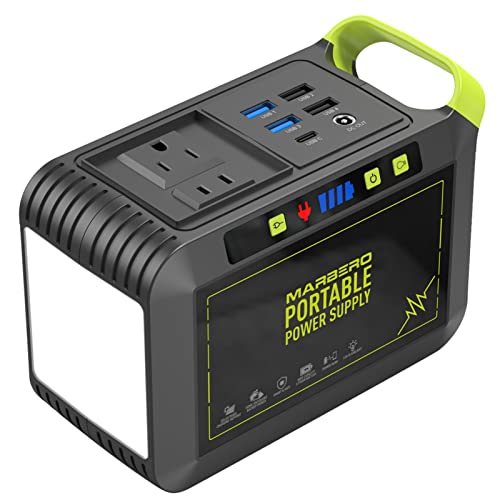
MARBERO’s 88Wh compact station focuses on efficient charging with an 8-output configuration and a built-in BMS for safety. It can be charged quickly (0–80% in about 2 hours via the included adapter) and supports solar panel charging as an option. Best for: quick outdoor charging, light campsite use, and as a travel backup for phones, tablets, and small appliances.
Best use case and rationale: Choose this if you want multiple outputs in a very small footprint and reliable charging speed. Limitation: power capacity is lower than larger models, so plan for essential devices only and moderate load during outages.
Jackery Portable Power Station Explorer 300

The Explorer 300 delivers 292Wh capacity with LiFePO4 chemistry, offering two AC outlets, a 100W USB-C PD port, two USB-A ports, and a 120W car port. It weighs about 7.5 pounds and includes a sturdy handle for portability. Best for: weekend camping, travel, and as a reliable off-grid power source for laptops and cameras. It’s built for durability and long life, with thousands of cycles typical for LiFePO4 systems.
Best use case and rationale: Opt for this when you need robust, durable off-grid power for longer trips and multiple devices. Caution: higher weight relative to ultra-compact models; not ideal if you prioritize pocket-sized form factors.
Apowking Portable Power Station 300W
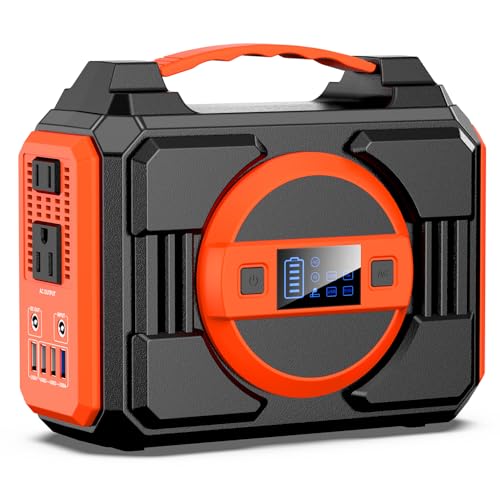
Apowking’s 300W unit packs a 220Wh battery and seven outputs, including two 110V AC outlets (pure sine wave), multiple USB ports, and a DC car port. It supports solar charging as an optional input and provides real-time energy level indicators. Best for: home backup, RVs, camping, and emergency outages where multiple devices require simultaneous charging. Limitation: while 300W is adequate for many devices, high-startup appliances may exceed capacity.
Best use case and rationale: Choose this when you need a versatile power station that can run several devices at once, including some home appliances. Avoid this if you require larger appliances or heavy loads during prolonged outages.
DaranEner Portable Power Station 192Wh

The DaranEner model uses LiFePO4 chemistry with 192Wh capacity and 300W output (600W peak). It includes two AC outlets, USB-C PD 60W, and other USB ports. It emphasizes long cycle life and safety through advanced BMS, making it suitable for camping, outdoor activities, and home backup. Best for: users who want longer battery life and solid surge handling for small to mid-sized loads. Caution: not ideal for very high-power appliances like air conditioners or devices with high startup surges.
Best use case and rationale: This unit is a solid middle-ground option for longer lifespan and dependable power for everyday devices. Choose this if LiFePO4 longevity and safety are priorities, while staying within a moderate power envelope.
Buying Guide: Key Purchase Considerations
- What battery chemistry matters: LiFePO4 offers longer life and better safety vs. standard lithium-ion, but may add weight and cost. Consider cycles, safety, and charge efficiency for your needs.
- Power needs and output: Estimate the total wattage of devices you plan to run simultaneously. Pick a unit with a continuous wattage above that total and peak surge above any startup spikes.
- Port selection: Ensure the station has your required outlets (AC, USB-C PD, USB-A, DC car port). If you rely on laptops or fast-charging devices, prioritize USB-C PD and multiple USB ports.
- Charging options and speed: Look for devices with multiple charging methods (AC, car, solar). MPPT or fast-charge tech can shorten charging times, especially off-grid.
- Portability vs. capacity: Smaller forms are easier to carry but offer less runtime. Balance weight, size, and runtime for your use case.
- Safety features: A robust BMS, overcharge protection, short-circuit protection, and temperature management improve reliability, especially in outdoor settings.
Frequently Asked Questions
- How many devices can a portable power station charge at once? This depends on the wattage of your devices and the station’s continuous output. Check the total combined wattage against the device list.
- Can these power stations charge while in use? Many support pass-through charging, allowing charging and discharging simultaneously, but check the specific model’s guidelines to avoid stress on the battery.
- Are LiFePO4 batteries safer for outdoor use? Yes, LiFePO4 chemistry is generally more stable at higher temperatures and offers longer cycle life, making it a common choice for outdoor power stations.
- Do these units run essential home devices during outages? Smaller units power essentials like phones, tablets, small fans, and lights. Larger models can run laptops, CPAP machines, and small TVs, depending on wattage.
- Can I use solar panels to recharge these stations? Several models support solar charging as an option. Verify panel compatibility, input voltage, and maximum input wattage for optimal charging.
- What is the typical lifespan of these batteries? LiFePO4 systems often offer thousands of cycles; exact life depends on usage, maintenance, and charging practices.