Answering the need for reliable home backup power, these batteries and portable power stations are selected for different use cases—from home backup during outages to off-grid living and camping. Best for whole-home backup is the high-capacity units; best for portability are lighter models; best for rapid charging use fast-charge capable options. The table below compares five top choices to help you pick the right fit for your home and lifestyle.
| Product | Capacity | Best For | Notable Benefit |
|---|---|---|---|
| Jackery Explorer 1000 v2 | 1070Wh | Medium-to-large home backup, off-grid | 1-hour fast charge, long lifespan |
| LIBRIDS C600 | 640Wh | Backup for small essentials | 10 ms UPS, compact for travel |
| Jackery Solar Generator 1000 v2 + 200W Panel | 1070Wh | Off-grid living, RVs | Flexible solar charging options |
| EF ECOFLOW Delta 3 Classic | 1024Wh | Home backup with high surge | Ultra-fast charging, <10ms UPS |
| Jackery Explorer 2000 v2 | 2042Wh | Large home backup | High AC output, fast USB-C PD |
Jackery Explorer 1000 v2 Portable Power Station

Capacity: 1,070Wh with a LiFePO4 battery and a compact 23.8 lb frame. The 1,500W continuous AC output (3,000W surge) supports appliances like fridges and air conditioners. The foldable handle improves portability for camping or power outages. Best for mid-sized households needing reliable surge power and mobility.
Best for: Home backup on a budget, RVs, and off-grid living where portability matters. The unit supports emergency charging via the Jackery App, claiming a one-hour full-charge capability under emergency charging mode. Limitations: actual full charge times vary with input method; read the app guidance for optimal health.
LIBRIDS Portable Power Station C600

Capacity: 640Wh with a peak 1,200W, 1.5-hour full charge. It includes a 10 ms UPS switch to keep essential devices running during outages, making it suitable for routers, CPAP machines, and other critical gear. Best for: Small homes or camping setups where quick UPS transition plus portable power matter.
Consideration: May not sustain high-wurst loads for extended periods; plan for higher-watt appliances accordingly. The data supports safe brief use for common devices but not for heavy-duty appliances for long durations.
Jackery Solar Generator 1000 v2 + 200W Solar Panel

Capacity: 1,070Wh, 1,500W continuous output with 3,000W surge. This kit emphasizes flexibility with solar charging and multiple charging pathways. It’s a solid choice for off-grid living, camping, or emergency prep where solar input is a major advantage. Best for: Homes in sunny climates or mobile setups where solar recharging is convenient.
Limitation: Solar charging speed depends on panel size and sun conditions; in cloudy environments, charging may be slower than outcome expectations. Use the 600W alternator option if available to boost charge times when driving.
EF ECOFLOW Delta 3 Classic
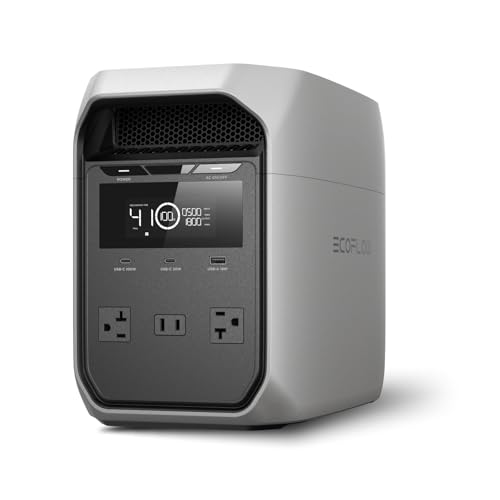
Capacity: 1,024Wh LiFePO4 with 1,800W AC output (3,600W surge). X-Boost expands capacity for heavier loads up to 2,600W. It features Ultra-Fast charging: 0–80% in 45 minutes with X-Stream AC charging and <10ms UPS to protect sensitive electronics. Best for: Home backup where fast recharge and resilient power are priorities.
Limitation: While powerful, the Delta 3 Classic is larger than some compact options; ensure space and weight considerations fit your installation goals. UPS response time is an advantage for electronics during outages.
Jackery Explorer 2000 v2 Portable Power Station

Capacity: 2,042Wh with a total 2,200W AC output. Weighing 39.5 lbs, it balances high capacity with a comparatively lightweight design for a 2 kWh unit. USB-C PD 100W supports fast charging of devices. Best for: Large homes, small businesses, or extended outages where sustained power is needed.
Consideration: Heavier than smaller models; plan for storage and handling. The unit’s high capacity helps reduce the need for frequent recharges but requires efficient space planning in a home setting.
Buying Guide: Key Purchase Considerations
- Power needs: Assess peak loads and surge requirements. Choose a unit with a higher peak/surge capacity if you run appliances like refrigerators or pumps.
- Battery chemistry and longevity: LiFePO4 offers longer cycle life and better thermal stability for home backup. Consider units advertising 3,000+ cycles for longer-term use.
- Charging options: Look for fast charging (AC, car, or solar) and fast solar input if you rely on solar power. For off-grid living, compatibility with solar panels is essential.
- Portability vs. capacity: Higher capacity generally means heavier units. Match weight and size to your installation constraints and transport needs.
- UPS and safety features: 10 ms or faster UPS protects sensitive electronics. Ensure proper protection against overcharge, overheating, and short circuits.
- Environment and use case: For camping, portability dominates; for home backup, capacity and reliability take precedence.
FAQ
What is LiFePO4, and why is it important for home backup?
LiFePO4 offers longer cycle life, better thermal stability, and safer chemistry than many other Li-ion chemistries, making it well-suited for frequent charging and discharging in home backup scenarios.
How do I determine the right capacity for my home?
Estimate total watt-hours needed by listing critical devices and their running watts, then multiply by expected outage duration. Choose a unit with more capacity than the sum to cover inefficiencies.
Is UPS essential for home backup?
UPS (uninterruptible power supply) helps prevent outages during brief power interruptions, protecting electronics and maintaining essential operations.
Can solar panels charge these power stations?
Yes, many models support solar charging. Check input limits (watts) and compatibility with your panels to determine charging times in your environment.
What should I consider about weight and placement?
Heavier systems may require dedicated shelving or flooring; ensure proper ventilation and avoid placing near heat sources or water.