When a power outage hits, you need reliable battery backup to keep essential devices running and to allow safe shutdowns. This guide highlights five solid options for different setups, from compact routers to full home offices. It’s ideal for small office workers, remote workers, gamers, and IT-conscious households seeking uninterrupted power during outages while protecting equipment from surges.
| Product | Best For | Key Benefit |
|---|---|---|
| APC BE600M1 | Basic home office and router setups | Compact, economical backup with surge protection |
| CyberPower CP1500PFCLCD | Mid‑range PCs and peripherals | Sinewave output with LCD panel and multiple outlets |
| APC BX1500M | Home offices with multiple devices | High capacity with ten protected outlets |
| CyberPower CP1500AVRLCD3 | Power users needing clear status | Intelligent LCD, AVR, and robust protection |
| CyberPower EC850LCD | Compact setups with many outlets | Eco mode and many total outlets |
APC UPS 600VA/330W BE600M1
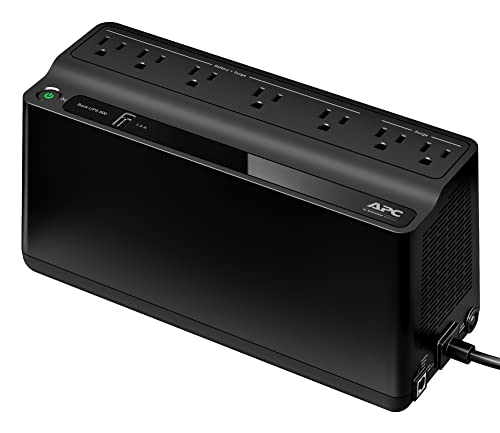
Best for basic needs where internet stays online and a safe shutdown is key during outages. This unit provides battery backup for essential devices and surge protection across multiple outlets. It is well suited for a single computer, a router, and a NAS or external drives in small home offices or dorm rooms. The BE600M1’s 23 minutes of runtime at higher loads helps maintain connectivity during brief outages and supports a safe shutdown sequence when power fails.
Who it’s best for: individuals with a small desktop setup plus networking gear who want reliable, compact protection without breaking the bank.
Limitations: Runtime is modest at higher loads; not designed for power-hungry gaming rigs or large home theater systems.
CyberPower ST425 Standby UPS

Best for smaller home offices or media centers needing eight outlets with a mix of battery backup and surge protection. The ST425 provides four battery-backed outlets and four surge-only outlets to keep essential devices running while protecting others from surges. It uses a simulated sine wave output, which is adequate for smaller electronics and standard PCs.
Who it’s best for: users with a compact desk setup and several peripherals that require intermittent power during outages. Caution: not ideal for high‑demand workstations.
CyberPower CP1500PFCLCD PFC Sinewave UPS

Best for power users who rely on active PFC (Power Factor Corrected) power supplies and require robust runtime. This 1500VA/1000W unit supports computers, workstations, network devices, and telecom gear with twelve outlets, including six battery backup sockets. A color LCD panel provides immediate, detailed information about battery and power conditions, helping users anticipate issues before downtime occurs.
Who it’s best for: professionals with mid‑to‑high power systems seeking clear status indicators and strong protection. Limitation: higher upfront cost and larger footprint than smaller UPS models.
APC Back-UPS 425VA BE425M

Best for small routers, modems, and basic home office electronics. The BE425M provides up to 15 minutes of runtime for a typical 100W load and offers six outlets with a mix of battery backup and surge protection. It also includes surge protection on remaining outlets to safeguard connected devices from spikes.
Who it’s best for: users with essential small devices needing reliable backup during short outages. Caution: not designed for power-intensive devices like desktop PCs for extended periods.
APC UPS 1500VA BX1500M

Best for home offices and small workstations that require more capacity and extended runtimes. The BX1500M offers up to 68 minutes of backup at 100W and ten protected outlets (five battery backup + five surge-only). It also includes built‑in protection for coaxial and Ethernet lines, helping shield connected devices from external surges.
Who it’s best for: users with multiple critical devices—computers, network gear, NAS, and home surveillance—that need dependable uptime and comprehensive outlet protection. Limitation: larger footprint than ultra-compact units.
CyberPower EC850LCD Ecologic UPS

Best for balanced setups that want energy efficiency and mid‑range capacity. The EC850LCD provides a total of twelve outlets (six battery backup and surge protected, six surge protected). It includes ECO mode to reduce energy consumption when devices are idle and a multifunction LCD panel for easy monitoring of battery and power conditions.
Who it’s best for: users seeking an energy-conscious UPS with plenty of outlets for a mid‑sized home office. Caution: ECO mode requires compatible devices to maximize energy savings and may have limited benefit with non‑synchronized loads.
Buying Guide: Key Purchase Considerations
- Power capacity and runtime: Match VA/W ratings to your total equipment load. Consider future needs and whether you’d rather prioritize longer runtime or more outlets.
- outlets and layout: Assess how many battery-backed outlets you need and ensure there are enough surge‑protected outlets for non-critical gear.
- Output waveform: For active PFC and modern desktops, sinewave or simulated sinewave outputs can improve compatibility and performance.
- LCD status and monitoring: A color LCD panel helps monitor battery health, load, and potential faults. This is valuable for proactive maintenance.
- Surge protection and connectivity: Look for protection on data lines (Ethernet, coaxial) when available to guard against surges through networks.
- Size, noise, and installation: Consider where the UPS will sit and whether its size and fan noise fit your workspace.
- Energy efficiency: ECO mode and energy-saving features can reduce electricity use over time, especially with idle devices.
- Protection features: Automatic shutoff, surge protection, and protection against power spikes help preserve connected equipment.
Frequently Asked Questions
- What is a UPS and why do I need one? A UPS provides battery backup during outages to keep essential devices running and allow safe shutdowns, protecting equipment from data loss and corruption.
- How long will a UPS power my computer? Runtime depends on the unit’s VA/W rating and the load. Higher wattage devices reduce runtime; lighter loads extend it.
- Should I buy a sinewave UPS or a simulated sinewave UPS? Sinewave UPS units are generally better for active PFC power supplies and sensitive electronics, while simulated sinewave can be adequate for basic setups.
- How many outlets should I need? Count all devices that require backup power and surge protection. Add a few extra outlets for future needs to avoid crowding.
- Is an LCD display important? An LCD panel helps monitor battery health and power status, which can prevent downtime by enabling proactive maintenance.
- Do UPS units protect network devices? Many models include surge protection for Ethernet, coaxial, or network lines, which helps guard networking gear from external surges.