Answer: If you need reliable power during outages to protect aquarium life and equipment, choose a backup that can keep aeration and essential devices running. The top options include compact desk UPS units for routers and PCs, versatile high-capacity UPS systems, and dedicated battery-backed air pumps for aquariums. This guide helps you compare options and pick the right one for your tank size, critters, and setup. It focuses on devices that can support aeration, filtration, and essential electronics during outages.
The following table offers a quick glance at the five selected products, their best-use scenario, approximate runtime notes, and what they’re best for in an aquarium setup. This overview is designed to help you decide which model to consider first based on your tank size and needs.
| Product | |||
|---|---|---|---|
| APC BE600M1 UPS | Small to mid-size tanks with essential electronics | Short-term backup for basic devices | Compact, 5 battery-backed outlets plus surge protection |
| CyberPower CP1500PFCLCD | Medium to larger setups with multiple devices | Longer backup for PCs/routers and pumps | 12 outlets with split battery/surge protection and LCD panel |
| CyberPower ST425 | Small tanks needing backup for essential gear | Moderate runtime for basic devices | Compact standby UPS with transformer-spaced outlets |
| hygger Battery Backup Aquarium Air Pump | Direct aquarium aeration during outages | Up to ~20 hours continuous oxygen at max flow | Automatic AC/DC switching with built-in lithium battery |
| fishkeeper Battery Powered Aquarium Air Pump | Emergency aeration for 5–125 gallon tanks | Extended uptime via rechargeable lithium battery | USB rechargeable and portable for outdoor or backup use |
APC BE600M1 Battery Backup Power Station
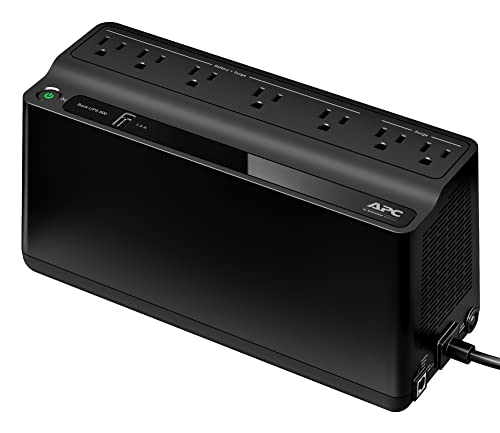
Best for: Small to mid-size aquariums with essential electronics such as a heater, filter, and air pump, plus a router or computer nearby. The BE600M1 provides five battery-backed outlets and two surge-only outlets to protect vital gear during outages. It supports moderate runtime to perform safe shutdowns or maintain minimal operations during brief power interruptions. Caution: It is designed for lighter loads; avoid connecting high-power devices that exceed the regulator’s battery capacity.
CyberPower CP1500PFCLCD PFC Sinewave UPS

Best for: Mid-size ecosystems with multiple devices requiring longer backup, including computers, routers, and aquarium equipment. It features 12 outlets with six battery-backed and six surge-protected, plus USB-C and USB-A ports for charging. The color LCD panel helps monitor battery and power conditions. Choose this if you need robust runtime and clear visibility of system status. Limitation: Higher price and footprint than smaller units, so plan room accordingly.
CyberPower ST425 Standby UPS

Best for: Small tanks or setups with essential devices where quiet operation and reliable standby backup are important. This compact unit provides eight outlets with four battery-backed and four surge-protected, plus a simple LED status indicator. It’s a practical choice for space-constrained aquariums or desks. Limitation: Lower overall backup capacity compared to larger units; not ideal for high-wattage devices for extended periods.
hygger Battery Backup Aquarium Air Pump

Best for: Aquariums that require reliable oxygenation during outages, especially larger tanks or situations prone to power instability. This dual-outlet unit includes a built-in 5000mAh battery (two batteries) yielding around 20 hours of continuous airflow at maximum settings. It automatically switches from AC to DC, ensuring continuous aeration. Caution: Battery capacity may vary with airflow level; higher flow reduces runtime.
fishkeeper Battery Powered Aquarium Air Pump

Best for: Portable backup for emergency aeration in 5–125 gallon tanks. The device is USB rechargeable and designed for outdoor or backup use, ensuring oxygen supply during power outages when main power is unavailable. It provides a reliable option for temporary, mobile setups or when a larger UPS isn’t feasible. Limitation: USB-recharge mode may limit runtime compared with larger systems; practical for short outages or supplemental aeration.
Buying Guide: Key Considerations For Aquarium Backups
- Tank size and equipment load: Larger tanks with multiple devices (heater, filter, air pump, lights) require higher-capacity UPS units or dedicated air pumps with longer runtimes.
- Critical gear prioritized: Decide which devices must stay on during an outage. Aeration is often most critical to prevent oxygen dips, while lights can be deprioritized temporarily.
- Run time expectations: For aquarium use, longer backup for air pumps is often more valuable than extended computer uptime. Look for lithium-based battery technology for longer life and faster recharge.
- Power quality: If you have devices sensitive to power irregularities, a sinewave UPS (not a simulated sine wave) offers cleaner power to minimize stress on electronics.
- Maintenance and battery life: Lithium-based UPS units generally offer longer lifespans and more charge cycles than traditional lead-acid options. Consider replacement battery availability and total cost of ownership.
- Physical space and noise: Some units are compact but may generate noticeable fan noise during heavy use. Consider placement away from the aquarium viewing area if noise is a concern.
- Portability: For small tanks, portable battery-powered air pumps provide flexible backup options without electrical outlets nearby.
Frequently Asked Questions
- What size UPS should I buy for a typical home aquarium?
Answer: For basic setups with a heater, filter, and air pump, a small to mid-size UPS (like 600–1500 VA) is common. For larger tanks, consider a higher-capacity unit or dedicated air pumps with battery backup. - Is it better to backup aeration or the heater first?
Answer: Aeration is typically prioritized to prevent oxygen depletion. If you must choose, maintain aeration while trying to keep at least one heater functional to prevent rapid temperature shifts. - Do all UPS units support aquarium hardware?
Answer: Most UPS units support common aquarium equipment, but check outlet configuration and wattage. Some devices are optimized for computers and networking gear, not continuous heavy loads like heaters. - Can lithium-based UPS batteries last longer in an aquarium environment?
Answer: Yes, lithium-based backups generally offer longer life and more charge cycles, delivering more reliable performance over time with proper ventilation. - How should I test backup performance?
Answer: Periodically simulate a power outage by unplugging the unit (with permission and safety in mind) to verify aeration remains active and critical gear stays powered for the expected duration. - Are there safety considerations when using a UPS near water?
Answer: Ensure devices and cables are kept dry and away from splashes. Use only equipment rated for indoor use and follow manufacturer guidelines for placement and ventilation.