Finding reliable backup power is essential for home protection, outdoor adventures, and emergency readiness. This guide highlights five top generators suited for American homes and off-grid destinations. Each picks up where others fall short, offering a mix of dual-fuel capability, portable convenience, and inverter reliability to keep clocks, electronics, and lights on when the grid goes dark.
Summary of selected products
| Product | Brand | Key Feature |
|---|---|---|
| DF1100T | WEN Store | Dual fuel (gas/propane) with electric start |
| Explorer 300 | Jackery Store | Lightweight lithium battery with multiple ports |
| A-iPower 4600W | A-iPower Store | Compact inverter with CO sensor |
| 12500 Watt | Westinghouse Store | Remote start; transfer switch readiness |
| Power Equipment 4400 | Oxseryn Store | High-output inverter with multiple outlets |
WEN 11,000-Watt Dual Fuel Generator

The WEN DF1100T combines dual-fuel versatility with a substantial power output suitable for larger homes and job sites. It switches between gasoline and propane with a simple dial, delivering 11,000 surge watts and 8,300 running watts on gasoline, or 9,500 surge and 7,500 running watts on propane. This flexibility makes it practical for transfer switches and emergency backup. An electric start powers a robust 457cc 4-stroke OHV engine, activated by a key for quick responses during outages. The dual-voltage capability spans 120V to 240V, expanding compatibility with various appliances and tools.
Because of its size and power, sound and fuel management are considerations. The generator is designed to be wheel-kit friendly for easier maneuverability, though its larger footprint fits well in backyards or garages with proper clearance. The fuel selection dial helps homeowners plan for routine use or extended outages. For safety, regular maintenance of the 4-stroke engine and proper venting is advised when using propane or gasoline indoors or in enclosed spaces. Overall, this model is a strong, flexible power backbone for serious backup needs.
Jackery Explorer 300 Portable Power Station

The Jackery Explorer 300 is a compact, lightweight backup option designed for outdoor use and light home needs. It houses a 293Wh lithium-ion battery, offering stable 300W AC output through two Pure Sine Wave outlets. The unit weighs only 7.1 pounds, facilitating easy transport to campsites, cabins, or trailers. It supports multiple recharge paths: wall outlets, car adapters, and solar (with optional panels), enabling rapid top-offs while away from power. A USB-C port (PD) and USB-A outlets help with quick device charging, making it a practical “power on the go” solution for phones, cameras, drones, and small laptops.
Recharge speed is a highlight, with an 80% fill in about two hours via wall power and a 60W USB-C input. However, the 293Wh capacity is best suited for smaller devices or shelter-level needs rather than running high-draw appliances. For users seeking silent operation, portability, and modular expansion with solar gear, this model is a strong fit. It pairs well with campers, hikers, and emergency kits that prioritize quiet, dependable power without heavy gasoline engines.
A-iPower 4600W Inverter Generator
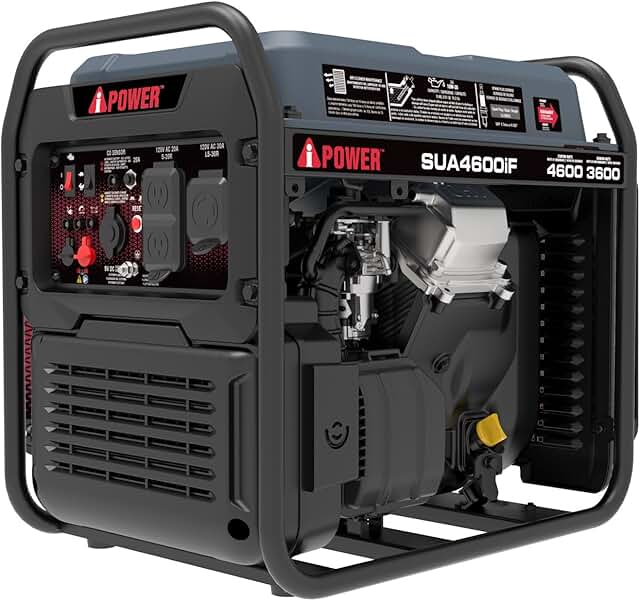
The A-iPower 4600W inverter generator emphasizes portability and clean energy. It generates 4,600 starting watts and 3,600 running watts, delivering reliable AC 120V/60Hz for RVs and home backup scenarios. At about 56 pounds, it’s designed for easy hand transport and quick setup at camp sites or tailgates. The inverter tech keeps total harmonic distortion around 3%, ensuring safer power for laptops, TVs, cameras, and other sensitive electronics. This balance of weight, stability, and performance makes it a practical choice for mobile power needs.
Users should consider fuel availability and noise levels when planning extended outages. The unit is open-frame and suitable for outdoor use with proper ventilation. While it excels in portability and clean power, the overall runtime depends on load, fuel capacity, and operating conditions. This model serves well for travelers who want dependable power without the bulk of larger generators, especially for short trips or emergency buffering for essential devices.
Westinghouse 12500 Watt Dual Fuel Generator

The Westinghouse 12500 Watt dual-fuel generator is designed for serious home backup with remote start and transfer switch readiness. It offers 12,500 peak watts and up to 9,500 running watts on gasoline, and 11,200 peak watts with 8,500 running watts on propane. The unit runs up to 12 hours on a 6.6-gallon tank, with a fuel gauge to help monitor consumption. It includes multiple outlets: GFCI 120V, a 120/240V transfer switch-ready outlet, and an RV-ready configuration. The heavy-duty 457cc Westinghouse four-stroke OHV engine features automatic low oil shutdown and a digital hour meter for maintenance tracking. Real-time VFT displays show voltage, frequency, and hours of operation.
Remote start adds convenience during outages, while the transfer switch readiness makes it a robust option for home hard-wiring. Safety features and durable construction are emphasized, with rubber outlet covers and protective housings. As a larger unit, it requires adequate space and ventilation, but it excels in long-duration outages and locations needing substantial power for appliances, heating systems, and essential electronics. It is a top pick for homeowners seeking a high-capacity, dual-fuel solution with modern monitoring features.
Power Equipment 4400 Watts Inverter Generator

The Power Equipment 4400 Watts inverter generator blends strong output with versatile connectivity. It provides 4400 peak watts and 3400 running watts, making it well-suited for RVs, camping, and home backup. The unit features multiple outputs: two 120V AC ports, one 12V DC port, and an RV port, enabling diverse power needs from lighting to appliances. It claims long runtime—up to 14 hours at 25% load with ECO mode—and includes a two-gallon fuel tank with a visible gauge. This combination supports extended use in off-grid scenarios or during weather disruptions while maintaining a compact form factor.
Considerations for this model include evaluating noise levels, fuel type, and the need for regular maintenance. Inverter technology provides cleaner power for sensitive devices, but users should confirm availability of fuel and the unit’s compatibility with local regulations. Overall, it offers a balanced mix of power, efficiency, and portability for those who prioritize a quieter, more fuel-efficient backup option without sacrificing performance.
Buying Guide: Key Purchase Considerations
- Power needs: Assess running and surge watt requirements for essential devices (refrigerators, sump pumps, lights, electronics). Choose a unit with a comfortable margin above peak loads.
- Fuel type and availability: Gasoline, propane, diesel, or battery/inverter options affect operating cost and convenience. Dual-fuel units add flexibility during fuel shortages.
- Portability vs. capacity: Portable generators excel for outdoor use and smaller homes, while larger units provide more robust backup but require space and ventilation.
- Inverter vs. conventional: Inverter generators deliver cleaner power with better efficiency, ideal for sensitive electronics and quiet operation.
- Remote start and monitoring: Features like electric start, CO sensors, fuel gauges, and digital displays improve ease of use and safety during outages.
- Safety and regulations: Check outlet configurations, GFCI protections, transfer switch compatibility, and local noise restrictions.
- Maintenance and runtime: Consider oil changes, filter maintenance, and expected runtime per tank. Heavier units may need professional service.
- Accessories and support: Wheel kits, covered outlets, and warranty terms add long-term value and reliability for frequent users.
- Environmental and space considerations: Ensure adequate ventilation, proper storage, and safe placement away from living areas and ignition sources.
In sum, selecting a backup power solution should align with your typical outage duration, location, and load profile. For homeowners facing winter weather or summer storms, a dual-fuel or inverter generator with sufficient outlets and a realistic fuel plan offers the best balance of reliability, portability, and safety.