If you’re seeking reliable backup power for solar systems, camping, or off-grid living, these five options provide practical energy without noise or fumes. This guide targets buyers who need expandable capacity, fast charging, or LiFePO4 longevity for long-term use. The top picks suit home backup, outdoor adventures, and emergency readiness, depending on your power needs and portability preferences.
| Product | Capacity | Best For | Key Benefit |
|---|---|---|---|
| EF ECOFLOW DELTA 2 | 1024Wh | Home backup, RVs | Fast charge, expandable up to 3kWh |
| Solar Charger 38800mAh (Kepswin) | 38.8Ah | Emergency charging on the go | Dual USB ports, solar & USB charging |
| MARBERO 88Wh | 88Wh | Compact camping power | Slim, portable with multiple outputs |
| Jackery Solar Generator 1000 V2 | 1070Wh | Off-grid living, RVs | 1-hour fast charging option |
| BLAVOR 10000mAh | 10,000mAh | Daily back-up for phones | Wireless charging, USB-C with solar mode |
EF ECOFLOW Delta 2 1024Wh LiFePO4 Power Station

- Brand: EF ECOFLOW
- Output: 1800W AC / 100W USB-C
- Battery: LiFePO4 (LFP); expandable capacity with additional batteries to 3kWh
- Fast charging: 0-80% in 50 minutes, 0-100% in 80 minutes with AC input
- Best for: Home backup power, camping, RVs seeking high output with quiet operation
This model is chosen for its high AC output and scalable capacity, making it strong for home backup needs and extended off-grid use. A caution: expansion requires additional compatible batteries, which increases total system cost.
Kepswin Solar Charger 38800mAh Power Bank

- Brand: Kepswin
- Capacity: 38800mAh; water-resistant and compact
- USB-C input/output; dual USB ports; LED indicators
- Best for: Emergency charging on the go, light travel, and outdoor activities
- Limitation: Solar charging is best viewed as an emergency top-up; USB charging is faster with sunlight dependent on panel efficiency
Selected for its portability and dual charging modes, this unit excels as a compact emergency power source. Choose this if portability and quick USB charging are priorities over large sustained power.
MARBERO 88Wh Portable Power Station
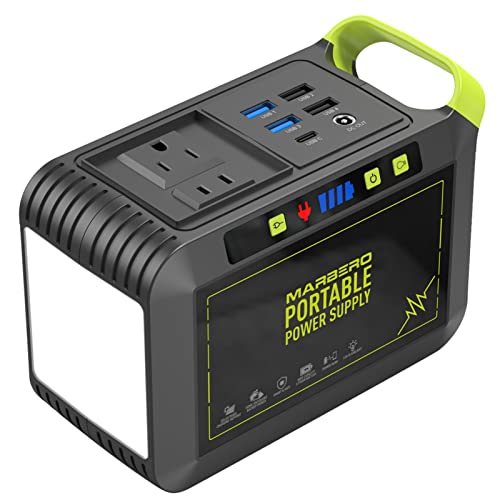
- Brand: MARBERO
- Output: 120W peak, multiple ports including 2 AC outlets
- Capacity: 88Wh; compact and lightweight
- Best for: Short outdoor trips, backup for small devices, and portable use
- Limitation: Lower energy capacity limits multi-day use for larger appliances
Selected for its slim profile and multiple outputs, this unit is a strong pick for light-duty power needs while camping or during quick outages. It is less suitable for powering high-wattage devices for extended periods.
Jackery Solar Generator 1000 V2

- Brand: Jackery
- Capacity: 1070Wh; 1500W AC output; LiFePO4 chemistry
- Charge options: 1-hour fast charging with emergency mode; solar panel optional
- Best for: Off-grid living, RV use, and emergencies where reliable, long life is required
- Limitation: Heavier than ultra-portable units; fast charging requires compatible charging setup
Chosen for robust capacity and LiFePO4 longevity, this unit suits those who prioritize endurance and broad appliance compatibility. Avoid if you need ultra-lightweight gear or if you prefer lower upfront footprint.
YELOMIN 38800mAh Solar Power Bank

- Brand: YELOMIN
- Capacity: 38800mAh; USB-C fast charging; dual USB ports
- Solar and wall charging options; rugged design
- Best for: Outdoor adventures requiring multiple device charging in a single compact unit
- Limitation: Solar charging is typically slower than USB charging; best used as a supplementary power source
YELOMIN is selected for its high capacity in a portable form and USB-C fast charging. This is ideal for travelers and hikers who want multiple device charging with solar backup when available. Consider this as a supplementary source rather than a primary power bank for high-wattage devices.
Buying Guide: Key Considerations For Solar Backup Power
- Capacity vs. usage: Estimate daily watt-hour needs. Home backup generally favors 1,000–2,000Wh, while camping may do well with 200–500Wh units.
- Chemistry: LiFePO4 offers longer cycle life and stability under heat, ideal for long-term use and heavy cycling.
- Output versatility: Ensure the unit has enough AC, USB-C, and USB-A ports for your appliances or devices.
- Charging methods: Solar input compatibility, wall charging speed, and whether fast charging is supported.
- Portability: Weight and dimensions affect transport for camping or travel.
- Expandability: Some models support additional batteries to scale capacity for larger needs.
- Safety features: BMS protection, over-discharge, short-circuit protection, and thermal management are important for durability.
FAQ
- What is LiFePO4 and why does it matter?
LiFePO4 batteries offer longer life cycles and better thermal stability, which is beneficial for frequent charging and outdoor use. - Can these power stations be charged by solar panels?
Yes, most listed models support solar charging, often via dedicated solar panels or compatible panels sold separately. - What is “fast charging” in this context?
Fast charging refers to reaching a high battery level quickly when plugged into a wall outlet or other high-amp source. - Is expansion necessary for all users?
Expansion is useful for long-term off-grid use or high-wattage needs, but not mandatory for basic camping or emergency use. - Which is best for home backup?
The Delta 2 and Jackery 1000 V2 stand out for higher capacity and robust output, suitable for powering multiple home devices during outages. - Are these devices safe for daily use?
All listed products include protection features and are designed for portable, safe operation when used according to instructions.