In today’s unpredictable energy landscape, having a dependable back up power generator is essential for homes, RVs, campsites, and emergency readiness. This guide highlights five top portable power stations that blend capacity, fast charging, and multiple output options. Each product below is designed to keep essential devices running during outages, outdoor adventures, and remote living scenarios.
Product Overview
- Jackery Explorer 300 (293Wh) — compact and lightweight with multiple outputs.
- Anker SOLIX C1000 Gen 2 — high power, fast recharge, and compact design.
- VTOMAN FlashSpeed Pro 3600 — robust capacity with quick charging and wheels.
- EF ECOFLOW Delta 2 — scalable capacity with extensive output options for home backup.
- Jackery Solar Generator 1000 v2 — strong 1070Wh capacity with fast charging and solar-ready.
The following sections present each product with essential specifications, key features, and practical usage notes to help you compare for your specific backup power needs.
Jackery Explorer 300: Lightweight 293Wh Backup Power

The Explorer 300 features a 293Wh lithium-ion battery and two Pure Sine Wave AC outlets delivering up to 300W. It weighs about 7.1 pounds, making it highly portable for camping or travel. Recharging is quick: 80% in roughly 2 hours via wall outlet and 60W PD USB-C input, with additional options including car outlets or compatible solar panels. It supports simultaneous charging and device use, enabling up to six devices to run or charge at once, including laptops, cameras, and drones.
- 2 Pure Sine Wave AC outlets for stable power
- Multiple input options: wall, car, AC adapter, or compatible solar panel
- Ports include PD USB-C, USB-A, and DC car outlet
Anker SOLIX C1000 Gen 2: High‑Power, Ultra‑Fast Recharge
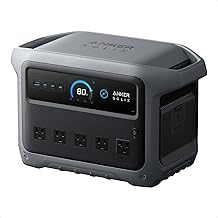
The SOLIX C1000 Gen 2 provides up to 2,000W continuous output with 1,024Wh capacity and a 3,000W surge peak. It recharges rapidly—up to 1,600W input—facilitating quick readiness for outages or trips. Port versatility supports a wide range of devices and appliances, and the unit is designed for portable use, suitable for home backup, remote work setups, or travel. The compact form makes it easier to move between rooms or into a vehicle.
- UltraFast recharging via high input (HyperFlash)
- 2,000W continuous output, 3,000W peak
- 1,024Wh capacity across multiple ports
VTOMAN FlashSpeed Pro 3600: Fast Charging and Big Capacity

This model pairs a 3600W continuous output (6000W surge) with a 3096Wh capacity and 2-hour fast charging. It’s designed for serious power needs—refrigeration, power tools, and high-draw appliances during outages or off-grid work. The unit includes wheels for easier transport and is built for extended use, whether at a campsite, on a construction site, or in a home backup scenario. The LiFePO4 battery offers longevity and reliable performance with solid protection features.
- 2-hour recharge from 0–100% (AC or solar) with fast charge capability
- High power output supports heavy appliances
- Mobility features such as wheels for easier relocation
EF ECOFLOW Delta 2: Expandable Power for Home and Outdoors

The Delta 2 offers 1024Wh of LiFePO4 capacity with a robust 1800W AC output. It features seven to ten outlets (depending on configuration) and is designed for versatile use, including home backup, camping, RV trips, and off-grid living. Its solar panel compatibility enables solar charging for extended outage readiness. The system emphasizes fast charging, safety, and capacity expansion through optional modules for longer outages or larger energy needs.
- Expandable capacity options for longer outages
- Strong 1800W continuous output and multiple ports
- Solar panel compatibility for off-grid charging
Jackery Solar Generator 1000 v2: Large Capacity with Solar Ready Power

The Solar Generator 1000 v2 combines a 1070Wh LiFePO4 battery with a 1500W continuous output (3000W surge). It supports one hour fast charging and aims to balance portability with substantial power for outdoor activities, RV use, or emergency scenarios. A foldable handle and lighter design enhance transport, while the robust battery chemistry supports long life and repeated cycles for reliable back up power.
- 1,070Wh capacity with LiFePO4 chemistry
- 1,500W continuous output; 3,000W surge
- One-hour fast charging via emergency charging modes
Buying Guide: Key Purchase Considerations for Back Up Power Generators
- Power needs and output: Assess the essential devices you want to run during an outage. Consider continuous wattage and surge requirements. If you regularly run refrigerators, sump pumps, or power tools, look for higher continuous output and robust surge capacity.
- Battery chemistry and lifespan: LiFePO4 batteries typically offer longer lifespans and greater safety than standard lithium-ion chemistries. Look for units with 3,000+ cycles at 80% capacity and protective battery management systems (BMS).
- Charge speed and input options: Fast charging can be critical in emergencies. Check maximum input wattage (AC, DC, solar) and whether the unit supports multi‑input charging to reduce downtime.
- Port selection and compatibility: Ensure the generator provides the right mix of AC outlets, USB ports (including USB-C PD), and any specific device adapters you need. Availability of car charging or solar input expands flexibility.
- Portability and form factor: Weighing considerations for travel or camping—lighter units with handles are easier to transport. Wheels and compact footprints help when moving around a home or campsite.
- Solar compatibility and expandability: If you want off-grid readiness, confirm whether the system supports solar panels and whether you can add more energy storage later to scale capacity.
- Safety and reliability: Look for certifications, over‑current protection, short‑circuit protection, and heat management. A solid product will maintain stable output under load while staying cool and safe.
- Warranty and support: A longer warranty and readily available customer support reduce risk and provide peace of mind for long-term investment.
These considerations help balance portability, capacity, and price while aligning with your specific backup power goals. For mixed use—home backup, camping, and RVing—prioritize units with high surge capability and flexible input/output options. For primary home backup, prioritize larger capacity, expandable configurations, and robust charging speeds to minimize outage downtime.