Power reliability matters for homes, small businesses, and remote setups. The right automatic transfer switch (ATS) ensures seamless switching between utility power and a backup generator without manual intervention. This guide reviews five top options compatible with residential and commercial needs, highlighting features, installation considerations, and how to choose the best ATS for your generator system.
| Product | Brand | Key Benefit |
|---|---|---|
| Automatic Transfer Switch, 100 Amp 3 Pole Auto Transfer Switch for Home Generator | Digowers | High load capacity, rugged outdoor/indoor use |
| 200 Amp Single Phase Generator Automatic Transfer Switch | RJSPHH | Service entrance rated with weatherproof enclosure |
| Transfer Switch 50 Amp, 6 Circuit Kit | Digowers | Six circuits with automatic switching and load management |
| Upgraded 100 Amp Generator Transfer Switch | phabcf | Dual power, automatic/manual modes with status indicators |
| 63A 110V Automatic/Manual Transfer Switch | MARSTEK | LED display and robust protection features |
Automatic Transfer Switch, 100 Amp 3 Pole Auto Transfer Switch

The Digowers 100 Amp 3 Pole Auto Transfer Switch is designed for 120/240-volt operation with a 24,000-watt capacity. It supports automatic switching during main power failures and offers a manual option with a clear power indicator to verify status. Built for durability, the metal enclosure withstands harsh weather, making it suitable for outdoor and indoor installations. This ATS is appropriate for a broad range of applications, including RVs and high-demand home appliances, ensuring faster transitions and reduced downtime.
200 Amp Single Phase Generator Automatic Transfer Switch

RJSPHH’s 200 Amp Single Phase Generator Automatic Transfer Switch is designed for indoor and outdoor use with service entrance rating and a NEMA 3R aluminum enclosure. It seamlessly transfers power from utility to generator, and supports intelligent control for HVAC loads, allowing reliable operation without additional hardware. The enclosure protects against wind, rain, rust, dust, sunlight, and corrosion, providing robust performance in challenging weather.
Transfer Switch 50 Amp, 6 Circuit Kit
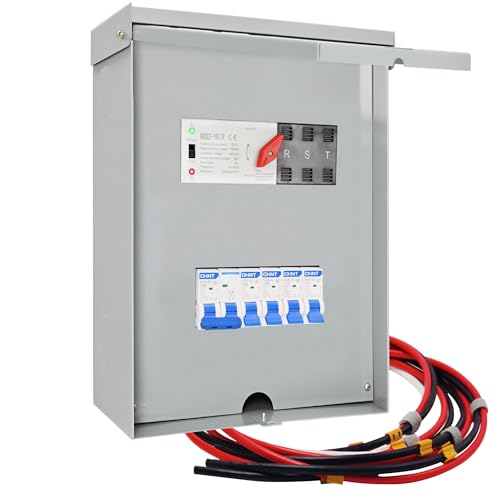
This Digowers kit features automatic transfer switching with six adjustable circuit breakers, including a mix of double-pole and single-pole breakers. When mains fail, it automatically shifts to generator power and reverts when mains return, ensuring critical loads stay powered. Its robust build uses galvanized steel with NEMA 3R/IP 55 waterproof rating, making it suitable for demanding environments and long-term reliability.
Upgraded 100 Amp Generator Transfer Switch for Home Use
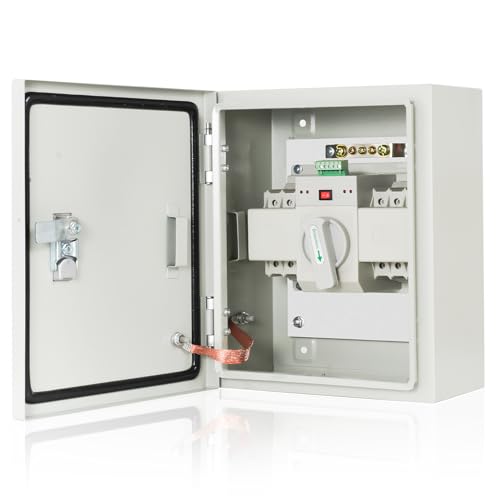
Phabcf’s 100 Amp transfer switch supports automatic and manual dual power mode for residential, commercial, or light industrial use. It includes a clear monitoring system with status indicators and one-touch reset, enabling real-time visibility of power status. The enclosure is designed for easy installation and maintenance, with a focus on safety and compliance, making it a versatile replacement option for RXSW100A3-compatible systems.
63A 110V Automatic/Manual Transfer Switch

MARSTEK’s 63A 110V transfer switch offers automatic and manual switching with microcontroller-powered automatic operation. It provides protection features like over-voltage and over-current, plus a user-friendly LED display for real-time voltage readings and system status. Pre-configured for common home and RV setups, it provides reliable transitions and easy adaptability for various backup power arrangements.
Buying Guide
- Power capacity: Match the ATS rating to your generator output and essential loads. Common residential ranges are 50–100A, with larger installations at 200A or more for whole-home backup.
- Number of circuits: Consider how many circuits you want managed. Some kits provide multiple breakers for HVAC, lighting, and appliances, while others focus on a single main transfer point.
- Enclosure rating: Outdoor installations should use NEMA 3R or equivalent weatherproof enclosures to withstand rain, dust, and temperature variations.
- Automatic vs manual mode: Automatic mode is standard for continuous backup. Manual mode is useful for testing or when you want direct control during maintenance.
- Protection features: Look for over-voltage, under-voltage, and over-current protections to safeguard connected equipment and prevent nuisance trips.
- Monitoring and indicators: LED displays or status indicators help you verify power status at a glance and simplify diagnostics.
- Installation considerations: Ensure compatibility with existing generators, service panels, and HVAC loads. Some ATS units integrate load management to optimize energy use.
- Warranty and durability: Choose enclosures with corrosion resistance and robust construction for longevity in challenging environments.
- Code compatibility: Verify the unit complies with local electrical codes and the manufacturer’s installation instructions for indoor or outdoor use.
- Future expansion: If you anticipate upgrading loads, consider an ATS with higher amp capacity or modular configurations that accommodate more circuits or solar backup integration.