When outages strike, an auto start home generator keeps essential systems online. This guide highlights five widely available models that offer remote electric start, transfer switch readiness, and CO protection where applicable. Each option is evaluated for fuel choices, runtime, portability, and safety features to help you pick a unit that suits a typical American home.
| Product | Main Benefit | |
|---|---|---|
| Westinghouse 12500 Watt Dual Fuel | Dual-fuel flexibility with remote start | Gas/Propane |
| Westinghouse 6600 Watt | Auto choke and CO sensor for safety | Gasoline |
| A-iPower 4600W Inverter | Lightweight, clean power for sensitive electronics | Gasoline |
| WEN 5600-Watt | CO shutdown sensor for safety | Gasoline |
| Westinghouse 12500 Peak Watt | High peak power with multiple outlets | Gasoline |
Choosing an auto start home generator involves balancing starting convenience, fuel availability, acoustic levels, and integration with your home’s electrical system. The models below emphasize remote control, transfer switch compatibility, and safety features to support continuous operation during extended outages.
Westinghouse 12500 Watt Dual Fuel: Flexible Backup Power

The Westinghouse 12500 Watt Dual Fuel generator combines versatility with robust output. Powered by a 457cc four-stroke engine, it supports both gasoline and propane, offering a flexible fuel strategy for different scenarios. A remote start with key fob adds convenience during cold mornings or when you’re outside inspecting a circuit. The unit includes a 6.6-gallon fuel tank and a digital hour meter to monitor usage. The design accommodates essential equipment via multiple outlets, including a transfer switch-ready 120V L14-30R and an RV-ready 50A receptacle. A built-in VFT display provides real-time voltage, frequency, and runtime data. Safety features include automatic low oil shutdown and rubber outlet covers for weather protection.
In performance terms, this model aims to support essential circuits—refrigeration, lighting, and heating—without sacrificing reliability. It’s well-suited for larger homes or areas with extended outages, where higher wattage and dual-fuel capability reduce the risk of running out of fuel. Consider the installation requirements for a transfer switch to maximize safe, automatic operation.
Westinghouse 6600 Watt: Auto Start with Safety Suite

This model blends compact size with a strong feature set designed for dependable home backup. It delivers 5300 running watts and 6600 peak watts, enough to cover critical loads during outages. The remote electric start is complemented by an auto choke for reliable ignition in varying temperatures. A CO sensor adds a necessary layer of safety by automatically shutting down if carbon monoxide is detected indoors or in enclosed spaces. The generator is transfer switch ready and RV capable, which means you can plan for a seamless switch to backup power when grid service fails. A practical bundle includes oil, a kit, and wheels, reducing setup friction when you need power quickly.
Operational considerations include fuel availability and runtime. With a 4.7-gallon tank, runtime is competitive for its class but can be extended with efficient load management. It’s a strong option for homeowners seeking a balance between power and portability, especially where a smaller generator may fall short during longer outages.
A-iPower 4600W Inverter: Lightweight, Clean Power
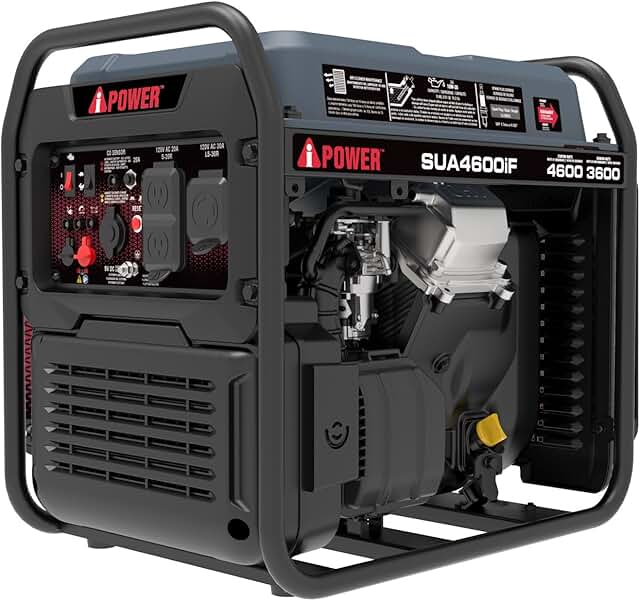
A-iPower’s 4600-watt inverter is designed for portability without compromising power quality. It offers 4600 starting watts and 3600 running watts, making it suitable for RV use and tailgating as well as home backup. The unit weighs about 56 pounds, a practical figure for users who need to reposition it or store it during non-emergency periods. Inverter technology ensures a clean power output with about 3% total harmonic distortion, which protects sensitive electronics like laptops and TVs. While not a heavy-duty standby unit, it fills a crucial niche for smaller homes or apartments where quiet operation and fuel efficiency matter most, and it pairs well with a portable transfer switch or power distribution setup.
When evaluating this model, consider noise levels, run time on a given fuel tank, and the availability of a weather-resistant enclosure if you plan to use it in more exposed outdoor settings. Its compact design makes it an excellent choice for off-grid camping or emergency charging for essential devices during outages.
WEN 5600-Watt: Safe, Ready-To-Go Generator

WEN’s GN5602X focuses on safety and preparedness. With 5600 starting watts and 4500 running watts, it’s designed to power a family’s critical loads. The unit includes an electronic start feature for quick ignition and a CO Shutdown Sensor to automatically shut the generator off if carbon monoxide is detected. The model is built with a camp-friendly footprint, making it easier to store and deploy. Its compatibility with common transfer switches enhances automatic operation, so you can rely on a smooth transition to backup power when the grid goes down. The key value here is dependable performance paired with integrated safety features that reduce risk during use.
For buyers, it’s important to assess fuel consumption against anticipated loads and to verify the availability of compatible transfer switches. The WEN unit’s safety features and straightforward operation make it a practical choice for households seeking a strong, medium-size backup option with peace of mind about CO exposure.
Westinghouse 12500 Peak Watt: High Output With CO Safety

Designed for maximum emergency power, the Westinghouse 12500 Peak Watt model blends peak capability with reliable running watts for essential circuits. It includes a remote electric start, an auto choke feature, and a robust 457cc engine. The fuel gauge helps manage extended outages, and a 6.6-gallon tank supports lengthy runtimes. The generator ships with multiple outlets, including a 50A RV outlet and a 30A transfer switch-ready receptacle, along with standard 20A outlets. Safety is reinforced by rubber-covered outlets and a CO/low-oil monitoring framework. A digital hour meter complements real-time status data, which is especially useful for planning maintenance during long outages.
Prospective buyers should weigh the advantage of higher wattage against the footprint and fuel costs. This is a strong candidate for households with high energy needs or for users who require dependable backup power for extended periods, particularly where a transfer switch integration is planned.
Buying Guide: Key Purchase Considerations
- Power requirements: List essential circuits (fridge, furnace, sump pump, lights) and choose a unit with sufficient running watts plus a buffer for startup surges.
- Fuel options: Dual-fuel units offer flexibility, while gasoline-only models are often more affordable but less versatile in outages that linger into multi-day periods.
- Transfer switch readiness: If you want automatic operation, verify transfer switch compatibility and the ease of connecting to your home’s electrical panel.
- Remote start and convenience: Remote key fobs and push-button starts reduce friction in emergencies and enable quicker response times.
- Safety features: CO sensors, automatic shutdowns, and weather-resistant outlets are crucial for safe operation indoors or near living spaces.
- Runtime and fuel capacity: A larger tank extends runtime, but consider fuel availability and storage space at home.
- Noise and portability: Weight, engine design, and enclosure options influence where and how you can use the unit around the home and yard.
- Maintenance: Look for units with accessible oil changes, clear digital meters, and readily available replacement parts.
In evaluating these options, consider whether you prioritize peak wattage for brief surges or continuous running watts for sustained outages. Dual-fuel models offer flexibility if propane is a practical wholesale supply or if gasoline prices spike. Ensure the selected unit integrates smoothly with your existing electrical setup and that installation is performed or inspected by a qualified professional when required.