Choosing an auto idle portable generator means balancing fuel flexibility, safety features, and clean power for sensitive devices. The following five models offer dual-fuel capability, CO sensors, and convenient startup options to support RV living, vehicle backup charging, and off-grid use. This guide highlights each unit’s strengths and what to consider when comparing performance, runtime, and safety features.
Summary of selected products
| Product | Fuel Type | Starting/Running Watts | Notable Safety | Key Strength |
|---|---|---|---|---|
| WEN 6800-Watt DF680iX | Gasoline / Propane | 6800 / 5100 (gas); 6000 / 4500 (propane) | CO Watchdog | Bonded-neutral 240V for Level 2 EV charging |
| Westinghouse 12500 Watt Dual Fuel | Gasoline / Propane | 12500 / 11200 (propane) | CO Sensor | Transfer switch readiness, long runtime |
| A-iPower 4600W RV-Ready Inverter | Gasoline | 4600 peak / 3600 running | CO Sensor | Ultra-lightweight and portable |
| ERAYAK 4500W Dual Fuel | Gasoline / Propane | 4500 / 3500 (gas); 4050 / 3150 (propane) | CO Sensor | Auto switch fuel and compact design |
| Westinghouse 6600 Watt | Gasoline / Propane | 5300 / 4200 (gas); 4500 / 3300 (propane) | CO Sensor | Remote start and multiple outlets |
WEN 6800-Watt Dual Fuel Inverter Generator

The DF680iX model from WEN uses a 224cc engine that runs on gasoline or propane. In gasoline, it delivers 6800 surge watts and 5100 rated watts, while propane provides 6000 surge and 4500 running watts. A bonded-neutral 240V configuration enables low-power Level 2 charging suitable for batteries and hybrid EVs. A key safety feature is the WEN Watchdog CO Shutdown Sensor, which automatically turns off the generator if dangerous carbon monoxide levels are detected. This unit is designed for RV parks, job sites, and emergency backup where clean power is needed for electronics and small appliances.
Westinghouse 12500 Watt Dual Fuel Generator

Westinghouse’s largest portable option here uses a heavy-duty 457cc four-stroke OHV engine with dual fuel capability, delivering 12500 peak watts on gasoline and 11200 peak watts on propane. It features 9500 running watts on gas and 8500 running watts on propane, ample run time with a 6.6-gallon tank, and a digital hour meter. The system includes a remote start via key fob and offers multiple outlets, including 120V and 120/240V receptacles, plus a transfer switch-ready configuration. Control and status feedback via the VFT display (voltage, frequency, lifetime hours) helps manage extended outages and complex power needs for homes and larger RV setups.
A-iPower 4600W RV-Ready Inverter
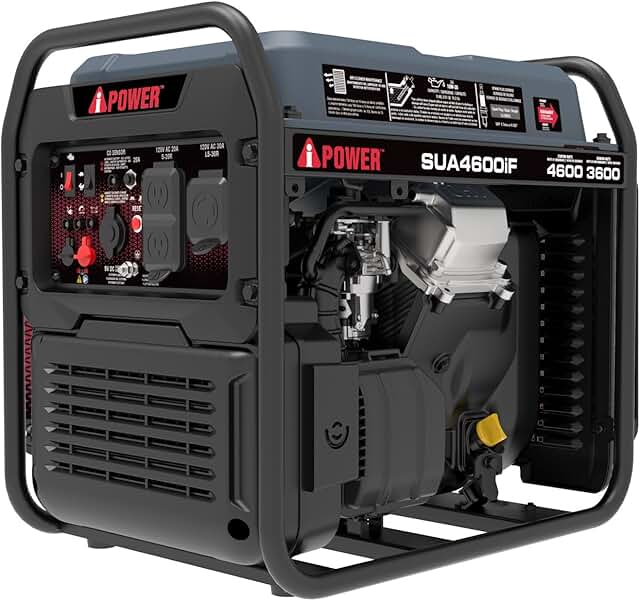
A-iPower offers a compact inverter with 4600 starting watts and 3600 running watts, designed for RVs and home backup. Weighing about 56 pounds, this model prioritizes portability without sacrificing clean power, delivering a stable 3% THD ideal for sensitive electronics like laptops and phones. The unit is geared toward travelers and campers who need a reliable, quiet power source that’s easy to transport to campsites or job sites.
ERAYAK 4500W Dual Fuel Generator

ERAYAK’s 4500W dual-fuel generator emphasizes versatility and portability. It provides 4500W peak and 3500W running on gasoline, with 4050W peak and 3150W running on propane. A notable feature is the dual-fuel capability with an auto switch to gasoline when gas runs out, reducing unexpected shutdowns. Its compact footprint and modest weight make it suitable for home backup, camping, and temporary job sites that require reliable power without a heavy, cumbersome setup.
Westinghouse 6600 Watt Home Backup Generator

The Westinghouse 6600 Watt model provides 5300 running watts and 6600 peak watts on gasoline, with a 4.7-gallon tank for up to about 14.5 hours of runtime. It includes an electric push-button start with a remote key fob and multiple outlets, such as 120V duplex, RV-ready TT-30R, and transfer switch-ready L14-30R, all with protective rubber covers. This unit emphasizes user convenience and flexible installation in homes and larger RV setups, while maintaining safety features like a CO sensor to monitor air quality during operation.
Buying Guide: Key Purchase Considerations
- Power needs: Determine your peak and running watt requirements for the devices you plan to power (refrigerators, TVs, chargers, pump systems) and choose a unit that comfortably exceeds those needs.
- Fuel flexibility: Dual-fuel options add resilience during outages or when gasoline isn’t readily available. Consider auto-switching capabilities that prevent abrupt shutdowns.
- Safety features: CO sensors, automatic shutoff, and proper venting are essential. Look for units with remote start options for convenience and safety.
- Portability vs. capacity: Heavier units offer more power but are harder to move. Inverter generators typically provide cleaner power for electronics but may have lower wattage than traditional models.
- EV and Level 2 charging compatibility: If EV back-up is a goal, check whether the unit supports a 240V output and meets charging standards for your vehicle or home backup scenario.
- Outlets and accessibility: Ensure the generator has the right mix of outlets (duplex 120V, 30A/50A RV outlets, 120/240V configurations) and that they’re protected by safety covers.
- Runtime and fuel tank: Compare fuel tank capacity and run time at a practical load to estimate how long you can sustain power without refueling.
- Maintenance and service: Look for a model with readily available replacement parts, accessible oil drains, and clear maintenance guidelines to extend life.
- Noise levels: For RV parks and residential areas, consider models that emphasize quieter operation or have sound-dampening features.