Looking for solar panels that can deliver reliable energy for homes, farms, or remote cabins? This guide highlights five suitable products and practical buying insights. While not all options are manufactured in Australia, each selection offers strong performance, durability, and clear benefits for off-grid living, RVs, and small to mid-size installations. The top picks are ideal for buyers seeking high efficiency, space-saving designs, and easy installation across varied climates and terrains.
Product Quick Reference
| Product | Best For | Key Benefit | Limitations |
|---|---|---|---|
| 860W Bifacial Solar Panels (STAR) | Homes and farms with space to install large panels | High power density; dual-side energy harvest | Large footprint; needs robust mounting |
| Callsun N-Type 16BB 400W Bifacial (2Pcs) | RVs, boats, off-grid cabins | Bifacial efficiency; anti-shade design | 2 panels only; shade on one half reduces output less than single panel |
| 5V 5W USB Solar Panel (WUOAUM) | Outdoor cameras and small devices | Easy maintenance; USB-C and Micro-USB | Low power; not for large systems |
| Epoch 800W Bifacial (2×400W) | Off-grid setups needing scalable power | High efficiency; IP68 waterproofing | Requires appropriate controller or system design |
| FlexSolar 100W Portable (Foldable) | Travel, camping, emergency kits | Ultra-portable; multiple outputs | Lower total wattage; not a fixed install |
Buyer note: When evaluating solar panels, consider system voltage, mounting space, climate, and future expansion. The following sections explore each product in detail, highlighting who benefits most and why each was selected for this guide.
860 Watt Bifacial Solar Panels, UL61730 Certified (STAR)

Best for large residential installations or small farms that have space and want maximum energy output. These 430W panels use bifacial technology to harvest sunlight from the front and rear, increasing daily energy harvest in favorable conditions. The high-efficiency A+ grade monocrystalline cells improve performance in mornings and late afternoons. With UL61730 certification and a robust 30-year service life, they are designed to endure extreme wind (up to 2400 Pa) and snow loads (5400 Pa). This makes them a strong choice for demanding environments and off-grid homes that require dependable power. Caution: The panels are sizable; ensure roof or ground mounting can support their weight and dimensions. Best for: larger rooftops, farms, or off-grid residences with ample space and long-term durability needs.
Callsun N-Type 16BB 400W Bifacial Panels (2Pcs)

Best for RVs, vans, marine use, or compact off-grid setups where space is at a premium. The N-Type cells and 16BB busbars support higher efficiency and lower degradation, while bifacial design adds extra energy capture from rear irradiance. The twin-cell anti-shade architecture provides improved reliability when partial shading occurs, making it better for mobile installations with variable sun exposure. Caution: Output relies on light conditions; ensure system design accounts for potential shading scenarios. Best for: mobile or compact off-grid systems needing solid performance with shading tolerance.
5V USB Solar Panel for Outdoor Security Camera (WUOAUM)

Best for standalone devices requiring constant trickle charging, such as outdoor security cameras. This compact panel outputs 5V and includes USB-C and Micro-USB compatibility, making it versatile for different camera brands. The long 9.8-foot cable and adjustable bracket place the panel in optimal sun exposure. Caution: It provides limited wattage; not suitable as a primary power source for larger systems or devices with higher power demands. Choose this for small ancillary charging rather than full-system power.
Epoch 800W Bifacial Panels (2×400W)
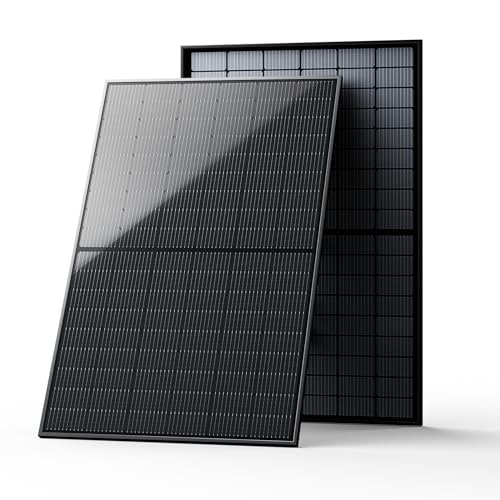
Best for scalable off-grid power systems and RV or marine applications needing robust, weatherproof performance. The Class A+ cells, PERC and half-cut design boost conversion efficiency up to around 25%, while bifacial capability improves overall energy capture. With a strong waterproof rating (IP68) and durable frame, these panels perform well in wet or harsh environments. Limitation: Proper system design is essential to maximize bifacial gains; rear-side irradiance can vary widely by installation orientation and ground albedo. Best for: off-grid expansions or larger mobile setups seeking high efficiency and durability.
FlexSolar 100W Portable Foldable Solar Panel

Best for travelers and emergency power kits where weight and portability are priorities. This foldable panel weighs light and collapses to a compact size, with a 45+ inch unfolded reach to optimize sun capture. It features PD 3.0 USB-C, USB-A, and DC outputs, suitable for charging power stations, phones, and small devices. Caution: Power output is lower than fixed installations; plan for supplemental charging if you need higher daily energy. Choose this for portability and quick setup in camping or temporary scenarios.
Buying Guide — How To Choose The Right Solar Panel
What installation environment are you targeting?
For homes or farms with ample space, high-wower panels offer best value per square foot. For tight rooftops or balconies, space-saving designs with higher density, like bifacial panels, can maximize energy without expanding footprint.
Do you need permanent or portable power?
Permanent installations benefit from rugged frames, durable backings, and long lifespans. Portable panels excel for travel, camping, and emergency kits, prioritizing weight, foldability, and quick setup.
What is your system voltage and controller compatibility?
Some panels list 24V or 48V operation, while others are intended for 12V or direct USB loads. Ensure your charge controller, inverter, and batteries are compatible with the panel’s voltage and current specifications to prevent bottlenecks or safety issues.
How important is shading tolerance and reliability?
Panels with anti-shade designs or bifacial technology tolerate partial shading better and deliver steadier current. This matters for off-grid sites with uneven sun exposure or reflective surroundings that affect rear-side capture.
What environmental conditions must be met?
Look for outdoor-rated enclosures, IP ratings, and corrosion-resistant frames if you expect rain, salt spray, or snow. Structural wind and snow load ratings protect the array in severe weather.
What is the total cost of ownership?
Consider installation complexity, mounting hardware, wiring, and potential future expansion. While higher efficiency panels may cost more upfront, they can reduce total required area and balance of system costs over time.
FAQ
- Are bifacial solar panels worth it for home use? They can be beneficial where rear-irradiance and reflective surfaces enhance energy gain, but effectiveness depends on mounting orientation, ground albedo, and installation height.
- What does N-Type mean in solar panels? N-Type cells typically offer higher efficiency and better performance under low light, with reduced light-induced degradation compared to traditional P-type cells.
- Can portable panels power a home? Portable panels are usually best for charging small devices or emergency power. For full-home power, fixed installations with dedicated inverters and battery storage are required.
- Do I need a professional to install large panels? For large, roof-mounted installs, professional installation ensures correct mounting, wiring, and safety compliance, particularly in wind-prone areas.
- How do I choose the right wattage? Calculate expected daily energy usage and peak sun hours in your location. Choose wattage that meets or slightly exceeds your daily needs when combined with storage or timing considerations.
- What maintenance is required? Regularly clean surfaces, inspect cabling, and verify connections. Most panels have long lifespans but require periodic checks for mounting integrity and seal conditions.