When selecting anchors for a mobile home, the goal is a strong, durable hold in varied soils and wind conditions. This guide highlights five reliable options, detailing who they’re best for, how they perform, and practical installation notes. Ideal for homeowners, rental park managers, and DIY installers seeking stable, long-lasting ground anchors. The selection favors models that balance deep grip, ease of use with common tools, and multi-purpose versatility for sheds, swings, and canopies.
| Product | Brand | Length | Best For | Notes |
|---|---|---|---|---|
| VASGOR 24” Ground Anchors | VASGOR | 24” | Mobile home, swing sets, shelters | High-wind tested, rust-resistant, drill-friendly |
| Ciyivak 18” Ground Anchors | Ciyivak | 18” | Tents, sheds, mobile home tie-downs | Includes straps, cable, clamps, drill adapter |
| Insaga 30” Ground Anchors | Insaga | 30” | Sheds, trampolines, caravans | 12mm solid steel, fully welded |
| BeneLabel 18” Trampoline Anchors | BeneLabel | 18” | Play areas, carports, canopies | Welded spiral, versatile L-bracket |
| Tinnmao 30” Ground Anchors | Tinnmao | 30” | Mobile homes, sheds, swing sets | Integrated turnbuckle, strong hold |
VASGOR 24” Ground Anchors Kit

The VASGOR kit offers 24-inch steel ground anchors with brackets and a drill adapter. Best for mobile homes requiring a deep, stable hold and for use with swing sets, sheds, or outdoor shelters. The kit emphasizes rust resistance from a powder-coated finish and sturdy metal construction that withstands high winds up to 1000 lbs per drilled anchor. This makes it a strong all-purpose anchor for long-term outdoor installations. Caution: performance depends on soil conditions and proper drilling depth.
Best for: Homeowners needing a robust, drill-friendly anchor system for mobile homes and multi-use outdoor setups. Limitations: Requires a drill for fastest installation; effectiveness varies with soil type.
Ciyivak 18” Ground Anchors Kit

The Ciyivak kit is a complete heavy-duty option with four 18-inch anchors, galvanized cable, straps, clamps, a drill adapter, and a T-Socket. It’s designed for maximum grip in mobile homes, sheds, carports, and trampolines, especially in high-wind environments. It’s a strong all-in-one solution that reduces prep time and expands use to tree anchors as well. Caution: assembly includes multiple components—check all parts before drilling.
Best for: Users who want an all-inclusive kit with cables and straps for quick, secure setups. Limitations: Slightly shorter anchors than some competitors; soil type still dictates grip.
Insaga 30” Ground Anchors (4 Pack)

Insaga provides a 30-inch solid-steel anchor with a 3-inch spiral blade and smooth edges. The data highlights a 12mm steel core and chrome coating for longer life, with a fully welded spiral and a top eyelet for quick attachment. Eyelets can be unscrewed to allow impact-drill installation, and repositioning is straightforward if needed. Best for deep-soil anchoring and installations that require a robust, long reach. Caution: ensure the eyelet removal step is performed only with appropriate tools.
Best for: Installers needing deep penetration and long-lasting hold in hard soils. Limitations: The 30” length demands more digging and space during placement.
Tinnmao 30” Ground Anchors Kit
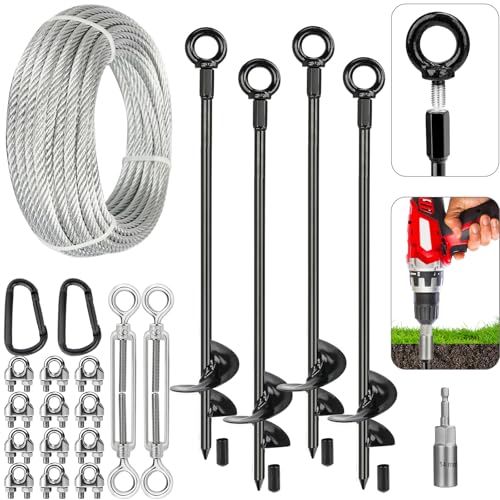
The Tinnmao kit features 30-inch anchors with an integrated turnbuckle tensioner and 50 feet of reinforced cable. The 12mm steel core is designed to endure high-wind conditions, with a focus on tightening tension for a stable hold. The turnbuckle allows fine-tuning after installation, reducing movement over time. Best for applications where post-installation adjustment is needed. Caution: longer setup may require additional space and careful alignment during drilling.
Best for: Projects needing precise tension control and strong wind resistance. Limitations: Turnbuckle components add a step to the installation process.
Buying Guide: Key Purchase Considerations
When choosing mobile-home anchors, consider soil type, anticipated wind loads, installation method, and installation site constraints. The following questions help tailor your choice:
- What is the soil type at the installation site (rocky, clay, sandy, or mixed)? Deep, spiral blades and longer anchors work best in hard or loose soils, respectively.
- Do you prefer drill-assisted installation or manual screw-in methods? Drill-compatible anchors save time, but manual options offer flexibility in tight spaces.
- Will you need accessories (cables, straps, clamps, turnbuckles) included in the kit? All-in-one kits simplify setup and maintenance.
- Is adjustable tension important for post-installation stability? Turnbuckles and adjustable eyes help reduce movement after wind events.
- What is the intended use beyond mobile-home anchoring (sheds, swings, trampolines, canopies)? Multi-use kits can be more cost-effective and versatile.
Installation Tips
- Dig or align the anchor location before drilling for a straight, centered entry.
- Follow manufacturer torque and depth guidelines to avoid under- or over-penetration.
- Inspect all connections (bolts, clamps, straps) for corrosion and wear periodically—especially after storms.
- Use protective coatings or rust inhibitors where applicable to extend life in salty or humid environments.
Comparative Summary
For quick comparisons, prioritize anchor length, included accessories, and the convenience of installation. If you need the longest reach and strongest hold, consider 30-inch anchors with turnbuckles. For multi-use quick-install sets, opt for kits that include cables and straps. For hard soils, look for heavy-duty welded spirals and chrome coatings to maximize durability.
Frequently Asked Questions
- What makes an anchor suitable for a mobile home?
Deep reach, high load capacity, corrosion resistance, and compatibility with common drilling tools are key factors.
- Are drill adapters necessary?
They speed up installation and improve hold by ensuring anchors are driven to the correct depth.
- Can I use these for other outdoor structures?
Yes. Most kits support swings, sheds, canopies, trampolines, and tents, offering versatile outdoor anchorage.
- What soils require the strongest anchors?
Hard soils, rocky or clay-heavy grounds benefit from longer, welded spirals and robust steel cores.
- How do I know if an anchor is failing after a wind event?
Check for bent brackets, corroded components, loose straps, or reduced tension; replace compromised anchors promptly.
- Is one kit better than another for beginners?
All-in-one kits with clear instructions and included accessories are easier for first-time installers.