Looking for reliable American-made power inverters for on-the-go use? This guide highlights five solid options that suit road trips, camping, and everyday vehicle charging. Each pick is described with who it’s best for, why it stands out, and a practical caveat. Use this article to compare continuous power, peak surge, USB ports, and safety features to match your devices and travel style.
Summary table of selected products:
| Product | Continuous Power | USB/Outlets | Best For | Notes |
|---|---|---|---|---|
| Pro Chaser 400W | 400W | 2 USB, 2 AC | On-the-go families needing dual outlets | Long cord, compact |
| BESTEK 300W | 300W | 2 USB, 2 AC | Road trips with laptops/tablets | Compact, widely compatible |
| Energizer 1100W | 1100W | 2 USB, 2 AC | Higher power devices and multiple chargers | LCD display, protection features |
| Ampeak 750W | 750W | 2 USB, 2 AC | Outdoor and RV use | Fuses included for protection |
| EPANEE 800W | 800W | 1 PD USB-C, 1 USB-A, 2 AC | Fast charging laptops and phones | Built-in cooling fan |
Pro Chaser 400W Power Inverter
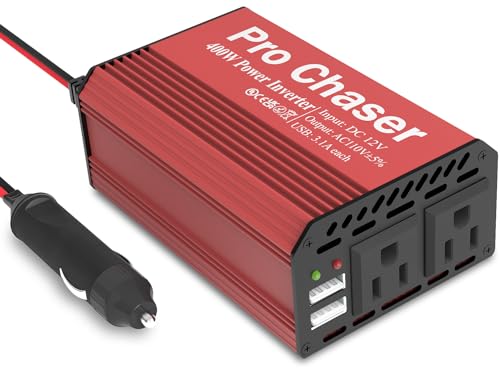
The Pro Chaser 400W inverter delivers steady 400W continuous power with 800W peak, two 110V AC sockets, and dual USB ports. Best for travelers who need to power laptops, cameras, and small appliances on the road. The 30-inch cord adds flexibility for rear-seat setups or trunk placement. It’s especially suitable for road trips with family members who require multiple charging options at once. A potential limitation is the 400W continuous rating, which may not handle very high-wattage devices for extended periods.
BESTEK Power Inverter DC 12V to 110V
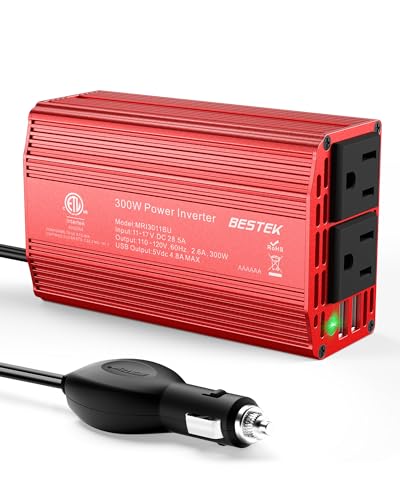
The BESTEK 300W inverter combines two AC outlets with two USB ports, and claims wide compatibility including modern devices via a 32-inch cigarette lighter plug. It’s best for road trips where compact size and multiple charging options matter, such as powering laptops or tablets alongside phones. A caveat is that at higher loads the unit may run warm, so avoid sustained max-power use for long durations.
Energizer 1100 Watts Inverter

The Energizer 1100W inverter offers substantial power with two AC outlets and two USB ports, plus an LCD display and bundled battery cables. It’s best for users who need to run larger devices or multiple devices simultaneously, such as charging laptops and running media players on a trip. It includes multiple protection features, reducing risk during extended use. Limitations can include higher weight and footprint compared with smaller inverters.
Ampeak 750W Inverter

The Ampeak 750W inverter blends 750W continuous power with 1500W peak, two USB ports, and two AC outlets. It’s well-suited for cars, RVs, and outdoor use, with replaceable external fuses for protection. It’s best for travelers who anticipate high-power moments like topping off batteries or running multiple small devices. A limitation is the reliance on vehicle power; sustained heavy use may affect the vehicle’s electrical system if not planned for.
EPANEE 400W Inverter With USB-C

The EPANEE inverter provides 800W peak with dual 110V outlets and a PD 65W USB-C plus 18W USB-A port. It’s ideal for quickly charging compatible laptops and phones while powering smaller appliances like a vacuum or air compressor. Best for shorter trips or where fast-charging devices matters. A potential downside is the limited continuous wattage for power-heavy loads over time.
Buying Guide: Key Considerations For Selecting The Right Inverter
What should you check before buying? Consider continuous power versus peak surge, device compatibility, and safety features. A larger continuous rating means longer operation at higher loads, while peak power indicates startup capability for devices like motors or compressors.
How to match continuous power to your needs
List essential devices you’ll run simultaneously. If you frequently power laptops or kitchen appliances, choose an inverter with at least 750W continuous power. For light-duty charging and small gadgets, 300–400W is often sufficient.
Outlet and port mix matters
Two AC outlets plus USB ports offer flexibility for families. If you plan to use USB-C devices, consider inverters with PD USB-C ports for faster charging.
Safety and protection features
Look for overload, short-circuit, under/over-voltage, and thermal protection. An LCD display or indicators can help monitor battery voltage and load. Built-in cooling fans can extend inverter life during prolonged use.
Portability and installation considerations
Compact, lightweight models are easier to relocate in vehicles. A longer DC cable helps with placement inside the cabin or trunk. Ensure you follow vehicle electrical guidelines to avoid draining the battery or causing voltage dips.
Best use cases by scenario
- Road trips with kids: multiple USB ports and dual AC outlets for devices and small appliances.
- Camping or RV life: higher continuous power and a robust build with protection features.
- Work trips: reliable power for laptops and chargers with fast USB-C charging.
FAQ
- What is the difference between continuous power and peak power?
- Can I run a laptop from a car inverter?
- Is high wattage always better?
- Which safety features are essential?
- Do I need extra cables when installing an inverter?
- What should I avoid when using an inverter in a car?
Continuous power is the steady output an inverter can sustain. Peak power is the surge capability for startup or brief high-load events.
Yes, many 300–750W inverters can power most laptops, depending on wattage and outlet availability. Check the laptop’s power rating.
Not necessarily. Matching continuous power to your typical load is more important than chasing maximum wattage, which can add size and risk.
Overload, short-circuit, under/over-voltage, and thermal protection are essential. An LCD readout can help monitor battery levels.
Most models include basic connection cables, but higher-power units may benefit from heavier gauge cables and proper fusing for safety.
Avoid running devices that exceed the inverter’s continuous rating for long periods. Excessive draw can drain the vehicle battery or cause voltage fluctuations.