Looking for a dependable, American-made inverter generator to back up home power, run RVs, or fuel outdoor adventures? This guide highlights five top options that balance quiet operation, clean electricity, and practical runtimes. Each entry is best for specific needs—home backup, camping, RV use, or portable power at remote sites. A quick comparison table helps you pick the right fit at a glance.
| Product | Peak Watts | Running Watts | Best For |
|---|---|---|---|
| ERAYAK 4500W | 4500 | 3500 | Home backup, camping, RVs |
| Oxseryn 4400W | 4400 | 3400 | Emergency home backup, RVs |
| Champion 4000W RV Ready | 4000 | 3000 | Travel RVs, camping, light home use |
| Westinghouse 5000W | 5000 | 3900 | Home backup, larger loads, outdoor events |
| WEN DF680iX | 6800 | 5100 | EV/backup charging, multi-vehicle support |
ERAYAK 4500W Portable Inverter Generator

Best for home backup and outdoor use, the ERAYAK 4500W inverter generator delivers a peak of 4500 watts and 3500 running watts. It uses advanced inverter technology to provide clean current suitable for sensitive electronics like laptops and CPAP machines. Quiet operation at about 60.5 dB(A) makes it suitable for neighborhoods and campgrounds. ECO Mode adjusts engine speed to maximize fuel efficiency and minimize noise. Weighing 55.12 lbs, it is relatively portable and compatible with wheel kits and a telescoping handle for easy transport.
Who it’s best for: homeowners needing reliable backup power, campers, and small businesses requiring portable electricity. Why selected: strong power, clean output, and portability in one package. Caution: ensure fuel supply for long outages; runtime varies with load.
Oxseryn 4400-Watts Inverter Generator
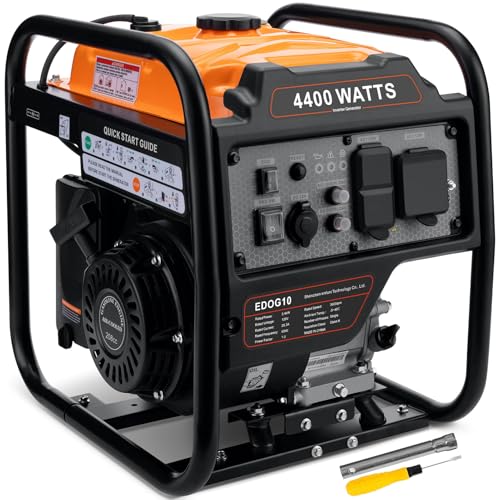
Open-frame, gas-powered inverter designed for emergency home backup and RV readiness. It delivers 4400 peak watts and 3400 running watts with multiple outlets (2x120V, 30A RV, 12V DC). A 14-hour runtime at 25% load demonstrates solid endurance for casual outages. Features include inverter technology, ECO mode, EPA compliance, overload protection, low oil shutdown, and cold-start capability.
Who it’s best for: homeowners seeking a robust backup power option and RV users needing an all-in-one unit. Why selected: comprehensive outlet options and long enough runtime for short outages. Caution: be mindful of fuel availability and storing fuel safely for extended outages.
Champion Power Equipment 4000-Watt RV Ready Inverter

This compact inverter weighs under 49 pounds and generates 4000 starting watts and 3000 running watts with a runtime up to 10 hours. It operates quietly at 64 dBA from 23 feet, making it a solid option for camping, tailgating, or powering essential home circuits. It’s CO Shield-equipped for carbon monoxide auto shutoff and supports optional parallel connectivity with another Champion inverter for more power.
Who it’s best for: campers and light home backup users who value quiet operation and expandability. Why selected: portable design, parallel capability, and protected output. Caution: 4000 watts may limit high-demand devices when used alone; consider a second unit for parallel setups.
Champion 4000-Watt Dual Fuel RV Ready Inverter

Equipped for gasoline or propane, this 4000-watt dual-fuel inverter provides flexibility for fuel choices and longer runtimes. With an ultra-quiet operation at 64 dBA from 23 feet and 3000 running watts on gasoline (up to 25 hours on propane), it suits RVs and camping. A CO Shield auto shutoff system adds safety, while the optional parallel kit expands output when needed.
Who it’s best for: users who want dual-fuel versatility and low-noise operation. Why selected: flexibility in fuel source and extended runtime on propane. Caution: propane performance varies with temperature and altitude; monitor fuel type accordingly.
Westinghouse 5000 Peak Watt Inverter Generator

With 5000 peak watts and 3900 rated watts, this model handles larger loads for home use or travel trailers. It features a remote electric start, a 5–20R 120V duplex outlet, RV-ready TT-30R, and two USB outlets. A digital display shows fuel level, power output, runtime, and voltage, aiding precise management. Parallel capability enhances output when needed. Quiet operation and built-in wheels ease transport.
Who it’s best for: households needing substantial portable power and RV operators who value remote starting and a full display readout. Why selected: higher wattage, convenient digital readout, and RV readiness. Caution: heavier than some compact units; plan for storage space and transport.
Champion 4500-Watt RV Ready Inverter

This Champion model delivers 4500 starting watts and 3500 running watts with quiet technology and up to 14 hours runtime on 2.3 gallons of gas. It uses CO Shield auto shutoff and supports optional parallel connections to increase power. An EZ Start Dial simplifies startup while Economy Mode optimizes consumption in real time.
Who it’s best for: RV owners and campers who want strong power in a portable, easily managed package. Why selected: robust power with quiet operation and parallel expandability. Caution: parallel kits are sold separately; plan ahead if you anticipate higher demand.
WEN 6800-Watt Dual Fuel RV-Ready Inverter

The WEN DF680iX delivers 6800 surge watts and 5100 running watts on gasoline, with propane support for 6000 surge watts and 4500 running watts. It includes bonded-neutral 240V configuration to support Level 2 EV charging, and the CO Watchdog sensor helps shut down if carbon monoxide is detected. This model is designed for higher-demand scenarios, including vehicle charging backups and larger camping setups.
Who it’s best for: users needing higher power for EV charging and heavy loads, plus dual-fuel flexibility. Why selected: strong performance with safety features and EV support. Caution: heavier and louder than smaller models; assess space and noise tolerance in camping or residential settings.
Buying Guide: Key Purchase Considerations
- Power needs: Match peak watts to combined devices you plan to run. If powering motor loads or multiple appliances, prioritize units with higher peak and running watts.
- Fuel type and availability: Gasoline, propane, or dual-fuel options affect flexibility and runtime. Consider storage and local fuel costs.
- Noise and portability: Look for ratings around 60–65 dBA for comfortable use in campgrounds and near homes. Heavier units may require wheels or a cart.
- Clean power: Inverter generators deliver stable voltage and frequency compatible with sensitive electronics. Check for “inverter technology” and low THD for electronics safety.
- Safety features: CO shutoff, low-oil shutdown, and automatic safety systems reduce risk during outages or camping trips.
- Expansion options: Parallel capability lets you increase total output by pairing with another compatible unit when needed.
- Reliability and warranty: Choose brands with established service networks and favorable warranty terms to minimize downtime.
FAQ
- What does THD mean, and why does it matter?
Total Harmonic Distortion (THD) indicates how clean the power is. Lower THD is better for sensitive electronics. - Is it safe to run a generator indoors?
No. Generators produce carbon monoxide and should operate outdoors in well-ventilated areas. - Can I parallel two inverters, and what do I need?
Some models support parallel kits (sold separately). Ensure both units are parallel-ready and compatible. - What maintenance is required for inverter generators?
Regular oil changes, air filter checks, spark plug inspections, and fuel stabilizer for long storage periods are common maintenance steps. - How do I choose between fuel types?
Gasoline is widely available and offers quick refueling. Propane provides clean burning and longer shelf life but lower energy density; dual-fuel options combine benefits. - Which model is best for RVs?
Look for RV-ready outlets (TT-30R), parallel capability, and quiet operation suitable for campground rules.