Looking for an AC to DC car charger adapter to power 12V devices from wall outlets or a vehicle’s cigarette lighter? This guide highlights five solid choices, with clear notes on who each product suits best. Each option converts 110V–240V AC to 12V DC, enabling basic car electronics, small appliances, and low-wattage devices to run in or out of the car. Best for budget-friendly power, travel kits, and compact electronics.
| Product | Best For | Key Limitation |
|---|---|---|
| ALITOVE AC to DC Converter 120W | Car refrigerators, dash cams, and small gadgets | Not for devices over 120W long-term |
| Yelesley 24W Car Adapter | Low-power devices indoors | Not suitable for high-power appliances |
| NALAKUVARA 60W Inverter | Low-wattage 12V devices | Limited to 60W |
| BESTEK 300W Inverter | Laptops, CPAPs, multiple devices on road trips | Higher upfront size and weight |
| PiSFAU 200W Inverter | Multiple USB ports and laptops on short trips | Lower continuous wattage than 300W models |
ALITOVE 120W Car Power Adapter For 12V Devices
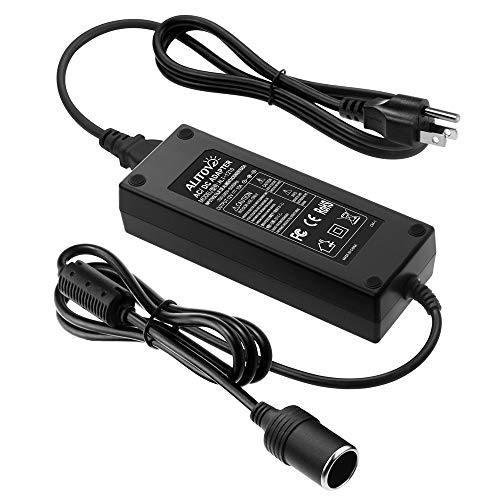
The ALITOVE AC to DC Converter provides 12V DC at up to 10A (120W) from a standard AC wall outlet, with a cigarette lighter-style output note for car devices. It includes an 8-foot power cord and built-in safety protections such as overload, over voltage, over temperature, and short-circuit cut-offs. Best for car electronics under 120W that need steady, reliable power, including car vacuums, coolers, CCTV equipment, and small appliances. It is well-suited for long runs that require more than a short plug-in, but avoid continuous use with devices exceeding 120W. Suitable for users who want a straightforward wall-to-vehicle 12V supply in garage or shop settings.
Who this is best for: Budget-conscious buyers needing a dependable 12V supply for medium-wattage car devices. Why selected: High output (120W) and broad compatibility with common 12V devices.
Caution: Do not run devices over 120W for extended periods to protect lifespan.
Yelesley 12V 2A AC/DC Converter For Indoors

The Yelesley model is a 12V DC power supply designed for indoor use with car electronics, converting 110–240V AC to 12V DC in a cigarette lighter socket. It’s limited to 24W (2A), making it best for low-power devices like dash cameras, FM transmitters, humidifiers, or small fans. Not suitable for high-power gear such as car air pumps, vacuums, or coolers. Built-in protections help guard against short circuits and overheating.
Who this is best for: Those powering low-wattage devices in a garage, home office, or testing bench. Why selected: Simple, compact, and safe for light-duty car electronics.
Caution: Not compatible with high-power appliances or devices above 24W.
NALAKUVARA 60W Wall-To-Car Converter
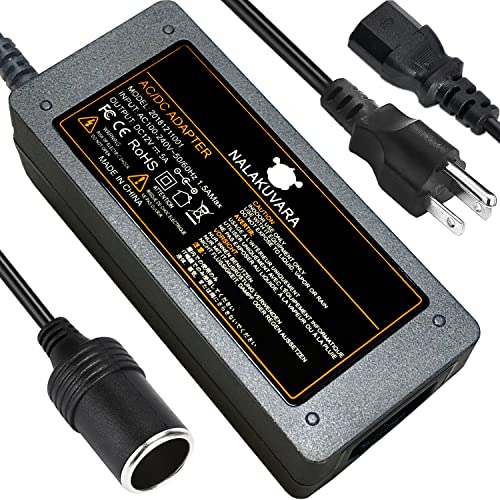
The NALAKUVARA converter pairs a wall outlet with a 12V cigarette lighter socket, delivering up to 60W at 12V. It features an 8.8-foot cord to reach a wide range, plus overload, over-voltage, and short-circuit protections for stability. This unit is ideal for 12V devices below 60W, such as dash cams, small fans, or portable devices used in homes or garages that require 12V power from a wall source. It’s a practical option when you need a longer reach without heavy-duty power.
Who this is best for: Users needing a compact, mid-wattage 12V supply for light-to-moderate devices. Why selected: Good balance of reach and safety features for everyday use.
Caution: Best avoided for high-power cars devices or long continuous runs above 60W.
BESTEK 300W Car Power Inverter

The BESTEK inverter is designed as a high-power solution with 300W continuous output and 700W peak surge. It converts 12V DC to 110V AC and includes two AC outlets plus USB-C (PD 30W) and USB-A (QC 18W) fast charging. This model is ideal for road trips or camping where laptops, CPAP machines, cameras, and other devices may need 110V AC power. It is best for users who need multiple devices and faster charging on the go and can handle the inverter’s larger size and cooling needs. PD and QC fast charging enhance compatibility with modern devices.
Who this is best for: Road-trippers and families needing a versatile, high-wattage power source in a vehicle. Why selected: High output with multiple outlets and modern fast-charging ports.
Caution: Larger footprint means more space and potential heat generation during heavy use.
PiSFAU 200W Car Power Inverter

The PiSFAU 200W inverter provides two AC outlets and multiple USB ports, making it suitable for laptops, tablets, and smartphones on the road. Its compact design is easy to carry, and it uses a quiet, efficient power conversion method. It is best for travelers who need a balance of power and portability for light to moderate loads. A practical choice when you don’t require the full 300W capability of larger models.
Who this is best for: Travelers needing a compact, versatile inverter for everyday devices. Why selected: Good combination of USB ports and AC outlets at a lower wattage than premium units.
Caution: Not ideal for high-wattage appliances or continuous heavy loads.
Buying Guide
What wattage do you actually need?
Match the inverter or DC converter’s continuous wattage rating to the total power draw of the devices you plan to run. For simple gadgets like dash cams or small fans, under 60W may suffice. For laptops or CPAP machines, aim for 150–300W with adequate surge capacity.
Do you need pure sine wave or modified sine wave?
Most basic 12V DC-AC inverters use a modified sine wave. If you power sensitive electronics (CPAP devices, some laptop chargers, or medical gear), consider pure sine wave options for smoother operation and reduced risk of damage.
How important are USB charging options?
If you frequently charge phones or tablets, select an inverter with USB-C PD and USB-A ports to enable fast charging and broad compatibility without using wall adapters for every device.
What about safety features?
Look for overload, short-circuit, over-voltage, and thermal protections. Over-current protection helps prevent damage to your devices, while proper ventilation reduces heat buildup during use.
Portability and installation considerations
Consider the space in your vehicle and how easy it is to reach the outlets. A longer cord can improve reach but adds clutter. Wall-to-car adapters are ideal for garages or workspaces, whereas compact inverters suit on-the-go needs.
Durability and build quality
Metal casings or robust plastics with durable connectors typically withstand frequent handling during travel. Check cable quality, connector durability, and any heat-dissipation features for longer life.
Availability and compatibility
Ensure the device’s input voltage range matches your region (110–120V in the US) and that the 12V output matches your car’s lighter socket or power port. Check device wattage ratings and compatibility with your gear.
Summary of considerations
- Low-wattage devices: choose 12V DC adapters with protection features and longer reach cords.
- High-wattage devices: use 300W inverter with dual outlets and fast charging ports.
- Indoor testing or garage use: consider wall-to-car adapters for constant power supply.
FAQ
- What is the difference between a car power inverter and an AC-to-DC converter?
Answer: An inverter converts DC (12V) to AC (110V–120V) for devices that require AC power, while an AC-to-DC converter takes AC from wall outlets and outputs DC to 12V devices. - Can I power a high-wattage device with these adapters?
Answer: Only if the device’s wattage stays within the converter’s or inverter’s rated continuous wattage and surge capacity. - Is a pure sine wave inverter necessary for my devices?
Answer: It is preferred for sensitive electronics to avoid noise or damage, but many low-power devices work with modified sine wave inverters. - Are there safety features I should prioritize?
Answer: Yes. Look for overload, over-voltage, short-circuit, and temperature protections to safeguard devices and the adapter. - Do these devices work with standard 110V outlets in the US?
Answer: Yes, most are designed for 110–120V mains and US car voltage standards, but verify your region’s specifications. - Can I leave these adapters plugged in for extended periods?
Answer: Prolonged operation under heavy load can shorten the lifespan of the adapter; monitor heat and device draw.