Answering the need for high-output, reliable backup power, these 7500 watt-class solar generators deliver strong performance for home use, RVs, and outdoor emergencies. They’re best for households facing frequent outages, LFP battery longevity enthusiasts, and outdoor enthusiasts who require robust solar recharging. Below are five top options with clear strengths, ideal use cases, and practical considerations.
Buyer’s guide at a glance:
| Product | Battery Capacity | Max AC Output | Expandability | Best for | Notable trade-off |
|—|—:|—:|—:|—|—|
| PECRON F5000LFP | 5120Wh | 7200W | Up to 35.8kWh | Large homes, extended outages | Higher upfront cost, complex setup for expansion |
| Jackery Solar Generator 5000 Plus | 5040Wh | 7200W | Up to 60kWh | Home backup with simpler expandability | Slightly lower capacity than some rivals |
| EF ECOFLOW Delta Pro Ultra | 6144Wh | 7200W | Up to 90kWh | Whole-home backup, fast charging, high scalability | Highest complexity and price range |
| WEN DF680iX | – | 6800W | Not user-expandable | RVs and outdoor work with propane/gas flexibility | Lower solar readiness vs. dedicated solar models |
| Jackery HomePower 3600 Plus | 3584Wh | 3600W (7200W surge) | Up to 43kWh | Primary home backup, easy setup | Lower continuous output than peers |
PECRON F5000LFP Power Station

Overview: The PECRON F5000LFP offers 5120Wh of LiFePO4 capacity with up to 7200W AC output and 6400W solar input. It supports 120V/240V dual voltage and is expandable to 35.8kWh using additional FP5000-48V packs. It also features three charging methods—AC, solar, and generator—allowing flexible, efficient recharging. The built-in UPS outlets (two 20A and one 30A) provide seamless power during outages.
Best for: Homes needing a robust, expandable backup system that can handle both essential loads and heavier appliances during outages. It’s especially suitable for users who prioritize uninterrupted power for critical devices and long-term resilience.
Why selected: Its high simultaneous output, dual-voltage capability, and large expandable battery make it one of the most capable 7+ kW systems in the list for serious backup needs. The UPS functionality helps maintain continuity for essential electronics.
Limitations: Expansion requires additional battery packs and setup complexity. Real-world performance depends on solar input and configuration of the battery packs.
Jackery Solar Generator 5000 Plus
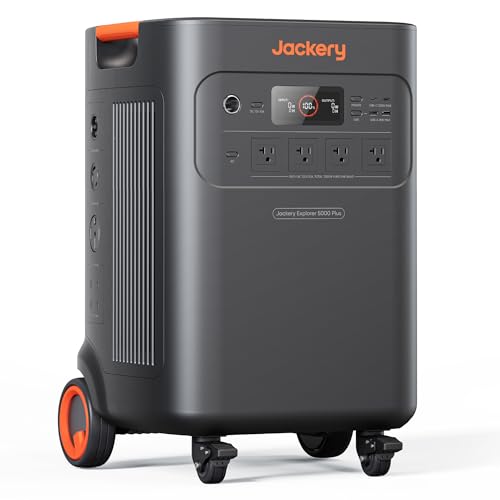
Overview: The Jackery Solar Generator 5000 Plus provides 5040Wh of LiFePO4 storage and a 7200W continuous (14,400W surge) AC output. It’s expandable to a substantial 60kWh, enabling long outages and greater versatility for home backup or RV power systems. It supports fast charging from solar and AC and is compatible with a broad range of solar panels.
Best for: Homeowners who want strong, reliable backup with straightforward expansion and a track record of compatibility with multiple solar configurations. It’s also well-suited for those who value a robust, long-life battery and a brand with proven ecosystem support.
Why selected: The combination of solid capacity, high continuous power, and a clear expansion path to 60kWh makes it a strong all-around choice for larger backup needs without sacrificing portability and ease of use.
Limitations: The system can be sizable and may require planning for installation space and wiring, especially with large expansions. Some users may prioritize purely solar-first charging over mixed charging strategies.
EF ECOFLOW Delta Pro Ultra

Overview: The Delta Pro Ultra is a high-capacity system featuring 6144Wh in base configuration with a 7200W AC output. It scales up to 90kWh with multiple batteries and can be charged rapidly via 2 hours to full using solar, wall outlets, or vehicle charging. It supports 120/240V operation and is designed for comprehensive home energy resilience.
Best for: Households seeking a scalable, all-in-one energy solution capable of powering substantial loads during outages, with fast charging and very high expandable capacity.
Why selected: Its modular approach, fast multi-source charging, and large scalable energy bank make it a standout for those aiming for long shelter-in-place power or full-home resilience, including high-demand appliances like central AC.
Limitations: It represents a premium option with higher upfront and ongoing integration considerations. Setup complexity increases with more batteries and charging options.
OSCAL PowerMax 6000 Solar Generator
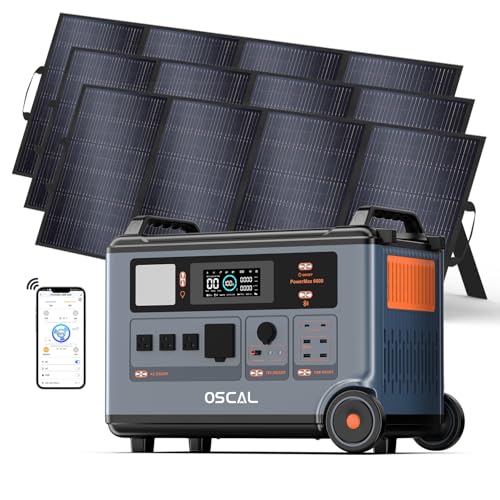
Overview: OSCAL PowerMax 6000 provides 3600Wh capacity with 6000W AC output (9000W peak) and 2200W fast charging alongside 2400W solar charging. It relies on LiFePO4 batteries with a durable BMS and robust safety protections, offering long cycle life.
Best for: Users who want a strong, mid-to-large power capacity with rapid charging and reliable solar input, suitable for off-grid camping or backup needs where high power is required without oversized systems.
Why selected: The fast charging capability combined with a solid 6000W output makes it a practical choice for those who need reliable high power in a portable form factor with good safety features.
Limitations: Capacity is lower than other 7kW-class units, so it may require more frequent recharging or expansion for very long outages.
Jackery HomePower 3000

Overview: The Jackery HomePower 3000 delivers 3600W (7200W surge) with a 3072Wh LFP battery. It’s designed for essential home backup, offering quiet operation and a straightforward setup with USB-C, USB-A, and RV outlets. It’s well-suited for basic resilience in homes, RVs, and light emergency scenarios.
Best for: Homes needing dependable backup for essential loads with a compact footprint and simple operation. Ideal for small households or renters seeking reliable power without complex installations.
Why selected: It provides reliable essential-power support with fast USB-C/USB-A charging and a practical 3072Wh capacity, making it an approachable entry in the higher-wattage category.
Limitations: Lower continuous output relative to the larger units; expansion options are more limited for very long outages.
Buying Guide: Key Considerations for 7500 Watt Solar Generators
What should I look for in a high-wattage solar generator?
Important factors include continuous AC output, surge capacity, battery chemistry (LiFePO4 is favored for longevity), expandability, solar input capacity, and charging options. A robust UPS feature can preserve critical devices during outages.
How much capacity do I need for my home or RV?
Estimate essential loads (refrigerator, Wi‑Fi, medical devices, lighting) and multiply by the number of days you want power. Units with 6–9kWh can support essential loads overnight; units around 12–20kWh or more are better for multi-day outages, especially when combined with high solar input and expandability.
What about expandability and charging speed?
Expandable battery packs and multiple charging sources (AC, solar, vehicle, generator) increase resilience. Look for systems that offer fast solar charging and multi-source charging to minimize downtime after an outage.
Is LiFePO4 the right chemistry for me?
LiFePO4 batteries provide longer life cycles, better thermal stability, and safer chemistry than some alternatives. They are especially advantageous for frequent cycling and long-term storage.
What are practical considerations for installation?
Consider space, ventilation, noise (for generators), wiring compatibility, and whether you need portable vs. stationary models. Some setups require professional electrical integration when connecting to home circuits or building-ready power banks.
Which model should I choose for my situation?
- For maximum resilience and future-proofing: EF ECOFLOW Delta Pro Ultra or PECRON F5000LFP with expansion.
- For a strong balance of capacity and expandability with straightforward use: Jackery Solar Generator 5000 Plus.
- For RV-centric or outdoor work with dual-fuel flexibility: WEN DF680iX.
- For a compact, essential-home backup with easy setup: Jackery HomePower 3600 Plus.
Frequently Asked Questions
- What does 7500W mean in practice? It refers to the maximum continuous AC output the unit can deliver, enabling heavy appliances to run simultaneously. Surge ratings indicate peak power available for brief startup needs.
- Can these power stations be charged by solar panels alone? Many models support solar charging with high input ratings; check each unit’s solar input limit and recommended panel configurations for best results.
- Are LiFePO4 batteries safer for home use? Yes, LiFePO4 cells offer improved thermal stability and longer life, reducing the risk of thermal runaway compared with some other chemistries.
- Will expansion increase my power capacity? Yes. Adding compatible battery packs increases total energy storage, enabling longer outages or higher sustained loads.
- Do these generators require professional installation? Some setups, especially those connected to home circuits or built-in systems, require professional wiring. Standalone use and RV hookups are typically straightforward.
- Which is the quietest option? Battery-based units are generally quieter than traditional gas generators, making them preferable for indoor use or overnight outages.
Selecting the right 7500 watt solar generator depends on your power needs, expansion plans, and preferred charging methods. The options above offer a range of capacities, expansion paths, and features to fit different homes, RVs, and emergency scenarios.