Find the best 7000-watt inverter generator for home backup, RV camping, or job sites. This guide highlights five top models, explaining who each is best for and why. You’ll see clear pros, potential limitations, and practical buying tips to compare power, fuel options, and noise levels. Whether you need clean power for sensitive electronics or robust surge for appliances, these options cover gasoline, dual-fuel, and propane setups. The following summary helps you compare at a glance.
| Product | Best For | Key Benefit |
|---|---|---|
| PowerSmart 7000-Watt Open Frame Inverter Generator (PS5055C) | Home backup and RV use | Clean power for sensitive electronics; 120/240V dual voltage |
| PowerSmart 7000-Watt Open Frame Inverter Generator (PS5055C variant) | Heavy-duty portable power | Electric start; robust engine |
| Westinghouse iGen8200TFc | Whole-home backup with multi-fuel flexibility | Tri-fuel options; transfer switch ready |
| GENMAX GM7250iEDC | Emergency home power and camping | Digital dual fuel inverter; parallel capability |
| Pulsar 7,250-Watt Dual Fuel with Remote Start | Versatile fuel choice | Remote start; strong peak and running watts |
PowerSmart 7000-Watt Open Frame Inverter Generator (PS5055C)
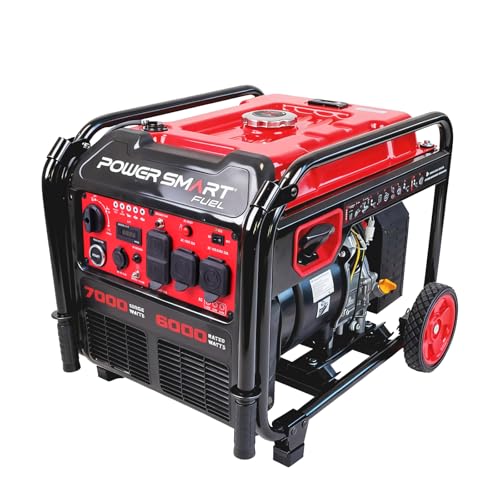
Hybrid power design combines rugged open-frame durability with inverter cleanliness. It delivers a 7000W surge and 6000W running, with a clean sine wave under 3% THD. Ideal for home backup or RV use where sensitive electronics must be protected. The 322cc 4-stroke OHV engine provides about 6 hours of runtime at 50% load on a 3.2-gallon tank, supporting overnight outages.
Best for: Home backup or RV users who require clean power for electronics and reliable cold starts. This model supports 120/240V operation for transfer switches or RV service.
Limitation: To achieve full rated power without tripping, start and let the engine stabilize for 10 minutes before connecting high-wattage loads.
PowerSmart 7000W Open Frame Inverter Generator (PowerSmart 7000W, 322cc)
This model emphasizes the same core strengths: 7000W peak, 6000W continuous, clean power (<3% THD), and a 322cc engine with electric start plus recoil backup. The 120/240V dual voltage makes it suitable for whole-house backup and heavy-duty RV service, with a compact 3.2-gallon tank designed for mid-length outages.
Best for: Users who want strong, steady power with easy ignition and dual-voltage versatility for home or RV setups.
Limitation: Exercise the same startup warm-up to prevent overload on high-wattage appliances during peak demand.
Westinghouse iGen8200TFc Tri-Fuel Inverter

This tri-fuel generator adds versatility with gasoline, propane, and natural gas compatibility. Inverter technology provides consistent power while the 50A transfer switch-ready outlet supports heavy loads like air conditioners and well pumps. It’s designed for quieter operation and reduced fuel usage, making it a practical option for home backup and remote work sites.
Best for: Home backup users who want fuel flexibility and a ready-for-transfer-switch setup for uninterrupted power during outages.
Limitation: For maximum efficiency, ensure appropriate fuel type aligns with intended use to maintain optimal run times.
GENMAX GM7250iEDC Dual Fuel Inverter

This digital dual-fuel inverter provides 7250 starting watts and 6000 running watts on gas, with LPG options offering strong performance. It features a digital display showing running hours, load, fuel level, and amperage. Its 50A outlet supports high-demand 120V service, making it suitable for home backup and parallel operation with compatible units.
Best for: Users who want easy monitoring and dual-fuel flexibility for emergency home power and outdoor use.
Limitation: Data notes parallel capability; confirm compatibility with other units if you plan to pair units for higher capacity.
Pulsar 7,250-Watt Dual Fuel Inverter

Offering 7,250 peak watts and 6,000 running watts on gasoline, plus 6,500 peak and 5,500 running watts on propane, this Pulsar model supports 120V and 240V outputs. Dual-fuel capability adds flexibility for long outages or outdoor events where fuel availability varies. It includes remote start for convenience in less accessible locations.
Best for: Campers or remote job sites needing dependable dual-fuel operation and convenient remote ignition.
Limitation: Higher peak output hinges on fuel supply; monitor fuel levels to avoid unexpected shutdowns under heavy load.
Buying Guide: Key Purchase Considerations
- Power needs: Match continuous (running) watts to appliances and tools. 7000W units are typically chosen for home backup or RV power where higher surge is needed for startup.
- Fuel type: Gasoline, dual-fuel (gasoline/propane), or propane/natural gas options affect runtime, availability, and emissions. Dual-fuel options offer flexibility during outages.
- Inverter benefits: Inverter generators deliver clean power (low THD) suitable for electronics. They also run more quietly and efficiently than traditional open-frame models.
- Transfer switches: If you plan to back up a whole house, look for models with 120/240V dual voltage and a transfer switch-ready interface or explicit transfer-switch compatibility.
- Startup options: Electric start with recoil backup simplifies ignition, especially in cold or remote locations.
- Runtime and fuel efficiency: Check runtime at 50% load and tank capacity. Longer runtimes are helpful for overnight outages or camping trips.
- Portability vs. durability: Open-frame designs are durable and easier to transport, but consider weight, wheels, and handles for frequent moves.
- Safety features: CO sensors, automatic shutoff, and overload protection help ensure safe operation in enclosed spaces or tents.
FAQ
- What does 7000W surge mean on these generators?
– Surge watts indicate the maximum startup power the generator can provide for brief moments to start heavy loads; running watts are the continuous power available during operation. - Are inverter generators quieter than traditional ones?
– Yes. Inverter technology allows engine speed to scale with demand, reducing noise and fuel use. - Which fuel type is best for long outages?
– Dual-fuel models offer flexibility. Propane and natural gas store longer and may be more convenient when gasoline isn’t available. - Is a transfer switch necessary for whole-home backup?
– A transfer switch is highly recommended for safe, code-compliant whole-house backup. Check if the generator is transfer-switch ready or requires additional hardware. - Can these generators run air conditioners?
– Most 7000W inverter units can start and run well pumps and refrigerators; air conditioners depend on unit wattage and startup current. Verify your AC’s starting watts and the generator’s peak capacity. - What maintenance steps improve reliability?
– Regular oil changes, air filter cleaning, and fuel stabilizer use; follow the manufacturer’s warm-up recommendations to stabilize the inverter before heavy loads.