Looking for a 65-watt car charger or higher that can power multiple devices quickly while you’re on the road? This guide highlights top options, explaining who each charger is best for and why. Ideal buyers include travelers needing fast laptop and phone charging, commuters who power multiple devices, and anyone seeking a compact, high-output option for daily use. The table below compares five strong picks to help you choose based on port setup, size, and charging speed.
| Product | Total Output | Best For | |
|---|---|---|---|
| Anker iPhone 17 USB-C Car Charger, 167.5W | 167.5W (100W + 45W + 22.5W) | Power-hungry laptops + multiple devices | Higher price point |
| UGREEN 130W USB C Car Charger | 130W (PD 100W + PD 30W) | MacBook, iPad, and high-power phones | USB-C only ports on some models |
| MRGLAS 125W Car Charger USB C | 125W (PD65W + QC60W) | Two devices at once with high-speed USB-C | Smaller form factor may limit port density |
| iMyOnly PD65W USB C Car Charger | 87.5W total (65W USB-C + 22.5W USB-A) | iPhone, iPad, and notebooks on the go | Lower total output than multi-port rivals |
| LISEN 90W USB C Car Charger | 90W (two 45W USB-C ports) | Two high-power PD devices simultaneously | Two USB-C ports may limit if you need USB-A |
Anker iPhone 17 USB-C Car Charger, 167.5W Max

The Anker model offers three ports with a total 167.5W output: 100W on USB-C1, 45W on USB-C2, and 22.5W on USB-A. This makes it suitable for users who need to charge a MacBook Pro or Air alongside a phone and tablet without slowing down. Best for tech-heavy travelers who carry a laptop and multiple USB devices.
Selected for: High-output charging for laptops plus quick fills for phones and tablets. Caution: The high port count can mean a larger unit and a higher price.
UGREEN 130W USB C Car Charger

The UGREEN charger delivers a robust 130W total, split into a 100W USB-C port and a 30W USB-C port. It’s ideal for users who need to power a MacBook or iPad along with a phone on long trips. Best for those prioritizing top-speed PD charging and compatibility with most 12V/24V sockets. Limitation: Some setups may benefit from a USB-A option for legacy devices.
MRGLAS 125W Car Charger USB C

MRGLAS combines 65W PD on USB-C with 60W QC on USB-A, delivering 125W total. This supports fast charging for iPhone 17 Pro Max, Samsung S25, and laptops simultaneously. Best for users who want a compact, high-power dual-port charger. Caution: The product emphasizes two high-power ports, which may limit further port expansion in some cars.
iMyOnly PD65W USB C Car Charger

This charger provides 87.5W total with 65W USB-C and 22.5W USB-A. It supports PD3.0, QC4.0, PPS, AFC, making it versatile for iPhone, iPad, MacBook, and Galaxy devices. Best for travelers who want strong USB-C power with a solid USB-A option. Limitation: Total output is lower than multi-port, high-output rivals.
LISEN 90W USB C Car Charger
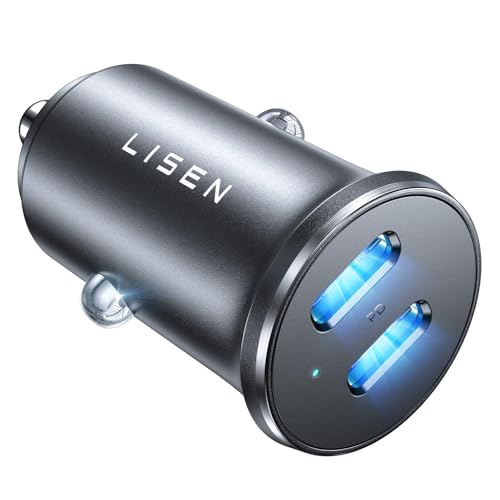
LISEN pairs two 45W USB-C ports for a total of 90W, enabling fast charging for two PD devices at once. It’s well-suited for users who regularly charge two high-power devices simultaneously, such as an iPhone 17 Pro Max and an iPad Pro. Best for dual-device fast charging; caution: no USB-A port on this model.
Buying Guide
Port configuration matters. If you need to power a laptop plus a phone, prioritize 100W USB-C ports or dual high-power USB-C ports. For lighter use, a paired USB-C and USB-A setup can cover phones, tablets, and some notebooks. Consider car socket fit and heat management to avoid overheating on long drives.
Key purchase considerations
- Total power budget: Higher total wattage enables charging multiple devices quickly. Look for 100W USB-C ports when charging laptops.
- Port type mix: USB-C PD ports deliver the fastest charging for modern devices; USB-A may be needed for older gear.
- Number of ports: More ports offer flexibility, but ensure the form factor fits your vehicle’s power outlet without blockage.
- Heat management: Metal bodies or advanced cooling help maintain performance during extended use.
- Safety features: Overheat, over-current, and short-circuit protection are essential for vehicle use.
Usage scenarios
- Road trips with a laptop and two mobile devices: Choose a charger with at least two high-power USB-C ports and one USB-A if needed.
- Daily commuting with a phone and tablet: A dual USB-C setup at 65W+ is often sufficient.
- Frequent gadget upgrades: A higher-wattage, multi-port charger provides longer-term flexibility.
FAQ
- Q: Is a 65W car charger enough for a MacBook Pro?
- Q: Should I prioritize USB-C PD ports over USB-A ports?
- Q: Can I charge two high-power devices at the same time?
- Q: Are metal-bodied car chargers safer?
- Q: Do all car chargers fit every 12V/24V outlet?
- Q: Is the higher wattage always better?
A: Yes, many 65W USB-C car chargers can power a MacBook Pro, but charging speed depends on the notebook model and battery state.
A: Yes, USB-C PD ports deliver faster charging for modern devices like iPhones, iPads, and Macs. USB-A is useful for older accessories.
A: Look for chargers with dual high-power USB-C ports (e.g., 45W/45W or 65W/30W) to balance charging speeds.
A: Metal bodies can improve heat dissipation, which helps maintain performance and longevity under load.
A: Most are designed for common cigarette lighter sockets, but verify socket size and depth for your vehicle.
A: Higher wattage is advantageous when powering multiple devices or laptops; for simple phone charging, lower wattage can be sufficient and more compact.