Clear answer: For reliable 500-watt power, lightweight gas generators and portable power stations offer compact, fuel-efficient options suitable for nearby outages, RV trips, and outdoor camping. This guide highlights five standout models, explaining who they’re best for, and why they fit under the 500-watt threshold. Ideal buyers include weekend campers needing quiet operation, emergency prep kits for apartments, and RV users seeking small, dependable auxiliary power.
Summary table of selected products:
| Product | Best For | Notes |
|---|---|---|
| GRECELL 519.48Wh Solar Generator | Home backup and outdoor trips requiring silent operation | Pure sine wave, multiple outputs, no gasoline |
| Aceup Energy 1200W Gas Generator | Small home use with reliable 120V power | 1200 peak, recoil start, EPA compliant |
| Oxseryn 4400W Inverter Generator | RV ready and extended outdoor use | Open frame, ECO mode, high capacity |
| Aceup Energy 1200W Gas Powered | Compact camping and portable power | 71cc engine, recoil start |
| Pulsar PG1200 and Pulsar PG1202SA | Weekend camping and portable backup | 1200W class, easy to carry |
| PowerSmart 1200W Portable Generator | Lightweight outdoor power | ULTRALIGHT design, 5-hour runtime at 50% |
GRECELL 519.48Wh Portable Power Station

Best for: Home backup and quiet outdoor use. This solar generator provides a pure sine wave output for sensitive electronics and up to 519.48Wh of capacity, supporting devices like phones, laptops, routers, small TVs, and CPAP machines with under-500W draw. It’s well suited for apartment outages or camping without gasoline fumes.
- Key outputs include 2 x 120V AC (500W), USB-A ports, USB-C PD, DC ports, car port, and wireless charging.
- Smart battery management system protects against temperature, overvoltage, and short circuits; the inverter helps protect delicate electronics.
- Limitation: Maximum sustained AC output is 500W, so high-watt appliances exceed its capacity.
Aceup Energy 1200W Gas Generator

Best for: Small home use needing reliable 120V power and longer runtime. The unit offers 900 running watts and 1200 peak watts with a recoil start and a 60 Hz output, plus a 1.1 gallon tank for multiple hours of operation depending on load. This is a solid choice when you require consistent short-term power and an EPA-compliant design.
- Two-prong and DC outlets support common household devices.
- Limitations: Fuel-powered operation generates noise and emissions; longer runtimes depend on fuel availability.
Oxseryn 4400-Watts Inverter Generator
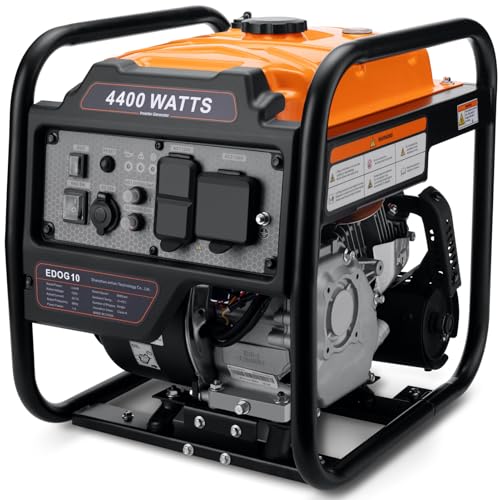
Best for: RV readiness and extended outdoor use. Although it exceeds the 500W mark, this section notes high-w watt capability to illustrate variety in the market. It features 4400 peak and 3400 running watts, multiple outlets, long runtimes, and ECO mode for efficiency. If you need more power for camp appliances, this is the better option—avoid if you strictly need sub-500W output.
- Includes 2 x 120V AC ports, RV outlet, and 12V DC port.
- Limitation: Higher power class; heavier and louder than lightweight models.
Aceup Energy 1,200W Gas Powered Generator
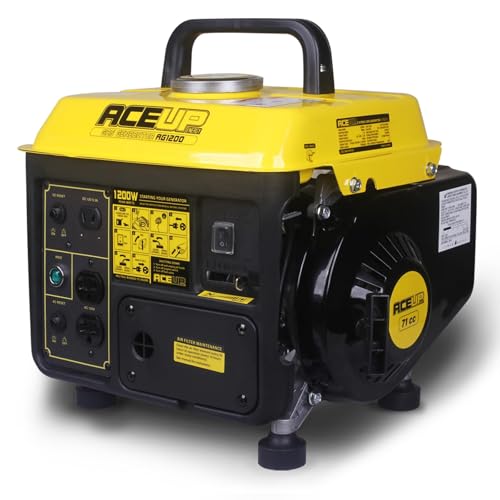
Best for: Compact camping and portable power with solid peak output. This 1,200W gas generator delivers 900 running watts and a recoil-start engine, packaged in a light 35.3 lb design. It’s suitable for powering small appliances and tools during outdoor trips while maintaining portability.
- Equipped with a 71cc single-cylinder, 2-stroke engine and an American-style outlet.
- Limitation: Not ideal for prolonged high-load use; best for short outdoor sessions.
Pulsar G1200SG 1,200W Carrying Handle

Best for: Portable power with easy carrying for weekend trips. The Pulsar G1200SG provides 1,200 peak watts and 900 running watts, featuring a carrying handle for mobility and straightforward operation. Choose this if you need a compact unit you can move between campsites or tailgates.
- Simple, lightweight design with basic controls.
- Limitation: Higher wattage tier may require more fuel and maintenance than sub-500W units.
Pulsar 1,200W Carrying Handle PG1202SA

Best for: Camping and outdoor recreation with a compact design and recoil start. The PG1202SA offers 1,200 peak watts and 900 running watts in a durable, two-stroke engine setup. It’s a fit for users who want quick-start power for lights, cooking gear, and small devices at the campsite.
- Recoil start and a compact design for portability.
- Limitation: Gas consumption can be higher during extended usage; consider fuel planning.
PowerSmart 1200W Portable Generator

Best for: Lightweight outdoor power with easy transport. The PowerSmart unit delivers 1200 surge watts and 900 running watts in a compact, 34 lb package with a carrying handle. This makes it a strong pick for campers and outdoor workers who need reliable, mobile power for essential devices and tools.
- Ultra-lightweight design with ergonomic carry handle.
- Limitation: Two-stroke engine requires fuel management and may be louder than inverter-based options.
Buying Guide: Key Considerations For Choosing A 500 Watt Gas Generator
What matters most when selecting a generator in the sub-500W to portable 1,200W class? Consider the following:
- Power needs: List essential devices and total wattage to ensure the unit’s peak and running watts meet or exceed demand without frequent overloading.
- Fuel type and runtime: Gas-powered models vary in tank size and efficiency. For longer camping trips, prioritize units with better runtime per load and easy refueling options.
- Portability: Weight, handles, and compact dimensions determine ease of transport to campsites or outdoor events.
- Noise level: Inverter generators and some compact units operate quieter than traditional open-frame engines, which matters for neighbor-friendly use and outdoor environments.
- Outlets and connectivity: Ensure the generator offers necessary outlets (AC, USB-C, USB-A, 12V, RV ports) to support your devices without adapters.
- Safety features: Look for overload protection, low-oil shutdown, and a battery management system for power stations to protect both the unit and devices.
- Compliance: EPA and CARB compliance indicate cleaner operation, important for outdoor use and areas with air-quality requirements.
FAQ
- What is the difference between a gas generator and a portable power station?
Gas generators burn fuel to produce electricity and often provide higher wattage; portable power stations store lithium or other batteries and run on internal batteries, solar input, or a smaller fuel source. Choose based on fuel availability, noise tolerance, and power needs.
- Can a 500W generator run a CPAP machine?
Many CPAP machines require less than 100W, but check the exact model’s running wattage and surge requirements. A pure sine wave, stable output is preferred to protect sensitive equipment.
- Is inverter technology worth it for camping?
Yes. Inverter generators provide cleaner power with stable voltage, reducing risk to electronics and improving efficiency at lower loads.
- How long can a small gas generator run on a full tank?
Runtime depends on tank capacity and load. Units with larger tanks at moderate loads can run several hours, while high-load operation reduces runtime.
- Are there quiet options for backyard outages?
Yes. Many compact models with inverter technology are designed for quiet operation, making them suitable for nighttime outages or shared spaces.
- When should I choose a power station over a gas generator?
If you prefer silent operation, no fuel handling, and recurring use with solar charging, a power station is advantageous. For higher wattage needs, gas generators are often more practical.