Yes, a 50 amp propane RV generator can deliver reliable, high-power backup and on-site power for RV adventures. This guide highlights five top options, focusing on models that offer true 50A RV-ready outlets and propane flexibility. Each pick is evaluated for RV use, safety features, and fuel efficiency to help you choose the right generator for your rig and energy needs.
| Product | Best For | Why It Stands Out |
|---|---|---|
| AIVOLT 7500W Dual Fuel | Full-time RVers, power-hungry rigs | Strong 50A RV outlet, CO safety, dual fuel flexibility |
| AIVOLT 8000W Dual Fuel Inverter | Quiet campsites, electronics protection | Inverter efficiency, ultra-quiet operation, dual fuel |
| DuroStar DS13000MX | Whole-home backup or large RVs | Very high wattage, robust safety, transfer-capable |
| AIVOLT 11250W Dual Fuel Inverter | Remote starts and fuel flexibility | Remote start, dual fuel, 50A RV readiness |
| Westinghouse Tri-Fuel iGen8200TFc | Versatile fuel options and electronics | Tri-fuel, inverter, 50A RV outlet |
AIVOLT 7500 Watt Dual Fuel Portable Generator

Best for high-demand RV power with flexible fuel options. This model delivers 7500 peak watts on gasoline and 6800 peak watts on propane, with 6300/5800 running watts respectively. It includes a 50A NEMA 14-50R RV outlet, a 120V 30A twist-lock, and standard 120V outlets. It’s designed for home backup, job sites, and camping trips where heavy loads are common.
- Dual fuel flexibility lets you run on propane when gasoline isn’t convenient.
- CO Watch-Guard with red/yellow alerts and automatic shutdown for carbon monoxide safety.
- Includes multi-circuit breakers and a USDA-compliant spark arrestor for safe outdoor use.
Who it’s best for: RV owners needing strong, reliable power for air conditioners, appliances, and tools, with safety features that make it suitable for frequent camping and backup use. Caution: Propane fuel availability can affect runtime; plan fuel storage accordingly.
AIVOLT 8000W Dual Fuel Inverter Generator

Best for quiet, electronics-friendly RV power with long runtimes. This inverter model provides 8000 starting watts and 6100 running watts, with eco mode for efficient fuel use. It weighs about 131 pounds and rolls on two wheels, making transport easier for RV enthusiasts who value portability and low noise on campsites.
- Ultra-quiet operation at 62 dBA at 23 feet, ideal for quiet camping areas.
- Dual fuel with automatic switching, supporting propane and gasoline without manual changes.
- Inverter technology delivers clean power suitable for sensitive electronics.
Who it’s best for: Campers and RVers who prioritize low noise and clean power for electronics. Caution: Heavier than some portable units; ensure you have a suitable storage and transport plan.
DuroStar DS13000MX 13,000-Watt Dual Fuel

Best for large RVs or home backup where maximum power is necessary. This unit offers 13,000 watts on gasoline and 11,000+ on propane, with a strong dual-fuel design and safety features like CO alert. It’s built for heavy duty use, including remote electric start and transfer switch readiness.
- High wattage ensures simultaneous operation of air conditioning, heating, and appliances.
- Dual fuel provides flexibility and potentially longer runtimes with propane.
- CO alarm enhances safety during operation in enclosed spaces or garages.
Who it’s best for: RVs with demanding power needs, or as a robust home backup. Caution: Higher weight and size require more storage space and a capable mounting or transport plan.
AIVOLT 11250W Dual Fuel Inverter Generator
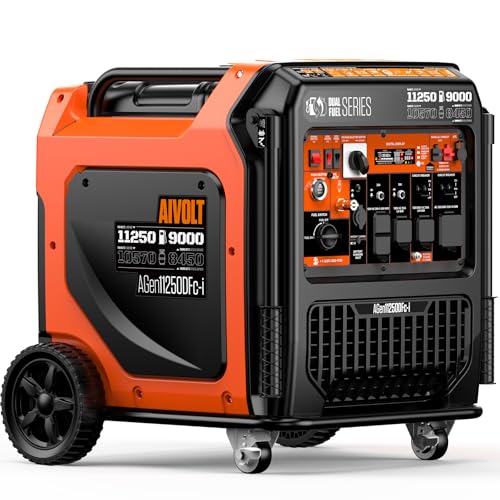
Best for advanced RV setups needing remote start and fuel flexibility. This inverter generator handles 11250 gasoline watts or 10570 propane watts, with 9000W running on gasoline. It includes 50A RV readiness, and CARB compliance for broad U.S. use, making it versatile for home backup and travel.
- Remote start for convenient operation from inside the rig.
- Easy gas-to-propane switching while running, with protection features like low-oil shutoff.
- Designed to connect to home electrical panels for backup power in emergencies.
Who it’s best for: RV owners who want convenient remote operation and a strong, flexible power source for travel, work sites, or home backup. Caution: Higher upfront cost; consider runtime and fuel logistics for extended trips.
Westinghouse iGen8200TFc Tri-Fuel Inverter

Best for flexible fuels and electronics-friendly RV needs. This tri-fuel inverter delivers gasoline, propane, and natural gas options, with a 50A RV-ready outlet for large loads. Inverter technology reduces noise and improves power quality for sensitive devices.
- Tri-fuel capability broadens fuel options on the road or at camp.
- Inverter power with lower total harmonic distortion ensures safe operation of electronics.
- Remote and transfer-switch readiness supports integration with home backup systems.
Who it’s best for: RVers who value versatility and a quieter, cleaner power output. Caution: Tri-fuel systems can be more complex; ensure proper maintenance and fuel management.
Buying Guide
Key considerations when choosing a 50A propane RV generator:
- Power needs: Calculate peak watts for air conditioners, heating, and appliances. A unit with a true 50A RV outlet (NEMA 14-50R) should be able to handle essential RV loads without overdrawing.
- Fuel type and availability: Propane offers clean burns and shelf stability, but consider propane supply and portability. Dual-fuel options add flexibility for remote trips.
- Portability and weight: Inverter generators are quieter and safer for electronics but can be heavier. A mobile kit or wheel kit improves transport on uneven terrain.
- Safety features: Look for CO detectors, low-oil shutoffs, automatic shutdown, and spark arrestors. These features protect occupants and the unit in adverse conditions.
- Noise and runtime: Inverter models typically run quieter and more efficiently. Assess runtime at typical loads to ensure the unit covers your trip duration.
- Compatibility with home backup systems: If you plan to connect to a transfer switch, verify receptacles and interconnection compatibility with your home or RV electrical panel.
- Maintenance and service: Consider after-sales support, spare parts availability, and local service options for dual-fuel engines.
Frequently Asked Questions
- What does 50A RV-ready mean on a generator?
– It refers to an outlet capable of delivering up to 50 amps at 120/240V, suitable for many larger RV appliances and air conditioners. - Is propane power enough for a full RV trip?
– Propane is fuel-efficient and convenient for outdoor use, but plan for refueling or backup fuel if you have high-power needs. - Can I run a generator indoors?
– Generators should never be operated indoors or in enclosed spaces due to carbon monoxide risk. Always use outdoors with proper ventilation. - Are dual-fuel generators worth the extra cost?
– For trips where gasoline may be scarce or expensive, dual-fuel options provide flexibility and longer venturing capability. - How important is an automatic CO shutoff?
– It is a critical safety feature that protects occupants by stopping the engine when carbon monoxide levels are high. - Do I need a transfer switch for RV use?
– A transfer switch helps safely connect the generator to a home or RV electrical panel, enabling seamless power distribution during outages.