If you need reliable dual fuel power with a 50A RV-ready outlet, these 50 amp dual fuel generators top the list for American homes and campsites. They run on gasoline or propane, offer transfer-switch compatibility, and provide substantial wattage for whole-house or off-grid needs. This guide highlights five strong options and explains who each unit is best for, plus a practical buying table to compare key specs at a glance.
Summary table of chosen products
| Product | Fuel Options | Approximate Peak/Running Watts | Best For | Notes |
|---|---|---|---|---|
| Westinghouse 12500 Dual Fuel | Gas or Propane | 12500/9500 (gas); 11200/8500 (propane) | Home backup with transfer switch readiness | 50A RV outlet, digital hour meter |
| Westinghouse 13500 Peak Watt | Gas or Propane | 13500/10500 (gas); 12500/9500 (propane) | Higher peak needs, extended outages | CO shutdown, long run time |
| Westinghouse 12500 Peak Watt Dual Fuel | Gas or Propane | 12500/9500 (gas); 11200/8500 (propane) | Balanced power with RV readiness | CO and low-oil protections |
| DuroStar DS13000MX | Gas or Propane | 13000 (gas) / 13000 (propane) | Whole-home backup and heavy loads | Transfer-switch ready |
| AIVOLT 7500-Watt Dual Fuel | Gas or Propane | 7500/6300 (gas); 6800/5800 (propane) | RV and emergency backup with strong outlets | 50A RV outlet, CO protection |
Westinghouse 12500 Watt Dual Fuel Home Backup Generator

Brand: Westinghouse
Overview: 9500 running watts and 12500 peak watts on gasoline; 8500 running watts and 11200 peak watts on propane. Features remote electric start with key fob, transfer switch readiness, and a 6.6 gallon tank with fuel gauge for up to 12 hours run time. Outlets include two GFCI 120V 20A outlets, one L14-30R 30A transfer switch, and an RV-ready 14-50R 50A receptacle. Engine: 457cc Westinghouse 4-stroke OHV with auto low-oil shutdown and digital hour meter. VFT display shows real-time voltage, frequency, and lifetime hours.
Best for: Homeowners needing strong backup power with a dedicated 50A RV outlet and transfer-switch compatibility. It is a solid all-around choice for medium to large homes with routine outages.
Caution: The 6.6 gallon tank limits run time under heavy load; plan fueling and venting accordingly.
Westinghouse 13500 Peak Watt Dual Fuel Generator

Brand: Westinghouse
Overview: 10500 running watts on gasoline and 9500 on propane, with a peak of 13500 watts on gas and 12500 on propane. Remote start with key fob, and a long runtime on a 9.5 gallon fuel tank. Features two GFCI 120V 20A outlets, one L14-30R 30A transfer switch, and one 14-50R 50A RV outlet. Safety includes automatic low-oil shutdown, CO shutdown, and a digital hour meter. Heavy-duty 500cc engine for robust performance.
Best for: Homeowners facing longer outages or higher power demand, where peak wattage matters for tools, HVAC, and multiple appliances. Better for larger homes or equipment-heavy setups.
Caution: Higher-weight unit may require more lifting and stable storage space; ensure proper ventilation and clearance outdoors.
Westinghouse 12500 Peak Watt Dual Fuel Generator

Brand: Westinghouse
Overview: Remote electric start, transfer switch readiness, and dual-fuel operation. Gas mode provides 9500 running watts and 12500 peak watts; propane mode offers 8500 running watts and 11200 peak watts. 6.6 gallon tank with fuel gauge for up to 12 hours of operation. Outlets include GFCI 120V 20A, L14-30R 30A, and 14-50R 50A RV outlet. Engine: 457cc with cast iron sleeve; includes automatic low oil shutdown and digital hour meter. CO shutdown and safety features included.
Best for: Buyers seeking balanced power with reliable RV capability and safe operation. Choose this if you want a cost-effective all-around dual-fuel option for frequent outages.
Caution: Gasoline may provide quicker surge power; propane offers steadier, longer-run options but at slightly reduced peak watts.
DuroStar DS13000MX 13,000-Watt Dual Fuel Generator

Brand: DuroStar
Overview: 13,000 watts of reliable dual-fuel power for home backup, with remote electric start and transfer switch readiness. Propane or gasoline capability supports flexible fuel management in emergencies. Features a robust build designed for whole-home power scenarios and RV readiness, delivering strong performance in demanding situations.
Best for: Homeowners needing substantial wattage for entire household circuits during outages or jobsites requiring consistent power. Choose this if you expect long outages and higher load demands.
Caution: Dual fuel units can be heavier; ensure proper placement and secure setup for outdoor use in windy conditions.
WEN 6800-Watt Dual Fuel Inverter (DF680iX)

Brand: WEN
Overview: 224cc dual-fuel engine with 6800 surge watts (gas) and 6000 surge watts (propane). Includes low-emission features and a CO watchdog for safety. 240V bonded-neutral configuration supports level 2 charging for EVs, making it a flexible option for small to mid-size backup needs.
Best for: RV travelers and smaller homes that don’t require 50A RV service but still want reliable dual-fuel power with EV charging capability. Avoid this if you specifically need a 50A RV outlet.
Caution: Lower running wattage compared to 50A models; may not support full-home loads during peak outages.
WEN 11,000-Watt Dual Fuel Generator (DF1100T)
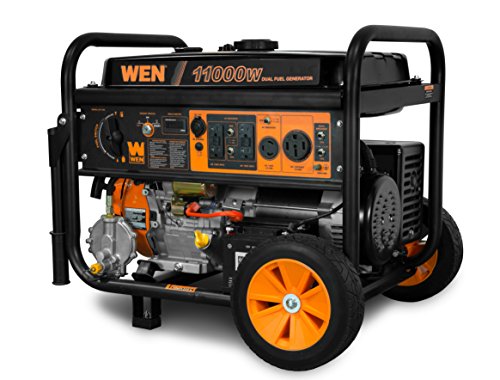
Brand: WEN
Overview: 11,000 surge watts and 8,300 running watts on gasoline; 9,500 surge and 7,500 running on propane. Allows 120V/240V operation for transfer switches and emergency backup. Electric start with a 457cc OHV engine for straightforward operation.
Best for: Households needing solid dual-fuel performance with transfer-switch compatibility but not specifically 50A RV ready. Choose this if you want a feature-rich WEN model with broad compatibility.
Caution: Not a dedicated 50A RV outlet unit; may require a different receptacle for full RV power needs.
Buying Guide: Key Considerations For 50 Amp Dual Fuel Generators
What wattage do you actually need?
Estimate your essentials first: air conditioning, heating, refrigerators, lights, and communication devices. If you plan to run heavy loads simultaneously, a higher peak wattage helps prevent brownouts. For RV use, the 50A outlet capacity matters for full hookup scenarios.
Fuel versatility vs. runtime
Dual fuel units provide flexibility between gasoline and propane. Gasoline typically offers higher peak watts, while propane can deliver longer run times with cleaner emissions. Consider local fuel availability and storage space when choosing a model.
Transfer switch compatibility
Most 50A dual fuel generators are “transfer switch ready.” Ensure your home’s transfer system matches the generator’s outlet configuration and amperage. This avoids wiring mismatches and simplifies installation with a qualified electrician.
Safety features you should not overlook
Important safety features include CO shutoff/CO alert, automatic low-oil shutdown, and durable circuit protection (GFCI outlets). These safeguards help protect your family and equipment during operation.
Portability vs. capacity
Heavy, high-watt units deliver more power but require secure outdoor placement and proper handling. If you need mobility, look for wheels and ergonomic handles, but be mindful of weight when selecting a 50A-capable unit.
Maintenance and durability
Look for engines with cast iron sleeves and reliable brand support. Regular oil changes, filter maintenance, and fuel stabilization are essential for long-term performance in backup scenarios.
Usage scenarios to compare
- Home backup: prioritize higher running watts for continuous operation of critical appliances.
- RV and outdoor use: ensure a robust 50A receptacle and strong surge watts for startup loads.
- Emergency outages: consider longer runtime with propane for storage and surge management.
FAQ
Q: Do I need a 50A outlet to run a whole home?
A: For full-home simultaneous operation, a 50A RV-ready outlet is commonly needed, but confirm with your transfer-switch configuration and appliance load calculations.
Q: Is propane safer or cleaner than gasoline?
A: Propane typically produces fewer emissions and cleaner burning, and offers longer run times at lower fuel costs, depending on availability and tank size.
Q: How important is CO protection on a generator?
A: CO protection can prevent dangerous exposure by automatically shutting down the engine when CO levels rise, which is crucial for safety in enclosed spaces or limited ventilation.
Q: Can I run a generator indoors to power more devices?
A: No. Generators should operate outdoors in a well-ventilated area to avoid carbon monoxide buildup and fire hazards.
Q: Should I choose a higher wattage unit if I expect occasional peak loads?
A: Yes. If peak loads occur frequently, a higher wattage unit provides headroom to prevent startup strains and allows for margin during outages.