Answer: For reliable 48V wind-powered energy at home, these models offer strong performance, scalable options, and practical features for different budgets. The top picks are best for homeowners seeking off-grid or grid-tied backup power, farm properties, or remote cabins. Below is a quick buyer’s snapshot of five suitable 48V wind turbine generators, followed by a detailed guide and answers to common questions.
| Product | Power Range | Best For |
|---|---|---|
| Tsampa Vertical Axis Wind Turbine Generator 20000W | Up to 48V | Large homes, off-grid systems needing higher capacity |
| Lbxlhr Upgraded Vertical Axis Turbine (12000W) | 12V/24V/48V | Hybrid wind-solar setups, longer lifetime expectations |
| Fablestoryem 14000W Wind Turbine Kit | 12V/24V/48V/110V/220V | Residential microgrids, multi-voltage flexibility |
| OLONETO 3000W Wind Turbine Kit (48V) | 48V | Compact installations, quick setup, cost-conscious |
| Generic Vertical Wind Turbines 8000W | 48V option | Stable performance with 360° wind capture, versatile use |
Tsampa 20000W Vertical Axis Turbine (48V)

The Tsampa vertical axis turbine uses precision injection-molded blades and an aerodynamic design to maximize wind capture at low speeds. It includes a 3-phase AC output suitable for 48V configurations and supports small to medium home energy supplementation. Best for buyers seeking robust wind capture with a compact footprint for year-round use in varied climates, from -40°C to 80°C. Caution: larger wind turbines may require structural assessment and professional installation for safety and compliance.
Lbxlhr 12000W Vertical Axis Turbine (48V)

This model features planetary guidance with a maglev generator for lower start torque and longer service life. It supports 12V/24V/48V/220V systems and relies on a PMG-driven three-phase output for efficient wind energy capture. Best for hybrid wind-solar systems and properties where long lifespan and easier wind-start performance matter. Choose this if you want a high-capacity vertical turbine without a yaw system. Limitation: maximum RPM protection is recommended to avoid over-speed situations in strong gusts.
Fablestoryem 14000W Wind Turbine Kit (Multi-Voltage)
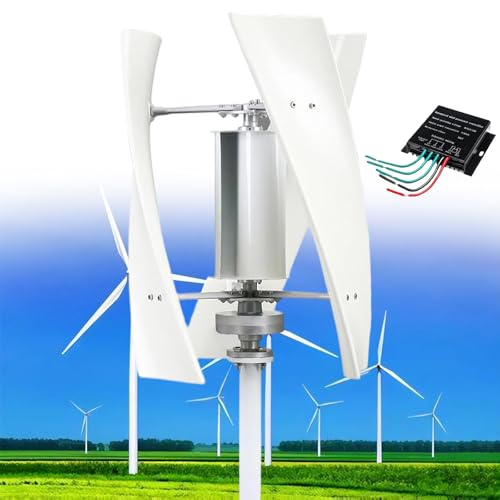
The Fablestoryem kit uses reinforced nylon blades with optimized aerodynamics to deliver higher power outputs and can operate across multiple voltage levels including 48V. The vertical design helps minimize noise and suits residential installations or decorative rooflines. Best for homeowners needing flexibility in voltage selection and quiet operation. Caution: actual performance depends on wind availability and proper mounting.
OLONETO 3000W Wind Turbine Kit (48V)

The OLONETO kit uses aluminum alloy die-casting and nylon fiber blades to optimize wind energy utilization. It features a compact form, low operating vibration, and three-phase AC output suitable for 48V systems. Best for small properties, curious hobbyists, or users seeking a straightforward kit with solid performance. Limitation: smaller capacity compared to higher-wattage models may require larger arrays for substantial gains.
Generic 8000W Vertical Wind Turbine (48V)

These vertical turbines are designed for 360-degree wind capture with a high-efficiency generator and robust blade design. Best for varied wind environments where consistent energy output matters and where a non-yaw approach simplifies installation. Caution: specifics on RPM and microprocessor control are not standardized across all units, so verify compatibility with your controller.
Buying Guide: How to Choose a 48V Wind Turbine Generator
- Power needs and scale: Estimate your daily energy consumption and pick a turbine with wattage that complements your storage and inverter capacity. Higher wattage models can better offset intermittent winds but require stronger anchors and support.
- Voltage compatibility: Ensure the turbine supports 48V and matches your battery bank or hybrid system. Some kits offer multi-voltage outputs for flexibility.
- Direction handling: Vertical axis designs often don’t require a yaw mechanism, capturing wind from multiple directions. Horizontal designs may need proper orientation or yaw control for optimal performance.
- Noise and vibration: For residential use, look for models advertised as low-noise or quiet operation and assess mounting options to minimize vibration transfer to structures.
- Durability: Consider blade material (nylon fiber, FRP), bearing type, and generator design for longevity in your climate, especially temperature ranges and salt exposure near coastlines.
- Installation and maintenance: Some kits emphasize easy assembly and integrated MPPT controllers, while others rely on separate components. Plan for professional installation if electrical codes or roof mounts are a concern.
- Control strategy: MPPT controllers improve energy capture by adjusting the electrical load. Verify controller compatibility with your battery chemistry and inverter.
- Cost vs. payoff: Higher-capacity turbines deliver more energy but require more robust mounts, maintenance, and storage capacity. Balance upfront costs with long-term energy savings.
Frequently Asked Questions
- What size wind turbine do I need for a 48V system? A turbine’s wattage should align with your average wind resource and storage capacity. For modest off-grid needs, 3–8 kW units are common; for larger homes, consider 10 kW or more, with adequate battery storage.
- Do vertical axis turbines work well in low wind? Yes, many vertical designs can start at lower wind speeds, offering steadier operation in light winds, though output scales with wind availability.
- Is a yaw system necessary for 48V turbines? Vertical axis turbines often do not require yaw alignment, which simplifies installation. Horizontal-axis models may need yaw control to optimize wind capture.
- What maintenance is typical for 48V wind turbines? Regular inspections of blades, bearings, and electrical connections are advised. MPPT controllers and inverters should be checked for firmware updates and proper grounding.
- Can these systems be grid-tied? Many 48V setups support hybrid configurations with batteries and inverters. Always follow local electrical codes and utility interconnection requirements.
- Are these turbines weather-resistant? Most models list operating ranges and materials suited for varied climates, including cold and high-humidity environments. Confirm corrosion resistance if near the sea or in salty air.