Answer: This guide helps shoppers pick 400-watt solar panels that fit off-grid setups, RVs, cabins, and portable power systems. It highlights five top options, explains who each is best for, and points out practical limits. Ideal buyers include van life and RV travelers, small off-grid homes, and emergency backup planners seeking robust, flexible 400W kits.
The table below compares five strong 400W choices to help you decide quickly. All entries include a direct Amazon link for quick reference, product type, and a note on best-use scenarios.
| Product | ||
|---|---|---|
| DOKIO Monocrystalline 400W | 1 panel, MC4 3 m lead | Fixed off-grid sheds, yard installations, or small systems |
| Callsun N-Type 200W x 2 (Bifacial 400W) | Twin 200W panels, bifacial | Higher-latitude or reflective setups with shading concerns |
| EPOCH 800W Bifacial (Two 400W) | Two 400W modules, bifacial | Home-roof or off-grid arrays needing more total watts |
| TWELSEAVAN 400W Portable | Portable foldable, ETFE | Camping, emergencies, portable power stations |
| VEVOR 400W Foldable | Foldable, MC4 + 10-in-1 DC adapters | Portable power stations and travel-friendly setups |
DOKIO Monocrystalline 400W Panel

Key features: Rated 400W at standard test conditions; 3 m MC4 cable for longer routing; aluminum frame and pre-drilled holes for yard or shed mounting. MPPT compatibility is noted as helping steadier charging under variable sun and temperature. Best for fixed installations where run length matters and a robust, weather-ready panel is desired.
Best for: Off-grid cabins or sheds that require a single, solid 400W source with flexible wiring routes. Use parallel wiring for most 12V systems to maximize stability; avoid series unless your controller explicitly supports higher input voltages.
Limitation: Real-world output may vary with sun angle, temperature, shading, and cable runs. Ensure a compatible charge controller and mounting plan to minimize performance losses.
Callsun N-Type 400W (Twin 200W) Bifacial

Key features: N-Type 16BB high-efficiency cells with up to 25% conversion efficiency; bifacial design to capture rear-side light, potentially boosting total output by up to 30%; anti-shade design with twin-module parallel architecture to maintain energy when parts of the panel are shaded. Best for shading-prone sites or setups needing extra wattage without increasing panel count.
Best for: Roofs or installations where shading occurs or reflective surfaces (like snow) on the ground can help rear-side capture. Use when maximizing energy in varied lighting is important.
Caution: Bifacial gains depend on reflective albedo and installation specifics; real-world gains can vary. Ensure mounting allows rear-side sun access.
EPOCH 800W Bifacial (2×400W)
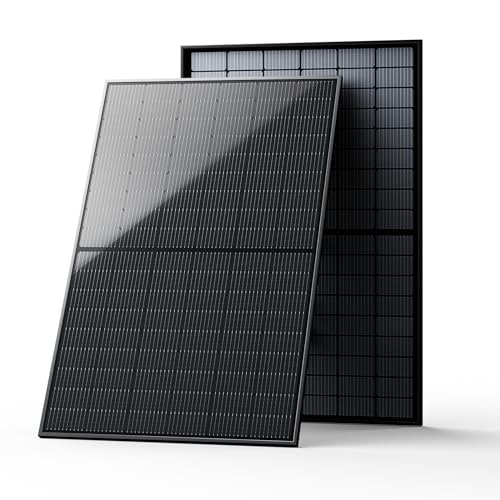
Key features: Class A N-type cells with PERC and half-cut designs; double-sided transparency to boost efficiency; IP68 junction box and MC-4 connectors for weather resistance. High efficiency up to 25% with robust durability claims for harsh conditions.
Best for: Larger off-grid systems or RV/marine applications needing more total watts from a pair of panels. Consider for roof installations where durability and extended lifespans are priorities.
Limitation: As a dual-panel 800W configuration, ensure your inverter/controller can handle higher input currents and that mounting space accommodates the two-panel footprint.
TWELSEAVAN 400W Portable Solar Panel

Key features: Up to 24% efficiency with A+ grade monocrystalline cells; ETFE laminated case with high light transmission; 9.8 ft MC4 connector cable and multiple adapters for compatibility with popular power stations. Foldable design plus four adjustable kickstands for versatile setup.
Best for: Outdoor camping, emergency power for RVs, and portable power stations where quick setup and rugged portability are needed. Ideal for travelers who need a compact, high-efficiency panel that travels well.
Limitation: Portable panels may not deliver peak 400W in poor sunlight; performance depends on sun conditions and angle. Heavier than smaller portable units when fully deployed.
VEVOR 400W Foldable Solar Panel

Key features: Foldable design with 16BB PERC cells and ≥24% efficiency; built-in MC4 wiring plus a 10-in-1 DC adapter kit for broad compatibility with power stations. IP67 waterproof connectors ensure resilience in varied environments.
Best for: People needing a highly portable yet capable 400W option that plays well with many power stations and portable systems. Choose this if you want extensive adapter options in a compact form.
Limitation: Folding panels require careful storage and handling; some setups may need additional mounting options for stable positioning in windy locations.
Buying Guide
What to consider when choosing a 400W panel
- System type: Fixed roof or ground-mounted versus portable or foldable. Portable panels excel for camping and emergencies, while fixed installations may prioritize mounting options and durability.
- Cell technology: N-type versus P-type cells and bifacial design. N-type and bifacial panels can offer higher efficiency and better shading tolerance, but installation specifics influence gains.
- Wiring strategy: Parallel vs series. For 12V systems, parallel wiring generally provides steadier charging; series connections require compatible controllers with higher input voltage ratings.
- Durability and weatherproofing: Look for IP ratings, robust frames, and secure junction boxes for outdoor use. Bifacial and hail-resistant designs add resilience in challenging environments.
- Portability vs. capacity: Foldable panels trade some raw wattage for portability. Fixed panels emphasize ruggedness and long-term reliability.
How to compare quickly
- Best for shading-prone sites: Twin-module or bifacial designs with shading-tolerant layouts.
- Best for mobile setups: Portable foldable models with long MC4 leads and multiple adapters.
- Best for maximum watts in a compact package: Larger 800W configurations or two-panel arrays that fit your inverter capacity.
FAQs
- What is the practical difference between 400W and 800W solar panels? Most 400W panels deliver similar performance under standard sun; 800W configurations simply provide more total energy capacity, suitable for larger systems or multi-panel arrays.
- Do I need a special controller for bifacial panels? Yes, to optimize rear-side capture and prevent overcharging, ensure your charge controller supports the panel’s voltage and current.
- Can I use 400W panels on a 12V system? Yes, typically via parallel wiring. Check your controller’s input specifications.
- Are foldable panels durable for outdoor use? Many are built with weatherproof housings and IP-rated connectors, but always follow manufacturer mounting and storage guidelines.
- Is higher efficiency always better? Higher efficiency can mean more watts in a smaller area, but real-world gains depend on alignment, temperature, and shading.
- What maintenance is required for these panels? Regularly inspect cables, connectors, and mounting hardware; clean surfaces to minimize dirt and ensure optimal light absorption.