Looking for high-efficiency 400W bifacial solar panels to power RVs, cabins, boats, or off-grid setups? This guide highlights five strong options designed to maximize energy capture from both fronts and backsides. These selections emphasize reliability, shading tolerance, and dual-module designs that help maintain output in real-world conditions. They’re suitable for buyers who want robust solar arrays with better total energy yield and durable construction.
Summary table of selected products
| Product | Brand | Key Advantage | Best Use |
|---|---|---|---|
| Callsun 400W Dual-Module Kit | Callsun | 25% efficiency, twin-cell anti-shade design | RVs, off-grid, small homes |
| Epoch 800W Bifacial Pair | Epoch | IP68/IP67 protection, 25% efficiency | Marine, RVs, off-grid |
| Epoch 400W Bifacial Panel | Epoch | High transparency, durable for harsh weather | RVs, boats |
| Callsun 450W Bifacial Duo | Callsun | Anti-shade dual-module, 25% efficiency | Home rooftops, large off-grid |
| JJN 425W Bifacial Panel | JJN | 16BB N-Type, weather resistant | Homes, RVs, off-grid |
Callsun N-Type 16BB 400W Bifacial Dual-Module Kit

The kit uses N-Type 16BB cells and a dual-module parallel design to boost output and shading tolerance. It includes two 200W panels designed to work together for higher total power. Best for RVs, vans, and off-grid homes where space is limited but reliability matters. The 25% efficiency target aligns with high-performance needs, and the bifacial design taps rear-side light for more energy.
Who it’s best for: buyers seeking compact, paired panels that maximize daily energy in shaded or reflective environments. Choose this if you want a ready-to-install two-panel setup with anti-shade benefits. Caution: while high efficiency is highlighted, real-world gains depend on mounting height and rear-surface reflectivity.
Epoch 800W Bifacial Panels (Two 400W)
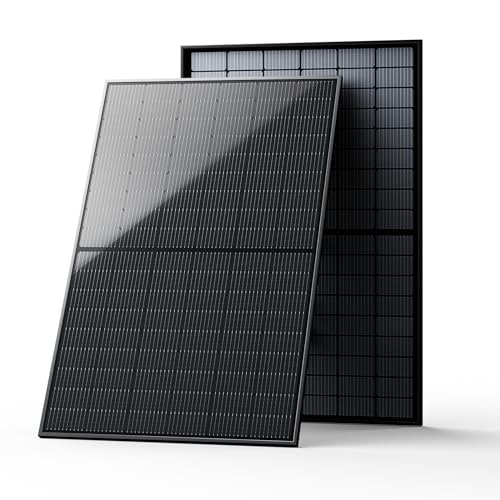
This product pair leverages Class A cells with PERC and bifacial design, delivering up to 25% efficiency. It emphasizes double-sided energy capture and strong durability against weather with IP68 protection. Best for marine and RV setups that demand rugged performance and long-term stability. It’s suitable for multi-panel rooftops or ground installations where wind and water exposure are concerns.
Who it’s best for: buyers requiring robust waterproofing and a high-energy yield from bifacial panels. Better for larger off-grid arrays than a single panel. Limitation: installation requires careful sealing around junction boxes to maintain IP ratings.
Epoch 400W Bifacial Panels (Single 400W)

This 400W Epoch model uses N-Type 16BB cells with high transparency for efficient energy conversion on both sides. It offers durable waterproofing and strong wind tolerance. Best for RVs, boats, and open-area rooftops where exposure demands resilient hardware. Data supports improved efficiency in low-light conditions due to bifacial capture.
Who it’s best for: buyers wanting a reliable, double-sided panel with solid weather resistance. Choose this if you value IP68 protection and strong low-light performance. Caution: higher upfront cost may be offset by long-term energy gains in bright environments.
Callsun 450W Bifacial Dual-Module Kit

This 2-pack configuration delivers 900W total with anti-shade dual-module design. It uses N-Type 16BB cells to maximize voltage and current and feature a bifacial backsheet to harvest rear-side light. Best for home rooftops and mid-to-large off-grid installations where space allows multiple panels. It’s suitable for scenarios needing higher overall system power without drastically increasing panel count.
Who it’s best for: buyers planning larger off-grid arrays or home solar that benefits from higher panel count with shading resilience. Limitation: weight and installation effort increase with a two-panel set-up.
JJN Bifacial 425W Panel

JJN’s 425W bifacial panel uses N-Type 16BB cells and a robust aluminum frame to resist weather. It supports 24V- and 48V-class systems, making it flexible for various off-grid configurations. Best for homes, RVs, and farms where higher-wattage panels help reduce total module count. It favors installations with strong wind and snow loading capabilities.
Who it’s best for: buyers seeking higher wattage in a single panel with good durability. Better for fixed installations rather than portable setups. Limitation: heavier weight may require reinforced mounting hardware.
JJN 400W Bifacial Panel (Two 200W Modules)

This JJN 400W option splits into two 200W modules with 16BB N-Type cells. It emphasizes light capture from both sides and offers IP67/IP65-rated protection for connectors and junction box. Best for RVs, campers, and portable solar setups where partial shading is unavoidable and panel halves can operate independently.
Who it’s best for: buyers seeking modularity and shading resilience in a compact pair. Choose this if you want easy replacement or expansion. Caution: actual performance gain depends on installation reflectivity and shading patterns.
Buying Guide
Key purchase considerations for 400W bifacial solar panels include efficiency, bifacial gain, shading tolerance, and mounting requirements. Understand whether you need a single high-wattage panel or a dual-module configuration to minimize shading losses.
- Efficiency and bifacial gain: Look for panels rated around 25% efficiency and clear bifacial claims. Higher front-side efficiency improves early morning and late-day output.
- Cell type and durability: N-Type 16BB cells offer better performance under shading and reduced degradation compared to older designs. Check for robust frames, waterproof junction boxes, and weather ratings (IP67/IP68).
- Shading resilience: Dual-module parallel designs help ensure partial shading doesn’t drop total output significantly. Consider sites with potential tree shade or reflective surfaces.
- Mounting and installation: Bifacial panels benefit from reflective surfaces (snow, gravel) underneath. Ensure adequate clearance and secure mounting for high winds and snow loads specified by the panel.
- System integration: Verify compatibility with 12V/24V or 48V battery systems and any charge controllers or inverters in your setup.
- Maintenance and durability: Look for water-tight seals, corrosion-resistant frames, and tested wind/snow tolerances to ensure long service life.
Frequently Asked Questions
- What is bifacial solar technology? It captures light from both the front and back sides of the panel to increase energy yield, especially on reflective surfaces.
- Are 400W bifacial panels worth it for camping? Yes, if you need higher daily energy in limited space and can mount panels with reflection underneath.
- Do these panels require special inverters? Most standard MPPT inverters work, but verify compatibility with your battery system and controller.
- Can shading ever be completely avoided? Partial shading reduces output; bifacial and anti-shade designs help minimize impact but not eliminate it.
- How do I choose between a pair vs. a single 400W panel? A dual-module kit can offer better shading tolerance and installation flexibility in constrained spaces.
- What maintenance is needed? Regular cleaning and inspection of seals, connectors, and frame integrity help maintain performance.