Looking for a 4 inch belt sander that balances power, dust control, and ease of use? This guide highlights top picks for common woodworking tasks, from light refinishing to heavy stock removal. Each product is evaluated for who it’s best for, its standout features, and any limitations to consider. Ideal buyers include DIY hobbyists, hobby woodworkers, and professionals seeking a reliable, compact sander that fits on a benchtop or cart.
A quick summary table of selected products helps you compare at a glance:
| Product | Best For | Key Benefit |
|---|---|---|
| Makita 9403 | General wood finishing | Low noise and strong removal |
| WEN HB424V | Versatile benchtop or handheld | Variable speed, dual setup |
| Makita 9404 | Fast material removal | Powerful motor, auto-tracking |
| Bucktool BD4603 | Quiet, efficient work | Direct-drive motor, multi-angle |
| Woodskil 4.3A | Heavy-duty projects | Dual dust ports, solid base |
Note: Each product has distinct strengths. Use the buying guide below to tailor your choice to your project type, budget, and workspace setup.
Makita 9403 4″ Belt Sander

The Makita 9403 is a 4″ belt sander designed for smooth material removal with controlled operation. It features a 4″ wide belt at a sizable speed, delivering efficient stock removal while maintaining operator comfort. Its labyrinth construction helps protect motor and bearings from dust and debris, extending tool life. Best for: hobbyists and small shops seeking steady performance with durable construction.
Best for: users who prioritize low noise and long-term durability. Limitation: the unit is corded and may be heavier than portable handheld models.
WEN HB424V 4-by-24 Variable Speed

The WEN HB424V combines benchtop and handheld flexibility with a 10-amp variable-speed motor. Belt speed ranges from 660 to 1310 feet per minute, allowing quick stock removal or finer finishing. A lock-on switch supports extended sanding sessions, and the belt can be used on a benchtop for upward-facing sanding. Best for: versatile users who need both handheld and stationary sanding options in one tool.
Caution: setup changes between modes may require alignment checks; ensure secure mounting when converting to benchtop use.
WEN Benchtop Belt & Disc Sander 6502T
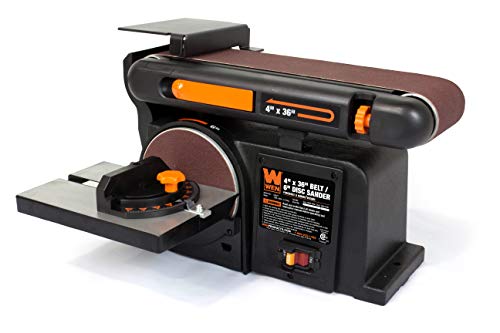
This two-in-one machine combines a 4-by-36 inch belt with a 6-by-6 inch disc for versatile sanding tasks. The belt tilts 0 to 90 degrees, and a sturdy cast iron base minimizes vibration during heavy material removal. Best for: users who need both belt and disc sanding in a single, stable unit.
Choose this if you want broad capability in a single machine; limitation: it may take more bench space than purely belt-only models.
Makita 9404 4″ x 24″ Belt Sander

The Makita 9404 delivers a powerful 8.8-amp motor for faster material removal and lower finishing times. It shares Makita’s reliability features, including a low-noise profile and an auto-tracking belt system that tracks the belt without manual adjustment. Best for: professionals and serious hobbyists needing speed with dependable tracking.
Limitation: higher power draw may require a robust electrical setup in smaller workspaces.
Bucktool BD4603 Belt Disc Sander
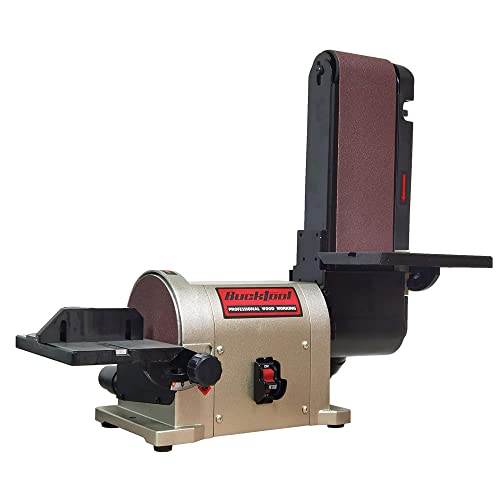
The Bucktool BD4603 uses a direct-drive motor with a 3/4 HP rating, offering efficiency gains over traditional belt-and-disc designs. It supports multi-angle sanding with belt tilting 0 to 90 degrees and features quick belt replacement with track control. Best for: users who want responsive performance with simplified maintenance.
Caution: assembly and setup can be more technical; ensure proper alignment to avoid belt tracking issues.
TPmax 4×36 Belt Pack (4×36) for Sander

This belt pack includes multiple grits of aluminum oxide belts suitable for wood, aluminum, and non-ferrous metal work. Best for: those who need a budget-friendly, ready-to-use belt selection for routine sanding jobs. Limitation: depends on compatible belt sizes and may not suit all machines.
Woodskil 4.3A Belt Sander

The Woodskil sander combines a 3/4 HP motor with a 4×36 inch belt and a 6×6 inch disc, offering a robust setup for demanding work. It includes a double dust exhaust system and a steel base for stability. Best for: projects requiring heavy-duty material removal with cleaner dust management. Caution: expect a larger footprint and heavier weight than compact models.
Buying Guide: Key Purchase Considerations
- Project type and speed control: If you need fast stock removal, prioritize higher belt speed or a more powerful motor. For finer finishing, look for variable speed options and stable belt tracking.
- Mounting and workspace: Benchtop vs. handheld versatility impacts stability and space. Consider models with solid bases, tilting belts, and ease of transfer.
- Dust management: Double dust ports or integrated dust collection improve shop cleanliness. Check for easy-access dust ports and compatibility with bags or collectors.
- Durability and maintenance: Labyrinth seals, cast-iron bases, and direct-drive motors contribute to longevity. Ensure belts are easy to replace and tracks stay aligned.
- Budget and availability: Belt packs and multi-feature models offer value, but confirm belt compatibility and replacement costs before purchasing.
FAQ: Quick Answers For Buyers
- What is the standard belt size for these sanders? The common size is 4 inches by 36 inches, with some models offering 4 by 24 inch belts.
- Is a variable-speed sander worth it for beginners? Yes, it helps adapt to different materials and finishing needs, reducing scorching and tear-out.
- Should I choose benchtop or handheld? Benchtop provides stability; handheld offers flexibility for curved or awkward surfaces.
- Do belt sanders require special maintenance? Regular belt changes and belt tracking checks keep performance consistent; dust management helps longevity.
- Can these sanders handle metal or plastic? Most are optimized for wood; some belts are suitable for non-ferrous metals, but always check belt compatibility.
- Is noise a concern? Many models list low-noise performance; consider hearing protection for extended use.