Answer: These 3500-watt inverter generators deliver quiet, efficient power for home backup, camping, and RV trips. They are best for small-to-medium electronics, essential home appliances, and mobile setups. The top picks here balance quiet operation, runtime, and portability for different use cases such as home outage protection, RV life, or outdoor adventures. The following five models were selected for clear, objective comparisons based on listed features.
| Product | Power (peak / running) | Best For | Key Benefit |
|---|---|---|---|
| MaXpeedingrods 3500W Portable Inverter Generator | 3500 / 3000 W | Home backup and light camping | Compact, lightweight with multiple outlets |
| WEN 4800-Watt Dual Fuel Inverter (DF480iX) | 4800 / 4000 W | Versatile fuel options and quiet operation | Dual fuel and CO watchdog for safety |
| Pulsar PGD40ISCO 4000W Inverter | 4000 / 3200 W | Portable power for travel and camping | Ultra-light and very quiet at 59 dB |
| PowerSmart 3600W Inverter Generator | 3600 / 3200 W | RV and camping with long runtime | Extended runtime up to 8 hours |
| LIFAN 3500W Portable Inverter Generator | 3500 / 3000 W | Home backup and RV use | Super quiet operation and compact design |
MaXpeedingrods 3500W Portable Inverter Generator
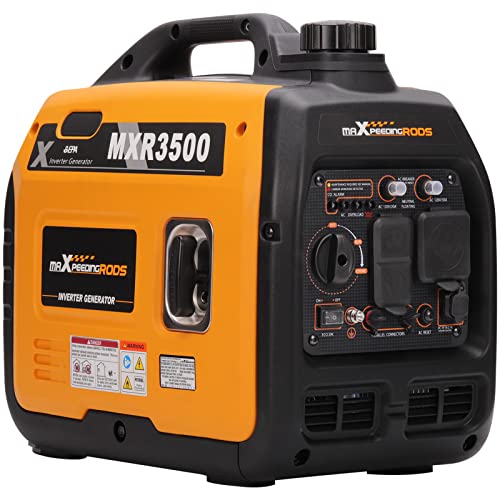
Powerful yet portable, this model offers 3500 peak watts and 3000 running watts. It includes a 120V 30A RV outlet, two 120V 20A outlets, and two 5V DC USB outlets, making it suitable for home backup, small RV setups, and outdoor events. The Eco mode extends runtime up to 8.3 hours at 25% load and 4.5 hours at 50% load, aiding efficiency. Best for users who need a compact generator that can handle essential appliances during outages or camping trips. Caution: might be on the heavier side for very long-portability needs at 47 lbs.
WEN Quiet and Lightweight 4800-Watt Dual Fuel Inverter

This model offers dual-fuel convenience (gasoline and propane) with 4800 surge watts and 4000 rated watts, delivering flexibility for fuel access. It operates quietly and provides clean power suitable for electronics like smartphones, tablets, and laptops. Best for users who value fuel versatility and silent performance in larger setups. Limitation: higher weight compared to smaller 3500W units, which can affect portability.
Pulsar PGD40ISCO Ultra Light 4000W Inverter

This Pulsar model delivers 4000 peak watts and 3200 running watts with a lightweight build and a 1-gallon fuel tank that provides around 4 hours at half load. It operates quietly at about 59 dB, making it a strong choice for portable power during camping or small outdoor events. Best for those prioritizing ultra-lightweight design, with the caveat of shorter runtime between fills.
PowerSmart 3600-Watt Inverter Generator

With 3600 starting watts and 3200 running watts, this unit is well-suited for RV air conditioners, refrigerators, and tools. It features an advanced inverter with less than 3% THD, ensuring clean power for sensitive electronics. Its 1.3-gallon tank provides up to about 8 hours at 25% load, making it practical for overnight camping or outages. Best for users who need steady power for longer periods without frequent refueling. Limitation: slightly higher fuel consumption at heavier loads compared to ultra-efficient models.
LIFAN 3500W Portable Inverter Generator

Rated at 3000W running and 3500W peak, this LIFAN model emphasizes quiet operation and a compact 46 lb design. It is EPA compliant and suitable for home backup and RV camping. Best for buyers needing a balance of portability and power in a compact frame. Caution: some users may prefer slightly higher running watts for demanding appliances.
Buying Guide: Key Purchase Considerations
- Power needs: Determine your essential appliances and total running watts. Choose a unit with a comfortable margin above your peak demand.
- Noise level: Look for models rated around 58–62 dB at typical operating loads for quiet environments like campgrounds or neighborhoods.
- Fuel type and runtime: Decide between gasoline, propane, or dual-fuel. Consider tank size and expected runtime at your typical load.
- Portability: Weigh the generator and check for handles, wheels, or compact dimensions for easy transport in an RV or car trunk.
- Electrical safety: Choose models with clean power (low THD) to protect sensitive electronics and features like CO watchdog or auto shutoff.
- Parallel capability: If future needs grow, verify whether the unit supports parallel operation with another unit.
- Maintenance and durability: Favor reputable brands with straightforward maintenance access and documented service intervals.
FAQ
- What is the typical noise level for a 3500W inverter generator?
Most models operate between 58 and 62 dB at moderate loads, which is comparable to normal conversation and suitable for quiet environments.
- Is a 3500W inverter enough for RV air conditioning?
Many RVs with 13,500–15,000 BTU AC units require higher starting wattage. A 3500W unit can run smaller AC units or essential appliances but check your AC’s starting watt requirements.
- What fuel type is best for portability?
Gasoline-only units are generally lighter and simpler, but dual-fuel options expand refueling flexibility, especially for longer outages or remote camping.
- Do I need a CO sensor on a generator?
Yes. CO sensors or shutoff features improve safety in enclosed spaces or near living areas.
- Can I run a 3500W inverter in parallel with another unit?
Some models support parallel operation to increase total output. Check the official specifications for each model to confirm compatibility.
- What maintenance is required for inverter generators?
Regular oil changes, air filter checks, spark plug inspection, and fuel stabilization are common maintenance tasks. Follow the manufacturer’s schedule for best results.