Choosing a reliable 3500-watt portable generator helps you stay powered during outages, camping trips, or remote jobs. This guide highlights five top options that balance power, efficiency, and quiet operation. Each product features robust startup wattage, clean power for sensitive electronics, and practical runtimes. Use the buying guide to compare fuel types, noise levels, and accessories to fit your needs.
| Product | Peak Watts | Running Watts |
|---|---|---|
| MaXpeedingrods 3500W Portable Inverter Generator | 3500 | 3000 |
| PowerSmart 4300W Portable Generator (Inverter) | 4300 | 3500 |
| ERAYAK 4500W Portable Inverter Generator | 4500 | 3500 |
| Aceup Energy 4000W Dual Fuel Inverter | 4000 | 3200 |
| WEN 3600-Watt Portable Inverter Generator | 3600 | 2900 |
The following sections feature concise, objective overviews of each model. All details come from product listings to help you compare features like fuel type, noise, runtime, and electrical safety.
MaXpeedingrods 3500 Watt Portable Inverter Generator
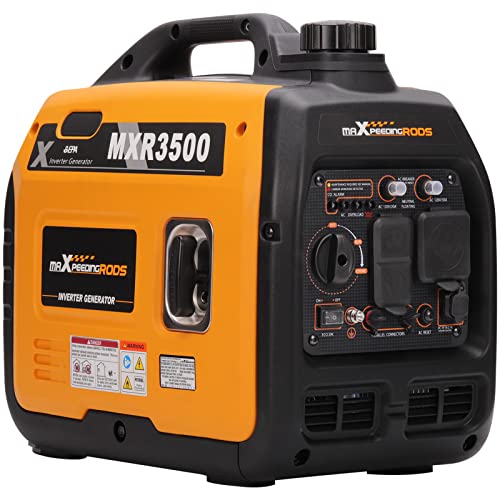
The MaXpeedingrods 3500 Watt Portable Inverter Generator offers a peak of 3500 watts and 3000 running watts, supporting a small home backup, RVs, food trucks, and outdoor setups. Its compact design weighs about 47 pounds, aiding portability for camping or travel. In Eco mode, runtime extends up to 8.3 hours at 750W and 4.5 hours at 1500W, providing practical efficiency for extended outages. Connectivity includes one 120V 30A RV outlet, two 120V 20A outlets, and two 5V DC USB outlets to power common appliances and devices.
PowerSmart 4300-Watt Portable Inverter Generator

The PowerSmart 4300-Watt model delivers 4300 surge watts and 3500 rated watts, making it capable of starting high-torque loads like RV air conditioners and sump pumps without tripping breakers. It uses advanced inverter technology to provide clean power with a THD under 3%, suitable for sensitive electronics. The unit includes a 1.98-gallon tank for up to 6.5 hours at 50% load and features Eco-Mode to optimize fuel efficiency and engine life for emergencies or camping.
ERAYAK 4500W Portable Inverter Generator

ERAYAK’s 4500W inverter generator provides 4500 peak watts and 3500 running watts, offering dependable power for RVs, camping, homes, and outdoor work. The unit utilizes inverter technology for stable, clean electricity and operates quietly at about 60.5 dB(A). Eco Mode adjusts engine speed to optimize fuel use and minimize noise, while its portable design weighs roughly 55 pounds for easy transport and storage, including potential wheel kit compatibility for mobility.
Aceup Energy 4000 Watt Dual Fuel Inverter Generator

Aceup Energy provides a 4000-watt dual-fuel inverter generator, offering 4000 peak watts / 3200 rated watts on gasoline and 3500 peak / 3000 running watts on propane. Powered by a 149cc 4-stroke engine with a recoil start, it runs up to about five hours at half-load on a 1.32-gallon tank. Quiet operation is a highlight, with roughly 60 decibels in Eco mode at 23 feet, while inverter technology keeps THD below 1.5%, protecting sensitive devices from voltage fluctuations.
PowerSmart 4300W Portable Inverter Generator
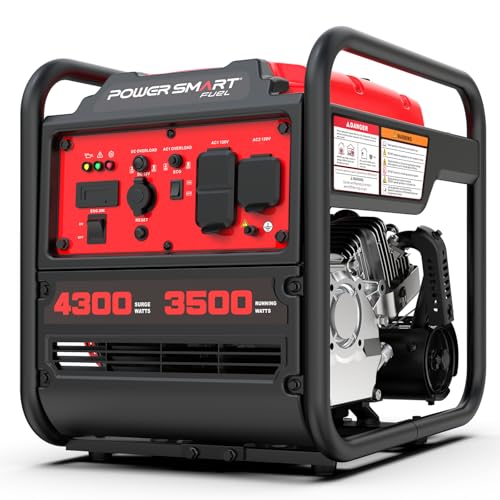
This PowerSmart model delivers 4300 surge watts and 3500 running watts, powered by a 223cc 4-stroke OHV engine. It is designed to start and run heavy-duty loads like a 15,000 BTU RV air conditioner and sump pumps with a stable, clean output. It features a pure sine wave output with less than 3% THD to protect electronics, making it suitable for laptops, tablets, CPAP machines, and more. A 1.98-gallon tank provides up to 6.5 hours at 50% load, and Eco-Mode tweaks engine speed to improve fuel economy during long use.
Buying Guide: Key Purchase Considerations and Comparisons
Power needs and fuel source are the core considerations when selecting a 3500-watt class generator. For home backup, choose models with robust surge watts and stable running watts to handle air conditioners, sump pumps, and electronics. For camping or RV use, prioritize portability, noise levels, and fuel flexibility. Dual-fuel options offer versatility in fuel availability and cost, while inverter technology ensures clean power suitable for sensitive devices.
- Power and surge ratings: Compare peak watts to running watts to determine the load your setup can support. Higher surge watts help start heavy appliances without tripping breakers.
- Clean power and THD: Look for pure sine wave output with low THD (under 3%), especially if you intend to run laptops, CPAP machines, or medical devices.
- Fuel type and runtime: Gasoline, propane, or dual-fuel units offer different fuel costs and availability. Consider tank size and run-time at typical loads to plan for outages or trips.
- Noise level: Measured in decibels at a given distance, quieter generators are more suitable for campgrounds or residential areas. Eco or Smart modes can reduce noise and fuel use.
- Portability features: Weight, handles, wheels, and compact dimensions affect transportability. Wheel kits and ergonomic designs add convenience for frequent moves.
- Outlets and compatibility: Ensure the generator has outlets that fit your devices (RV outlets, 120V/20A, 30A, USB ports). Some units include multiple ports for simultaneous use without adapters.
- Maintenance and warranty: Check oil service intervals, parts availability, and warranty coverage. Longer warranties and accessible service networks improve long-term value.
Depth across models varies in fuel efficiency, runtime, and noise optimization. For users prioritizing reliability in emergencies, models with larger tank capacities and Eco-Mode features deliver longer runtimes with manageable noise. For outdoor enthusiasts, lighter weights and dual-fuel configurations provide flexibility and ease of transport. Always assess your typical load, the environment where the generator will operate, and local noise regulations to select the most suitable option.