Answering the needs of data centers, small offices, and serious home setups, these 3000 watt UPS units provide continuous power with pure sine wave output for demanding equipment. They are best for enterprise-grade servers, network gear, and mission-critical instruments that require minimal transfer time and reliable protection. The following selections help compare form factors, expansion options, and remote management capabilities to match different buyer profiles.
The table below summarizes five strong options. It highlights intended use, key strengths, and notable considerations to help you pick quickly.
| Product | Best For | Key Benefit | Notable Limitation |
|---|---|---|---|
| OPTI-UPS DS3000E II | Commercial data centers or labs with dedicated power circuits | Online double-conversion with zero transfer time | Requires 30 amp outlet or adapter; heavy unit (60 lbs) |
| Eaton Tripp Lite SMART3000RM2U | Rack-mounted server rooms needing remote management | Pure sine wave, LCD monitoring, user-replaceable batteries | Rack setup may require 2U space and maintenance planning |
| CyberPower PR3000RT2UC | Networked environments with cloud monitoring | Smart App, built-in cloud monitoring, AVR protection | Management card and optional modules may add cost |
| CyberPower PR3000RTXL2UC | Expanded runtimes and remote management in rack/tower | Extended Battery Module option, strong outlet mix | Higher power needs may require expansion for full load |
| VEVOR 3000W Sump Pump Backup | Basement or flood-prone areas needing dedicated inverter for pumps | Pure sine wave output with 3-stage charging | Primarily designed for sump use; not a general IT UPS in all scenarios |
OPTI-UPS DS3000E II

What it is best for: Commercial settings needing continuous power for mission-critical equipment. The DS3000E II is an online double-conversion UPS with pure sine wave output and zero transfer time, suitable for computers, instruments, and data center devices that require stable voltage and reliability.
Why selected: It delivers 3000VA/3000W with a 24/7 operating profile and emphasizes continuous cooling and power isolation. It also supports 80-150 VAC input and 110-127 VAC auto-sensing output, making it flexible for varied office or facility electrical environments.
Who should avoid or be cautious: Heavy installation logistics due to its 60 lb weight and the need for a 30 amp wall outlet or appropriate adapter. Consider this when space and wiring are constrained.
Notes: This unit is best in environments where continuous operation is critical and where the noise level is accommodated by the facility design.
Eaton Tripp Lite SMART3000RM2U

What it is best for: Rack-mounted setups in server rooms that require centralized power management and remote control. The SMART3000RM2U combines a 3000W output with AVR, EMI/RFI filtering, and multiple outlets configured for rack deployment.
Why selected: It supports 7 outlets (including L5-30R and multiple 5-20R) with a long 10 ft cord, facilitating convenient rack integration. The LCD provides multiple views, and the option for a web card enables SNMP/remote management.
Who should avoid: If remote management is not a priority, a smaller or stand-alone unit could be more cost-effective. Consider space in a rack and potential maintenance access needs.
Notes: Batteries are user-replaceable with the EBP-1617 pack, aiding long-term operation in professional environments.
CyberPower PR3000RT2UC Smart App Sinewave
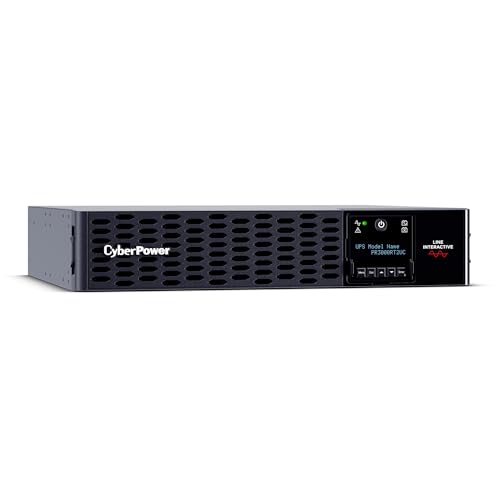
What it is best for: Medium-to-large networked environments needing cloud monitoring and remote visibility. This unit uses pure sine wave output and offers a 30A capability for robust protection of servers and telecom gear.
Why selected: Built-in cloud monitoring simplifies oversight, and a 9-outlet configuration mixes battery-backed and surge-protected outlets for diverse devices. The NEMA L5-30P input and 10 ft cord ease initial installation.
Caution: Management features and remote capabilities may incur additional costs if you add optional cards or modules for full remote access.
Notes: The unit is designed for secure, scalable UPS protection with clear status information via the multifunction LCD panel.
CyberPower PR3000RTXL2UC Sinewave
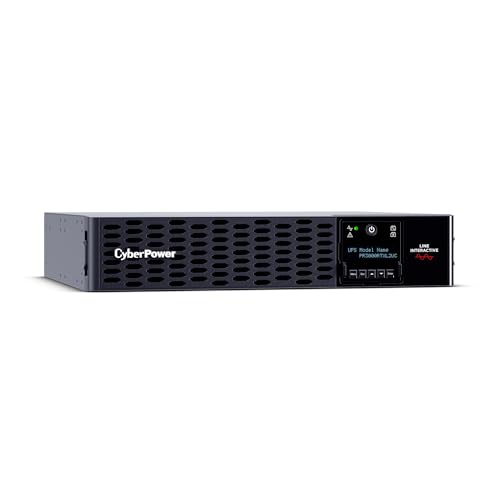
What it is best for: Networks or data-center-like racks that need higher runtime and flexible deployment in both rack and tower configurations. The RTXL2UC supports an optional extended battery module for longer outages.
Why selected: It combines sinewave output with remote management support and a robust 9-outlet arrangement, including NEMA L5-30R for backup power distribution. The design accommodates a tiltable, rotatable LCD panel for hard-to-reach installs.
Limitation: While expandable runtimes improve protection, adding the EBM option increases system complexity and ongoing maintenance considerations.
Notes: Cloud monitoring is built-in, enabling proactive oversight across devices and power conditions.
VEVOR 3000W Sump Pump Backup System

What it is best for: Basements or flood-prone areas needing a dedicated inverter for sump pumps during outages. It delivers 3000W of pure sine wave power suitable for motor loads common in pumping systems.
Why selected: The unit emphasizes plug-in setup with standard 3-prong plugs and 3-stage charging to optimize battery health for long-term use with compatible lead-acid, AGM, gel, or LiFePO4 batteries.
Limitation: This is specialized for sump pump use and is not a general-purpose IT UPS for servers or networking gear.
Notes: The model supports dual-pump operation, which helps prevent flooding where reliability is critical.
Buying Guide
What to consider when choosing a 3000W UPS
Power topology: Online double-conversion UPS units deliver the cleanest power and no transfer time, ideal for sensitive equipment. Line-interactive or standby models may be cheaper but offer less protection for high-load servers.
Outlets and layout: Check the mix of NEMA outlets and whether you need L5-30, 5-20, or 5-15 configurations. Rack-mount compatibility and the ability to securely manage devices in a cabinet matter for data rooms.
Runtime and expandability: Consider whether you need longer runtimes with an Extended Battery Module (EBM) or a sump-pump-specific backup. Plan for future growth by choosing models with field-replaceable batteries or scalable runtimes.
Monitoring and management: Cloud monitoring, SNMP/Web/Telnet access, and LCD visibility help IT staff respond quickly. Optional management cards may add upfront cost but can reduce long-term downtime.
Physical and installation constraints: Weight, footprint, and required outlet amperage (such as a 30A circuit) influence placement. Heavy units may require two people for safe handling.
Noise and cooling: Some units have louder fans suitable for data closets or mechanical rooms; verify noise levels if placed near workspaces.
How to compare these options at a glance
- Best overall protection and remote management: consider the models with cloud monitoring and user-replaceable batteries.
- Best for rack deployment: look for rack-compatible units with LCD panels and web-card options.
- Best value for non-critical residential use: standby or line-interactive models may suffice if complex features are not required.
Frequently Asked Questions
- What does 3000VA/3000W mean in UPS terms?
VA reflects apparent power; W represents real power. A 3000W rating indicates the maximum load the UPS can support in real watts. - Is online double-conversion better than offline for servers?
Yes, it provides continuous power with zero transfer time, which reduces the risk of power-related interruptions for sensitive equipment. - Do these units require a special outlet?
Some models need a 30 amp circuit or a compatible adapter; always verify building wiring and clearance in advance. - Can I expand runtimes later?
Many models offer an Extended Battery Module or easy battery replacement, allowing longer runtimes as needs grow. - What about noise and cooling in a data room?
Online UPS units often have active cooling and fans; plan placement to minimize audible impact in work areas. - Are cloud monitoring features essential?
For larger networks or remote sites, cloud monitoring enables proactive alerts and centralized power management.