When evaluating a 3000-watt class setup, Americans often look for reliable power for home backups, outdoor adventures, and RV trips. This guide focuses on versatile portable power stations and high-output generators that can handle essential appliances, charging needs, and off-grid living. You’ll find options with fast recharging, expandable battery capacity, and multiple outlets to power devices from refrigerators to laptops. Read on to compare features, performance, and practical use cases for each model, with a clear Buying Guide at the end to help you choose.
Summary of selected products:
| Product | Brand | Key Strength | Approx. Battery / Output |
|---|---|---|---|
| Anker SOLIX C1000 Gen 2 | Anker Store | UltraFast recharge, strong portable design | 2000W continuous, 3000W peak; 1024Wh |
| Champion Power Equipment 4000-Watt Inverter | Champion Power Equipment Store | Low weight, quiet operation | 4000W starting, 3000W running; up to 10h |
| MaXpeedingrods 3500W Portable Inverter | maXpeedingrods Store | Compact with multiple outlets | 3000W running, 3500W peak |
| OUPES Mega 1 Portable Power Station | OUPES Store | Fast charging, modular expansion | 2000W, 1024Wh, expandable to 5120Wh |
| Jackery HomePower 3000 | Jackery Store | ULUPS and high capacity | 3600W (7200W surge); 3072Wh |
Anker SOLIX C1000 Gen 2 Power Station
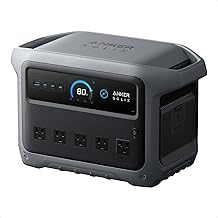
The Anker SOLIX C1000 Gen 2 is a compact, portable power station with a 1,024Wh LiFePO4 battery and a 2,000W continuous output, peaking at 3,000W. It supports ultra-fast recharging at up to 1,600W, enabling a full recharge in roughly 49 minutes under ideal conditions. This unit is designed for home backup, outdoor camping, and remote work setups where multiple devices require simultaneous power. It includes practical cooling and battery management features that help maintain performance during extended outages or heavy daily use.
Its portability and multiport design make it well-suited for small homes, RV trips, and tailgating events. The 10-output capability supports a range of devices from essential appliances to laptops and mobile devices, helping to keep critical systems online during power interruptions. The device can be controlled via the Anker app, making monitoring and scheduling straightforward for users who want a hands-off approach during emergencies.
Champion Power Equipment 4000-Watt Inverter

This inverter is among the lighter options in the 4000-watt class, weighing under 49 pounds and offering quiet operation at 64 dBA from 23 feet. It delivers up to 4000 starting watts and 3000 running watts, with run times reaching up to about 10 hours depending on load. The CO Shield system provides auto shutoff if carbon monoxide is detected, increasing safety in enclosed spaces. An optional parallel kit lets you connect with another 4000-watt Champion inverter to double your output for heavier loads like power tools or climate control.
MaXpeedingrods 3500 Watt Portable Inverter

MaXpeedingrods offers a 3500-watt portable inverter with a 3000W running capacity and 3500W peak, designed for home backup and outdoor use. The unit weighs about 47 pounds and includes multiple outlets: 1 x 120V 30-amp RV, 2 x 120V 20-amp outlets, and 2 x 5V DC USB outlets. Eco mode extends runtime, providing up to approximately 8.3 hours at 25% load or 4.5 hours at 50% load. This configuration makes it suitable for RVs, small homes, and outdoor work setups where continuous power is needed for several hours.
OUPES Mega 1 Portable Power Station

The OUPES Mega 1 stands out with 2,000W continuous output and a 4,500W surge capacity. It includes a 1,024Wh LiFePO4 battery and supports rapid charging, with claimed 0-80% in 36 minutes via AC. An unusual strength is modular expansion; you can connect up to two extra B2 Extra Batteries to scale capacity to 5,120Wh without complex wiring. Its fast charge and expandable architecture appeal to users who anticipate growing power needs, such as larger appliances or longer off-grid stays.
Jackery HomePower 3000

The Jackery HomePower 3000 is engineered for home backup with a robust 3600W output and a 7200W surge, backed by a large 3,072Wh lithium iron phosphate (LFP) battery. It includes a UL-certified UPS that switches within 20 milliseconds, ensuring essential devices stay online during outages. The unit offers versatile ports, including USB-C, USB-A, and DC outlets, plus a TT-30 RV port for straightforward plug-and-play power for an RV. This combination supports both home use and mobile scenarios where reliable, immediate power is critical.
Buying Guide: Key Purchase Considerations and Comparisons
Choosing the right 3000-watt-class power solution depends on your specific needs. Consider these factors to align a model with your typical usage, climate, and mobility requirements.
- Power Needs and Surge Capacity: If you routinely run high-wurst appliances, look for models with a strong surge rating (for example 3,000–4,500W peaks). A higher continuous wattage reduces the risk of brownouts when starting motors or air conditioners.
- Battery Chemistry and Longevity: LiFePO4 batteries offer longer life cycles and better thermal stability than some older chemistries. They are favored for frequent cycling or extended outages, though initial cost may be higher.
- Recharging Speed and Inputs: Fast charging reduces downtime between uses. Some units support simultaneous AC and solar charging for 2x faster replenishment in certain models, which is valuable for outdoor use and camping trips.
- Portability vs Capacity: If you plan to move the unit often, weight and form factor matter. Lighter units with similar outputs sacrifice some capacity, while larger packs offer extended run times at the expense of portability.
- Safety Features: Look for auto shutoff for CO detection, UL certification, and built-in UPS features for critical devices. These enhance reliability during emergencies and minimize risk in enclosed spaces.
- Expandability: Some systems allow battery expansion or modular accessories. This is useful if you anticipate increasing energy needs or wish to scale up gradually without changing cores units.
- Outlets and Versatility: Check if the device provides a mixture of AC outlets, USB-C/USB-A ports, and 12V/DC connectors. This ensures compatibility with everyday electronics, kitchen gear, and charging cables.
- Solar Compatibility: If you expect sunny periods, solar panel compatibility and optional solar panels can reduce ongoing fuel or grid dependence. Ensure the unit supports solar input specifications compatible with your panels.
Across the options featured, users compare portability, charging speed, and total energy capacity to match their priorities. For frequent campers or RV travelers, models with multiple outlet types and rapid recharging are particularly advantageous. For home backup scenarios, UPS functionality and expandable battery capacity can be decisive. The right choice balances budget, anticipated load, and the practical need to recharge quickly after extended outages or long outdoor stays.