If you need a robust 3-phase capable power solution, these generators provide strong performance, diverse fuel options, and practical features for homes, job sites, and emergency readiness. The best choices vary from portable multi-fuel units to large battery-backed systems for longer outages. This guide highlights five top picks and explains who should consider each one, with clear, comparison-friendly notes to help you choose wisely.
| Product | Best For | Key Strength | Fuel Type |
|---|---|---|---|
| Westinghouse 14500 Peak Watt Tri-Fuel | Large homes, backup power | Tri-fuel flexibility and long runtime | Gas, Propane, Natural Gas |
| Jackery HomePower 3600 Plus | Indoor use, emergencies, RVs | Expandable battery backup with parallel setup | Battery (AC & solar) |
| OSCAL PowerMax 6000 Solar Generator | Clean energy fans, off-grid | High solar input and bidirectional inverter | Solar |
| Champion Power Equipment 4000-Watt RV Ready | Lightweight, travel, camping | Very portable with silent operation | Gas |
| EF ECOFLOW Delta Pro 3 Ultra | Whole-home backup, RVs, camping | Expandable to large capacity with multiple charging options | Battery/AC charging |
Note: All five products are compatible with typical home outage needs and offer various fuels or power storage approaches. When choosing, consider runtime, starting watts, port availability, and how you plan to power essentials during an outage or in remote work scenarios.
Westinghouse Tri-Fuel Powerhouse

This model delivers 14,500 peak watts on gasoline, 13,500 peak watts on propane, and 12,000 peak watts on natural gas. It runs up to 19 hours on a 9.5-gallon tank and up to 7 hours on a 20-pound propane tank. The 550cc heavy-duty Westinghouse engine uses a cast-iron sleeve for durability. Best for households or small businesses needing tri-fuel flexibility with strong peak power. Choose this if you want a single unit that can run on whichever fuel is available during an outage. A potential limitation is the heavier weight and larger footprint, which may affect portability for some users.
- Best for large homes and prolonged outages
- Better for mixed-fuel availability (gas, propane, natural gas)
- Durable construction with high wattage flexibility
Jackery HomePower 3600 Plus

The Jackery HomePower 3600 Plus provides 3600W continuous output with 7200W in parallel. It includes a 3584Wh battery and is expandable up to 21kWh per unit, or 43kWh with multiple units, making it a strong option for whole-house backup when paired with MTS. Its battery cells claim high durability and long life, with a design focus on safe operation in cold or adverse conditions. Use this if you want a modular system that can scale with future needs. Limitation: extensive setup may require additional components for full home integration.
- Best for modular, safe home backup
- Better for scalable energy storage
- Excellent for emergencies and RV use
OSCAL PowerMax 6000 Solar Generator
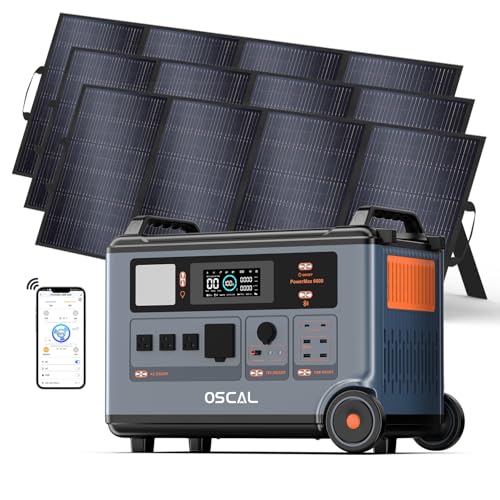
The OSCAL PowerMax 6000 uses a 3600Wh LiFePO4 battery and can deliver 6000W AC output, with a surge up to 9000W. It supports 120V/240V split-phase, with comprehensive inverter protection and 14 outlet sources for versatile charging. It charges quickly in 1.44 hours via 2200W AC input, and 2400W solar input. Best for users seeking fast charging and solid solar integration. Limitation: solar performance depends on sunlight and panel availability, which can affect charging speed in less sunny conditions.
- Best for solar-heavy setups and outdoor use
- Better for rapid recharging and versatile outlets
- Avoid if you need built-in 3-phase output in small form
Champion 4000-Watt RV Ready Inverter

This 4000-watt inverter generator weighs under 49 pounds, offers 64 dBA at 23 feet, and runs up to 10 hours. It includes an optional parallel kit to double output when needed and features CO Shield for carbon monoxide safety. Best for portable power needs where quiet operation and light weight matter. Limitation: while portable, it’s not designed for continuous long-term high-load home backup without pairing with another unit or a larger system.
- Best for camping, tailgating, and light home backup
- Better for quiet operation and portability
- Choose this if you may need to double power with a parallel kit
EF ECOFLOW Delta Pro 3 Ultra

The Delta Pro 3 Ultra is a high-capacity battery-based system with 3600W continuous output and 7200W surge, expandable up to 12000W with X-Boost. It includes 3072Wh LiFePO4 battery and broad charging options, including solar, AC, gas, and EV charging compatibility. Best for homeowners seeking a scalable, quiet, whole-home solution with flexible charging. Limitation: higher initial investment and reliance on compatible expansion modules for full peak capacity.
- Best for whole-home resilience and RV use
- Better for silent operation and flexible charging
- Avoid if you need immediate, non-expandable power with no future upgrades
Buying Guide: Key Considerations For 3 Phase and High-Capacity Power Needs
- Power output and peak demand: Match running watts and peak watts to the appliances you intend to run. For whole-home backup, target higher continuous watts and reliable surges.
- Fuel type and availability: Gas, propane, natural gas, and battery-plus-solar models each have pros and cons. Consider fuel accessibility during outages and the storage requirements.
- Runtime and efficiency: Look for fuel tank size or battery capacity and charging options. Long outages require higher runtime or modular expandability.
- Portability vs. capacity: Heavier, higher-output models are less portable. For RVs or job sites, prioritize transportability; for home use, prioritize sustained power and ease of installation.
- Safety features: CO sensors, automatic shutoff, and safe battery chemistry (like LiFePO4) help protect people and equipment during outages.
- Expansion and compatibility: Some systems support parallel operation or additional batteries. Plan for future power needs and integration with existing panels or generators.
Frequently Asked Questions
- What is three-phase power and why consider a generator with it?
Three-phase power delivers smoother, higher-capacity output suitable for motors and equipment with higher starting loads. A generator designed with three-phase capability helps reduce voltage drop and improves efficiency for larger power draws. - Which type of generator is best for a home during outages?
For outages, battery-backed systems with solar charging or high-capacity fuel generators are common. Choose based on whether you need mobility, quiet operation, or long-running power. - Can I run a home on propane or natural gas?
Yes. Some tri-fuel and dual-fuel models support propane or natural gas, which can be convenient if you have existing outdoor fuel lines or tanks. Check burn rates and available fuel supply during outages. - Is parallel operation worth it?
Parallel capability can double output by linking two units. It’s beneficial when you anticipate higher continuous loads or need redundancy for essential circuits. - What maintenance should I expect?
Regular oil changes, air filter checks, battery maintenance (for battery-based units), and fuel stabilization are typical. Follow the manufacturer’s guidelines for service intervals. - How do I choose between a portable generator and a stationary home unit?
Portable units are flexible for travel and shorter outages, while stationary or expandable battery systems offer longer, quieter power with easier home integration. Your choice depends on footprint, noise tolerance, and intended use.
For buyers seeking reliable, diverse 3-phase or high-capacity power options, these products cover a range of needs from portable to scalable home backup. Use the buying guide to match your priorities—fuel availability, runtime, expandability, and safety features—to the best option for your situation.