This article highlights practical 3-phase generator motors and mini wind/AC generators suitable for education, hobby projects, and small-scale power experiments. Each product below is chosen for its relevance to learning about three-phase AC generation, brushless designs, and reliable performance in low to moderate power settings. Readers will find options ranging from micro-scale teaching aids to more robust permanent-magnet generators for hobby wind setups and home-use experiments.
Summary of selected products:
- CrocSee Micro 3 Phase Brushless AC Generator Model Science Experiment Teaching Aid Kit DIY — 3V-24V, 0.1A-1A
- Klanata 6000W 3 Phase Alternator — 48V, 750 RPM, high-efficiency permanent magnet design
- ECSiNG 2PCS 3-24V 3 Phase AC Micro Hand Brushless Motor Mini Generator — versatile toy/model/app uses
- 6000W Three Phase Alternator by Hyuduo — low-speed, gearless PM generator
- YS Series 6324 0.18kW AC 380V 3-Phase Induction Motor — aluminum housing, standard flange
CrocSee Micro 3 Phase Brushless Generator Kit
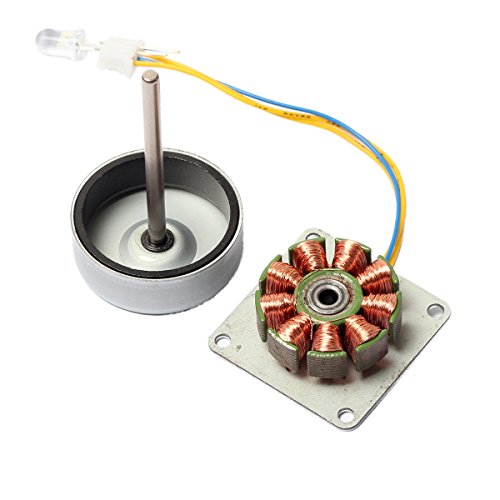
The CrocSee Micro 3 Phase AC Generator is designed as a compact teaching aid and hands-on experiment starter. Its brushless design reduces maintenance needs and promotes smooth operation, making it suitable for classrooms or hobby labs exploring how three-phase generation works. Output is configurable from 3V to 24V and current from 0.1A to 1A, enabling a variety of small-scale demonstrations and experiments in power electronics, energy conversion, and renewable energy concepts. The micro size makes it ideal for quick setups and safe demonstrations without heavy equipment.
Key considerations for this model include its voltage range, which allows learners to observe how different loads affect voltage and current output. The micro generator supports rapid iteration in experiments with different winding configurations or controller methods. While not intended for high-power applications, it provides a tangible, low-risk platform to study phase relationships, frequency, and the basics of motor-to-generator operation. It can also serve as a compact wind or turbine stand-in for intro-level experiments.
Educational takeaways: three-phase balance, brushless reliability, and a practical scale for controlled lab demonstrations. For educators, it offers a safe, compact demonstration unit that can be paired with basic rectifier or controller circuits to illustrate full-wave rectification and DC output behavior. For hobbyists, it’s a versatile starting point for small-energy projects and model-building tasks that require a multi-phase generator concept.
Klanata 6000W 3 Phase Alternator

The Klanata 6000W 3 Phase Alternator combines a high-output permanent magnet design with a robust aluminum shell. The unit emphasizes stability and efficiency, leveraging NdFeB magnets and high-purity copper windings to deliver consistent three-phase power. Its cooling and heat-dissipation features are highlighted, as well as strong resistance to environmental factors due to the shell’s protective treatment. This setup is suitable for larger DIY wind projects or as a supplementary generator in educational demonstrations that require more substantial output than micro kits.
Important considerations include starting torque and heat management, especially in wind-turbine or variable-load scenarios. The rotor design aims to minimize torsion at start-up, aiding smoother operation in fluctuating wind conditions. For users evaluating this model, match it with an appropriate controller, rectifier, and load profile to maintain stability across varying wind speeds. The aluminum shell contributes to durability and longevity in outdoor or workshop environments, which is essential for ongoing experiments or demonstrations involving three-phase power.
Application notes: ideal for multi-phase demonstrations where higher power and realistic generator behavior are desired. Its higher output capacity makes it suitable for projects that require more substantial training data on efficiency curves, power factor, and impedance matching between wind turbines and storage systems or loads.
ECSiNG 2Pcs 3-24V 3 Phase Micro Hand Generator

The ECSiNG micro hand generator set is designed for teaching aids and small-scale experiments. Operating in a 3-24V range with three-phase AC output, these units are well-suited for model makers, classroom demonstrations, and DIY projects that require a compact, brushless generator. The dual-pack option provides flexibility for experiments requiring multiple generators or parallel testing of electrical concepts such as phase alignment, load balancing, and controller integration.
What to look for when using this product includes ease of operation, minimal maintenance, and compatibility with toy models or educational kits. The three-phase design supports smoother output than single-phase alternatives, which helps learners observe how phase relationships influence power delivery. The brushless construction reduces wear and tear, offering longer service life for repeated classroom use or frequent project testing. In a teaching environment, pairing these generators with sensors, microcontrollers, or simple rectifiers can demonstrate real-time electrical characteristics effectively.
Teacher and student benefits include clear demonstrations of voltage and current behavior under varying loads, practical insight into energy conversion, and a hands-on approach to learning about AC power generation. For hobbyists, the compact form factor supports portable experiments and portable wind or micro-turbine studies with minimal setup time.
Hyuduo 6000W Three Phase Low Speed Alternator

The Hyuduo 6000W three-phase alternator is designed for low-speed operation with a gearless setup, making it suitable for direct-drive wind energy systems or other low-RPM power generation needs. The generator’s design emphasizes safety, reliability, and energy efficiency with features such as good heat dissipation and easy maintenance. Its low-speed operation aligns with wind energy concepts, enabling realistic demonstrations of how turbine rotation translates into electrical power in three-phase form.
Users should consider the integration with a suitable controller, battery storage (if used in wind projects), and appropriate rectification for DC storage or grid-tied systems. The unit’s three-phase output facilitates experiments with electrical power balance, reactive power considerations, and motor-drive compatibility in a controlled setting. For education, it provides a tangible example of how mechanical speed, magnetic design, and winding configuration interact to determine output characteristics.
BOBYK YS Series 3-Phase Induction Motor

The YS Series 6324 induction motor by BOBYK represents a standard three-phase induction option with aluminum housing and a 63B14 flange. While not a generator, induction motors can function as generators under certain conditions and are often used in education to demonstrate motor-to-generator concepts, slip, and field dynamics when coupled with electrical loads and converter circuits. The inclusion of an aluminum engine housing suggests durability and heat management benefits in classroom or lab environments.
Key considerations for educators and engineers include the motor’s rpm, voltage rating, and mounting compatibility. Induction motors like this are commonly used in lab demonstrations to illustrate how three-phase power is produced, controlled, and applied. In a broader project context, pairing a three-phase induction motor with a suitable controller or rectifier can help simulate generator behavior for teaching purposes or hobbyist experiments that explore energy conversion and motor drive systems.
Garosa 3-Phase Permanent Magnet Generator With Rectifier

The Garosa AVAN-300W three-phase permanent magnet generator emphasizes a compact, easy-to-operate design with a built-in rectifier option. The low-speed, gearless configuration is designed for straightforward direct-drive applications, making it suitable for small wind or hydro experiments, and hobbyist projects that require quick setup and reliable operation. The developer highlights user-friendly operation and maintenance, alongside energy efficiency and robust construction with an anti-corrosion shell finish.
Considerations for this model include the availability of an integrated rectifier and how it matches with storage or load systems. For educational use, it provides a practical platform to explore how PM generators interact with rectification stages, how headroom affects voltage regulation, and how three-phase output translates into usable power for simple DC or AC loads. The focused features make it a versatile option for demonstrations, model builds, and small-energy projects.
Acxico 3-Phase Micro Wind Generator For DIY Projects

The Acxico 3-Phase AC Micro Mini Wind Hand Brushless Generator is designed for teaching and DIY wind projects. It operates within a 3-24V range, offering 0.1-1A current, which makes it appropriate for small-scale wind experiments, STEM activities, and model-building that explores generator principles in a wind-driven context. The compact form factor and brushless design emphasize safety and longevity for repeated classroom use or hobbyist experimentation.
Educational value centers on its direct wind-driven operation, three-phase output, and host of learning opportunities about efficiency, voltage regulation, and dynamic response to changing wind speeds. For project developers, it serves as a convenient demonstration unit for how turbine rotation translates into electrical energy, how to implement rectification if DC storage is desired, and how to interface with microcontroller-based measurement tools to quantify electrical output under varying conditions.
Buying Guide: Key Purchase Considerations For 3-Phase Generator Motors
- Power needs and scale: Determine whether you need micro-scale educational kits or higher-output units for wind experiments. Choose a unit whose voltage and current ratings align with your intended loads and measurement tools.
- Phase and design: Brushless three-phase generators offer lower maintenance and smoother output, while induction-based motors may require more complex control for generator use. Assess whether a gearless, low-speed design fits your project’s mechanical interface and drive source.
- Voltage range and regulation: Models that operate in a wide voltage window (e.g., 3-24V) are versatile for experiments with different power sources. Consider how you’ll regulate voltage to avoid overloading sensors or loads.
- Thermal management: Generators with good heat dissipation and sturdy housings prevent performance degradation under sustained use. Outdoor or workshop environments benefit from durable shells and corrosion resistance.
- Integration with controls: Look for compatibility with rectifiers, DC storage, or microcontroller-based measurement systems. Some kits provide built-in rectifiers or can be paired with common controller modules for demonstrations.
- Educational value: If the primary aim is learning, prioritize units with clear documentation, safe operating ranges, and straightforward measurement points for voltage, current, and phase relationships.
- Durability and maintenance: Brushless and PM-based designs generally require less maintenance than brushed or induction-only systems. Consider ease of maintenance when selecting a long-term teaching or hobby project.
- Mounting and form factor: Ensure mounting flanges, housings, and size are suitable for your bench, wind-tunnel, or classroom space. Some products emphasize compact form factors for portability and quick demos.
In sum, these 3-phase generator motors cover a range of educational, hobbyist, and small-scale application needs. When evaluating options, reflect on your target learning outcomes, the anticipated load profile, and how you plan to measure performance across varying voltages, speeds, and wind or mechanical inputs. The right choice balances hands-on practicality, safety, and the ability to scale experiments as understanding deepens.