If you’re exploring three-phase AC generation, these compact generators are ideal for education, hobbyist experiments, and small-scale projects. They cover a range from micro brushless models to DIY wind turbine configurations, helping learners understand firing up three-phase power and its benefits. This guide highlights five suitable options, who they’re best for, and practical considerations to help you choose wisely.
| Product | Best For | Key Feature |
|---|---|---|
| CrocSee Micro 3 Phase AC Mini Hand Brushless Motor Generator | Educators and beginners | Micro size with 3V-24V output |
| ECSiNG 2PCS 3-24V 3 Phase Micro Generator | DIY projects and classroom demos | Wide 3-24V range and brushless design |
| 800W Horizontal Wind Turbine Generator (3 Phase) | Off-grid setups | Low start wind speed, durable housing |
| 3-Phase Permanent Magnet Generator (Low RPM) | Wind/water turbine enthusiasts | Direct-drive, rare earth magnets |
CrocSee Micro 3 Phase AC Mini Hand Brushless Motor Generator
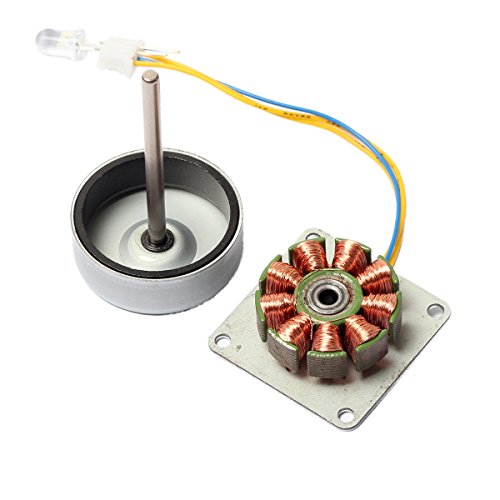
Best for introductory demonstrations and classroom experiments. This micro three-phase brushless generator helps learners observe how three-phase power is produced and distributed in small-scale labs. Output voltage spans 3V to 24V, with a current range of 0.1A to 1A, making it suitable for low-power projects or as a starter module in a larger setup. The compact form factor supports portable demonstrations and quick setup in teaching environments.
Who it’s for: ideal for students, teachers, and hobbyists seeking a compact, easy-to-connect unit to illustrate three-phase concepts. Why selected: its simplicity and versatile voltage range support a wide variety of experiments without needing larger power sources.
Caution: operate within the specified voltage/current limits to prevent overstress and potential motor damage. Not intended for high-power applications.
ECSiNG 2Pcs 3-24V 3 Phase Micro Generator

Best for flexible experiments and small-scale builds. The ECSiNG micro generator operates in a wide voltage range of 3-24V, facilitating integration with various power sources and models. Its three-phase design provides smoother operation and improved efficiency, with brushless tech offering lower maintenance over time. This makes it a strong choice for classroom demos or personal hobby projects that require dependable performance at low to moderate power levels.
Who it’s for: educators and makers who want a dual-pack option to run parallel demonstrations or build multi-source experiments. Why selected: the broad voltage range and brushless construction emphasize durability and adaptability. Caution: manage wiring and protection carefully when combining multiple units to avoid short circuits or overloads.
800W Horizontal Wind Turbine Generator (3 Phase)

Best for off-grid and remote-residence setups where wind is a primary energy source. This 800W wind turbine uses a 3-phase disk generator and features six nylon blades for efficient energy capture. A low 1.0 m/s start wind speed improves startup in modest wind conditions, making it suitable for homes, cabins, RVs, farms, or boats seeking more consistent power generation across calm days. It also includes protective features to help manage extreme weather.
Who it’s for: homeowners and hobbyists seeking practical wind power in moderate to low wind areas. Why selected: its low-start wind speed expands usable days of generation. Caution: performance depends on wind availability; consider local wind profiles before relying on it as a sole power source.
3-Phase Permanent Magnet Generator (Low RPM)

Best for wind or water turbine enthusiasts who want efficient direct-drive power at low RPM. This generator uses rare earth NdFeB magnets and copper windings, aiming for stable performance and better matching with turbine systems. A die-cast aluminum cover adds durability, while corrosion-resistant treatment helps extend life in harsh environments. It’s straightforward to operate, particularly for learners integrating it into larger turbine projects.
Who it’s for: wind or water turbine builders who prefer direct-drive PMG systems with minimal gearing. Why selected: high-efficiency, low-rpm operation and robust construction. Caution: ensure mechanical coupling is matched to your turbine’s RPM range to avoid overspin or mechanical stress.
Acxico 3 Phase Micro Mini Wind Hand Generator

Best for quick experiments and teaching demos in limited space. This three-phase micro generator operates over 3-24V with a 0.1-1A current range, making it flexible for a variety of hand-crank or small turbine setups. The compact design supports portable labs and easy integration with other educational kits.
Who it’s for: instructors and students looking for a compact, easy-to-use micro generator. Why selected: straightforward voltage/current range and small footprint. Caution: micro generators may require careful handling to avoid short circuits during demonstrations.
3-Pack 3-24V Brushless AC Motor Generator

Best for scalable classroom setups and multi-model demonstrations. This metal 3-phase unit is designed for DIY toy models, science experiments, and educational projects. The 3-24V range supports diverse experiments with flexible energy sources, and the brushless design helps reduce maintenance for ongoing teaching labs. The compact metal build aids durability for repeated classroom use.
Who it’s for: teachers and students running multiple demonstrations or projects in parallel. Why selected: robust metal construction and broad voltage range. Caution: ensure secure mounting and proper current limits when using more than one unit together.
3 Phase AC Hand Brushless Motor Generator Model

Best for wind or hydro turbine experiment setups where a direct 3-phase output is advantageous. The design emphasizes durability with a metal build and a wide operating voltage. It’s suitable for integration into teaching models and demonstrations requiring a reliable three-phase output without gearing. The included features suggest straightforward operation for learners exploring three-phase dynamics.
Who it’s for: students and hobbyists building compact turbine labs. Why selected: clear 3-phase output and rugged metal construction. Caution: check wiring and safety clearances when mounting on scaled educational rigs.
Buying Guide: Key Considerations For 3-Phase AC Generators
- Voltage and current range: Match the unit to your project’s power needs. A broader 3-24V range offers flexibility for multiple experiments, while narrower ranges may suit focused demonstrations.
- Three-phase design benefits: Look for smooth power delivery, reduced vibration, and better efficiency for educational demos or small turbines.
- Construction and durability: Metal housings and robust rotors are beneficial for classroom handling and long-term use in variable environments.
- Ease of integration: If you’re building multi-model demonstrations, units with standard connectors and clear wiring diagrams save setup time.
- Compatibility with power sources: Consider whether the generator can be driven by hand cranks, small wind turbines, or other hobbyist sources.
- Maintenance and lifespan: Brushless designs generally require less maintenance, which is preferable for teaching labs and repeated use.
- Safety and protection: Ensure proper shielding and protection when using high currents or in experiments with moving parts.
FAQ
- What is a 3-phase AC generator best used for?
It is ideal for demonstrations of three-phase power, educational experiments, and small-scale DIY projects where smooth, multi-phase output is beneficial.
- Do these units require external gearing?
Most micro and hobby units are gearless or direct-drive, designed for simple operation and direct coupling to turbine or manual input systems.
- Can I run these from a hand crank?
Some models are designed for manual input or low-speed input, but verify the operating voltage and torque requirements before cranking.
- Is a higher voltage range always better?
Not necessarily. Choose a range that matches your intended load and safety limits; broader ranges offer more flexibility but require careful wiring.
- What maintenance should I expect with brushless generators?
Brushless designs typically need less maintenance, mainly periodic inspection of connections and cooling checks in enclosed setups.
- How do I compare these generators for a wind turbine project?
Compare start-up wind speed, maximum output, durability, and how well the unit integrates with your turbine’s rotor RPM range.