Looking for a reliable 3000-watt generator capable of backing up essential appliances or running RV gear? This guide highlights five solid choices that balance power, portability, and efficiency. Each option is best for different situations—whether you need clean power for sensitive electronics, quiet operation for campgrounds, or long runtimes for emergencies. The top picks are selected to help you compare runtimes, outlets, and noise levels at a glance.
| Product | Best For | Key Power | Runtime (approx.) | Note |
|---|---|---|---|---|
| Oxseryn 4400-Watts Inverter Generator | Home backup and RV use | 3400 running / 4400 peak watts | Up to 14 hrs at 25% load | RV port and eco mode |
| PowerSmart 3600-Watt Portable Inverter Generator | Camping and night outages | 3200 running / 3600 surge watts | Up to ~4.75 hrs at 50% load | Quiet with USB options |
| Redact 3800W Lightweight Inverter Generator | Quiet camping and portable use | 3000 running / 3800 peak watts | Up to 9 hrs on 1.8 gal fuel | CO protection and parallel-ready |
| Anker SOLIX C1000 Gen 2 Power Station | Off-grid and emergency power | 2000W output (3000W peak) | Recharge in 49 min | LiFePO4, expandable with solar |
| EF ECOFLOW Delta 3 Classic | Home backup and RVs | 1800W (3600W surge) | Fast charging, UPS below 10ms | Expandable with X-Boost |
Oxseryn 4400-Watts Inverter Generator
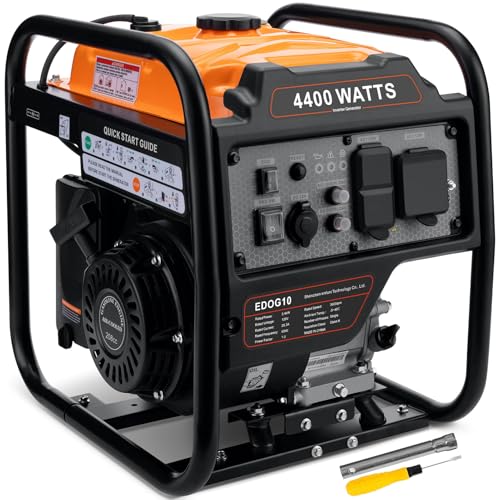
Best for: Home backup and RV enthusiasts who need substantial peak power with clean output. This model provides 3400 running watts with 4400 peak, making it capable of running RV air conditioners, refrigerators, and other essentials. It includes 2×120V outlets, a 30A RV port, and a 12V DC port, plus ECO mode for fuel efficiency and quieter operation.
Why selected: The combination of inverter technology, RV readiness, and multi-port output supports sensitive electronics while offering reliable performance for outdoor and emergency use. The 14-hour runtime at 25% load helps during longer outages. A potential limitation is the 2-gallon fuel tank, which may require refueling during extended use.
PowerSmart 3600-Watt Portable Inverter Generator

Best for: Campers and homeowners needing robust power for a few days with relatively quiet operation. This unit delivers up to 3600 surge watts and 3200 running watts from a 149cc engine, with a 1.3-gallon tank supporting several hours of use. It includes advanced inverter technology to deliver a clean sine wave for sensitive electronics.
Why selected: Its quiet operation and lightweight design make it suitable for camping, tailgating, and home outages where noise and emissions matter. A limitation is runtime, which can be modest on larger loads; plan for fuel management during longer outages.
3800W Lightweight Portable Inverter Generator

Best for: Users seeking high power in a compact, portable package with parallel capability. This model provides 3800 watts peak and 3000 watts running, plus eco mode and CO protection. It’s ideal for powering two devices or tools simultaneously and can be paralleled with another unit for added capacity.
Why selected: The parallel-ready feature and multiple outlets support a flexible setup for camping or home backup. A caution: ensure you have sufficient fuel and understand parallel operation requirements if pairing with a second unit.
Anker SOLIX C1000 Gen 2 Power Station

Best for: Off-grid living, emergency backup, and portable power where you need reliable, quick recharging. The SOLIX C1000 Gen 2 delivers 2000W continuous power (3000W peak) with a 1024Wh LiFePO4 battery and fast recharge in 49 minutes. It can be expanded with optional solar panels.
Why selected: The rapid recharge and long-lasting LiFePO4 chemistry provide a dependable option for remote work setups or campers who require compact, consistent power. Limitation: maximum sustained output may be lower for heavy appliances compared to some higher-watt generators.
EF ECOFLOW Delta 3 Classic
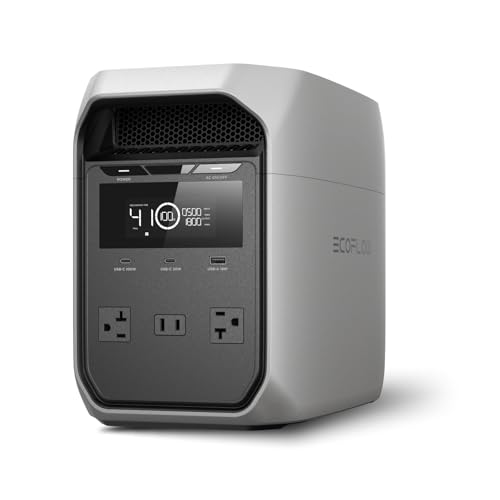
Best for: Home backup and RVs needing a compact, fast-charging power station with UPS protection. The Delta 3 Classic offers 1800W continuous power (3600W surge) and features X-Boost for higher loads, plus ultra-fast 0–80% charging in about 45 minutes.
Why selected: The UPS functionality (less than 10 ms) protects sensitive electronics, essential for computers and medical devices. A caveat is its peak power ceiling, which may be limiting for very high-power appliances for extended periods.
Buying Guide
What power level do I really need?
Consider the total wattage of appliances you plan to run and whether you need surge power for a starting load. Inverters prefer loads that stay within their running watts to achieve longer runtimes and better fuel efficiency.
Do I need portability or a stationary setup?
For camping or RV use, lighter, parallel-ready units with low noise are ideal. For home backup, a larger wattage with longer runtime and multiple outlets can offer more resilience, though it will be heavier.
Is inverter output important?
Yes. Inverter generators deliver clean, stable sine waves with low total harmonic distortion, which is safer for laptops, electronics, and medical devices compared to traditional generators.
What about fuel and runtime?
Fuel capacity and engine efficiency drive runtime. Eco mode helps maximize efficiency, but actual runtime varies with load. Plan for refueling during extended outages or camping trips.
Should I consider battery-based options?
Battery power stations offer quiet operation, fast recharge, and USB-C/USB-A outputs. They are excellent for short outages or remote work, with the trade-off of capacity constraints and higher upfront cost relative to gasoline generators.
Safety and maintenance considerations
Use outdoors in well-ventilated areas to avoid carbon monoxide buildup. Regular oil and filter checks, proper fuel storage, and following manufacturer guidelines are essential for longevity and safe operation.
Quick decision checklist
- RV or outdoor use: look for RV outlets and higher peak wattage.
- Technology sensitivity: choose a unit with inverter technology and low THD.
- Noise sensitivity: check dB ratings or Eco mode capabilities.
- Portability: weigh the unit’s weight and handle availability.
- Expansion needs: consider parallel-ready models for future power growth.
FAQ
- Q: What is the difference between running watts and peak watts? A: Running watts indicate continuous power output; peak watts represent the surge power available for starting appliances.
- Q: Are inverter generators quieter than traditional models? A: Yes, in general, inverter generators run at variable speeds and produce less noise while maintaining stable power.
- Q: Can I run a fridge or air conditioner on these units? A: Most models listed support essential fridge or small AC units, but verify the running watts against your appliance’s draw.
- Q: Is it better to buy one large generator or multiple smaller units? A: It depends on use. A single larger unit simplifies setup, while multiple smaller units can improve resilience and parallel-capability for higher loads.
- Q: Do these units require professional installation for RV hookups? A: Most RV-ready generators provide outlet compatibility, but consult your RV’s electrical guidelines to ensure safe connections.
- Q: Can I use solar to recharge battery-based units? A: Some units support solar charging or expansion via panels; check compatibility with the model you choose.